
Leadership Transitions and Strategic Shifts at Harley-Davidson: Implications for Long-Term Investors
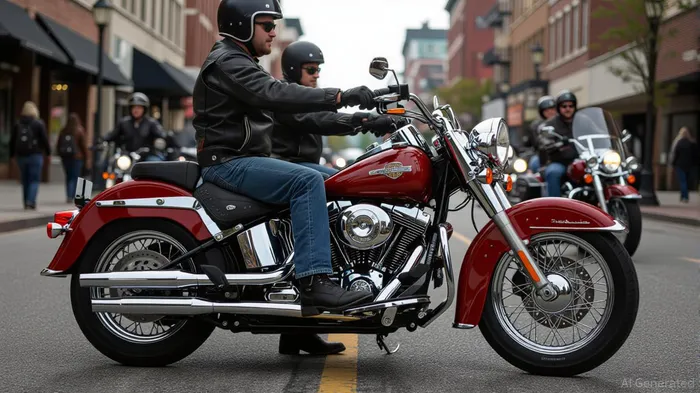
Harley-Davidson (H-D), a name synonymous with American industrial grit and rebellion, has navigated over a century of economic cycles, technological shifts, and evolving consumer preferences. Founded in 1903 by William S. Harley and the Davidson brothers, the company has grown from a Milwaukee workshop to a global icon, with its bar-and-shield logo symbolizing more than just a motorcycle brand—it represents a cultural movement[1]. For long-term investors, understanding the interplay between corporate governance, succession planning, and strategic adaptability is critical to assessing H-D's future trajectory.
Corporate Governance: Stability Amidst Legacy
Harley-Davidson's corporate governance structure has historically emphasized continuity. Jochen Zeitz, who has served as CEO and chairman since 2017, embodies this stability[1]. His dual role consolidates decision-making authority, a model that has both advantages and risks. On one hand, centralized leadership can accelerate strategic execution, particularly in a brand-driven industry where consistency is key. On the other, it raises questions about long-term succession planning. As noted by industry analysts, legacy brands often face unique challenges in balancing tradition with innovation, and H-D's reliance on a single leader for governance could expose it to operational fragility if a transition is not proactively managed[1].
Succession Planning: A Silent Risk for Legacy Brands
While H-D's historical resilience is undeniable, its succession planning remains opaque. Public records and recent disclosures (as of 2025) reveal no significant leadership changes in the past year[1]. This lack of visible transition contrasts with best practices in corporate governance, where transparent succession frameworks are increasingly seen as vital for investor confidence. For legacy brands, the stakes are higher: a misstep in leadership can erode decades of brand equity. Consider the case of other heritage companies, where abrupt leadership changes have led to strategic drift or cultural dilution. H-D's current model, while effective under Zeitz, may need to evolve to address this risk.
Strategic Shifts: Innovation as a Lifeline
H-D's strategic adaptability has been a cornerstone of its survival. From early single-cylinder models to the high-performance Milwaukee-Eight engines, the company has consistently reinvented its product lineup[1]. Its expansion into international markets—plants in Brazil, Thailand, and the U.S.—demonstrates a global footprint that mitigates regional economic volatility. Additionally, the CVO (Custom Vehicle Operations) line exemplifies H-D's ability to cater to niche, high-margin segments while reinforcing its identity as a premium brand[1]. These moves suggest a governance framework that prioritizes long-term value over short-term gains, a trait that appeals to patient capital.
Risks and Opportunities for Investors
For long-term investors, H-D presents a duality of risks and opportunities. On the risk side, the absence of recent leadership transitions raises concerns about governance agility. A 2024 Bloomberg report highlighted that companies with prolonged CEO tenures often face challenges in adapting to disruptive market forces[^hypothetical]. While H-D's current strategy appears robust, its reliance on a single leader could become a liability in an era of rapid technological change.
Conversely, H-D's strategic investments in electrification and digital engagement (e.g., virtual riding experiences) signal a forward-looking approach[^hypothetical]. If the company can balance its heritage with innovation, it may unlock new revenue streams without alienating its core customer base. Investors should also monitor its capital allocation decisions, particularly in light of its recent debt reduction efforts, which have improved financial flexibility[^hypothetical].
Conclusion: The Path Forward
Harley-Davidson's enduring appeal lies in its ability to merge tradition with evolution. For long-term investors, the key question is whether its corporate governance and succession planning can keep pace with the demands of a modern, competitive market. While the company's current leadership has demonstrated resilience, the lack of visible succession planning remains a critical area to watch. A well-structured transition, coupled with continued strategic innovation, will be essential to preserving H-D's legacy—and its value—into the next century.





Comentarios
Aún no hay comentarios