
Leadership Transitions in Regional Banking: Governance Risks and Strategic Continuity Challenges
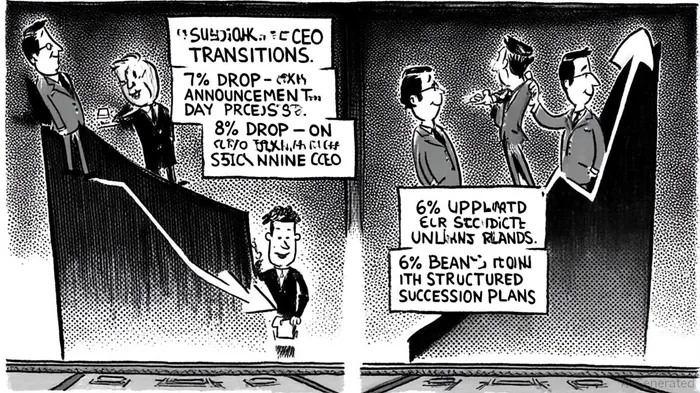
Leadership transitions in U.S. regional banks have emerged as a critical governance risk, with far-reaching implications for shareholder value, operational stability, and long-term strategic continuity. Recent data underscores a troubling pattern: abrupt CEO departures—often the result of inadequate succession planning—trigger immediate financial and reputational damage. According to a report by Russell Reynolds Associates, banks experiencing unplanned CEO exits saw an average 7% drop in stock price on the day of the announcement, followed by an additional 8% decline within a month [1]. Conversely, institutions with well-structured succession plans observed a 6% average stock price increase post-transition, highlighting the financial benefits of proactive governance [1].
The root of this volatility lies in the underpreparedness of many regional banks. Only 18% of institutions with under $100 billion in assets have identified a CEO successor with a defined timeline and action plan [1]. This lack of foresight is compounded by demographic trends: the average age of regional bank CEOs is 58, with 25% of C-suite executives aged 65 or older [1]. As these leaders approach retirement, an impending "leadership cliff" threatens to exacerbate existing gaps, particularly in community banks with limited internal talent pools [2].
Boards play a pivotal role in mitigating these risks, yet many fail to act as strategic partners in succession planning. A 2025 Governance Best Practices Survey revealed that 39% of directors believe their peers could contribute more effectively to setting strategic direction [3]. Instead, boards often delegate risk management and succession planning to management, reducing their oversight to passive "rubber-stamping" [3]. This dynamic leaves institutions vulnerable to factionalism and cultural erosion during transitions, as highlighted by case studies of mismanaged CEO exits [4].
To address these challenges, regional banks must adopt a dual focus on internal development and long-term planning. Internal candidates, who typically remain in roles 1.4 years longer than external hires, offer continuity and institutional knowledge [1]. However, only 52% of directors are familiar with executives beyond the CEO, limiting board visibility into the leadership pipeline [2]. A tiered framework for identifying Key Management Positions (KMPs) based on strategic importance and expertise scarcity can help align succession strategies with organizational goals [4].
For investors, the implications are clear: governance quality during leadership transitions is a key determinant of institutional resilience. Banks that integrate succession planning with risk appetite frameworks and business continuity strategies are better positioned to navigate regulatory shifts, technological disruptions, and geopolitical uncertainties [5]. Boards that treat succession as a strategic imperative—rather than an episodic event—can enhance shareholder value by up to 25% while safeguarding against the financial and operational fallout of abrupt leadership changes [1].







Comentarios
Aún no hay comentarios