
Leadership Transitions at Glucose Health: Navigating Uncertainty in a Competitive Market
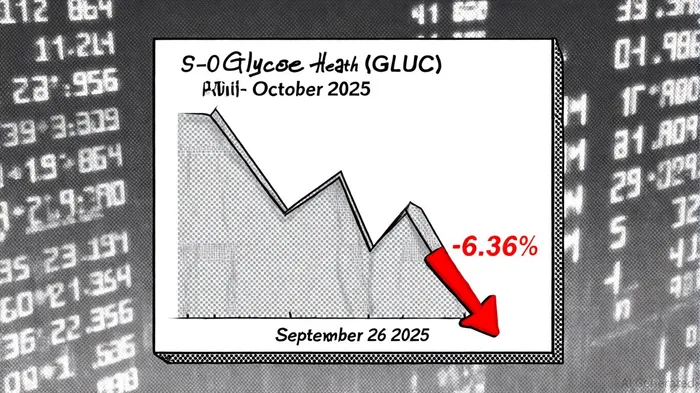
Leadership transitions at publicly traded companies often serve as a litmus test for investor confidence and market resilience. For Glucose Health, Inc. (OTC: GLUC), the abrupt departure of its CEO and CFO in late September 2025 has thrust the biotechnology firm into a period of administrative uncertainty, raising critical questions about its operational continuity and long-term viability. According to a report by GlobeNewswire, both executives resigned for personal reasons, with Murray Fleming—the company's sole director—stepping in to assume their roles temporarily[1]. While the company emphasized that the resignations were not contentious and that operations would continue under Fleming's oversight, the announcement coincided with a -6.36% drop in GLUC's stock price to $0.0927 per share[5], signaling investor unease.
Investor Confidence: A Fragile Equilibrium
The leadership vacuum at Glucose Health underscores the delicate balance between corporate governance and market perception. Investors typically view executive stability as a proxy for strategic coherence, and the sudden loss of two top executives—without clear succession plans—has eroded confidence. Data from Yahoo Finance reveals that GLUC's stock price fell sharply following the September 26 announcement, reflecting concerns about the company's limited operating capital and its acknowledgment of “uncertain prospects to continue as a going concern”[5]. While Fleming's temporary leadership aims to ensure continuity, the absence of a robust executive team could delay critical decisions, such as securing additional funding or pivoting product strategies.
This scenario contrasts with DexCom's recent interim leadership shift, where the appointment of an interim CEO amid a medical leave was managed with minimal disruption to key initiatives, such as expanding insurance coverage for CGM devices[1]. Glucose Health's situation, however, lacks such strategic clarity, amplifying risks for stakeholders.
Financial Health: A Tenuous Path Forward
Glucose Health's financials further complicate the narrative. Q2 2025 earnings reported a net loss of $0.01 per share and revenue of $0.08 million[3], while Q3 results showed a net income of -$63.04K and revenue of $60.91K[4]. Operating cash flow remains negative at -$17.25K, though financing activities provided a modest $10K inflow to sustain operations[2]. These figures highlight a company teetering on the edge of insolvency, with limited capacity to weather prolonged leadership instability.
The company's reliance on short-term financing and its admission of “uncertain prospects”[1] suggest that investors may demand immediate transparency about capital-raising efforts or operational restructuring. Without a credible plan, the risk of a liquidity crisis looms large, potentially triggering a downward spiral in both stock value and market credibility.
Market Positioning: Innovation Amidst Intense Competition
Despite these challenges, Glucose Health occupies a niche in the $26.91 billion global glucose market, which is projected to grow at a 3.79% CAGR through 2030[2]. The company's Fiber UP brand—a prebiotic soluble fiber-enriched beverage—positions it as a player in the health-conscious consumer segment, leveraging its January 2024 trademark[1]. However, this differentiation is tested by competitors like Archer-Daniels-Midland and Cargill, as well as alternative sweeteners such as stevia and allulose, which are gaining traction for their low-calorie profiles[2].
The pharmaceutical segment, a potential growth avenue for Glucose Health, is also fiercely competitive. While the global demand for high-quality glucose products is driven by GLP-1 drug manufacturing and diabetes prevalence[2], the company's limited financial resources may hinder its ability to scale or innovate in this space.
Conclusion: A Crossroads for Glucose Health
The leadership transition at Glucose Health has exposed vulnerabilities in its governance and financial structure, casting a shadow over its market positioning. While the company's Fiber UP product offers a unique value proposition, its ability to capitalize on this innovation hinges on resolving immediate operational and leadership challenges. Investors must weigh the risks of prolonged uncertainty against the potential for strategic revival under Fleming's interim stewardship.
For now, GLUC remains a high-risk, high-reward proposition. The coming months will be critical in determining whether the company can stabilize its leadership, secure necessary capital, and reassert its relevance in a competitive market.







Comentarios
Aún no hay comentarios