
Leadership Transitions in China's Beverage Sector: Governance Risks and Strategic Continuity in a Shifting Market
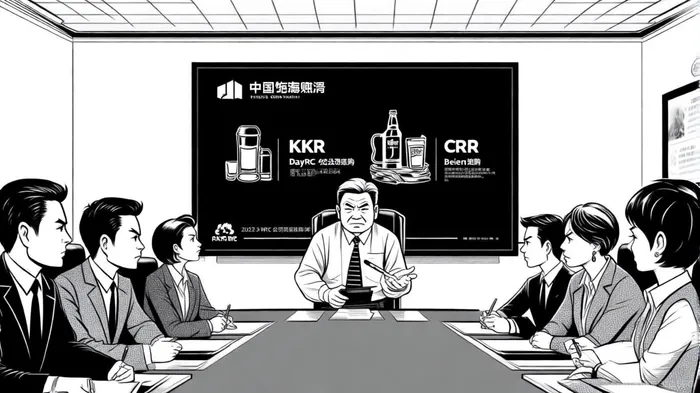
The Chinese beverage sector is undergoing a period of profound transformation, driven by regulatory shifts, evolving consumer preferences, and strategic leadership changes. As companies navigate these dynamics, the interplay between governance risk and strategic continuity has become a critical determinant of corporate stability and shareholder value. This analysis examines recent leadership transitions, governance reforms, and their implications for the sector's future.
Governance Reforms and Leadership Flexibility
The 2023 amendment to the PRC Company Law, effective July 1, 2024, has reshaped corporate governance in China. Key provisions include the option for limited liability companies to replace supervisory boards with audit committees, mandatory inclusion of employee representatives on boards for firms with over 300 employees, and stricter accountability for directors[1]. These reforms aim to enhance transparency and reduce redundancy in oversight, but they also elevate the stakes for leadership transitions. For instance, the requirement for employee representation introduces new layers of stakeholder engagement, potentially complicating decision-making during executive changes[2].
Case Study 1: KKR's Acquisition of Dayao Beverage – Strategic Shifts and Governance Compliance
One of the most significant leadership transitions in 2025 is KKR's $1.2 billion acquisition of 85% of Inner Mongolia Dayao Beverage. This move, which halted Dayao's planned Hong Kong IPO, reflects a strategic bet on the company's dominance in Inner Mongolia's non-alcoholic beverage market (75% share) and its iconic “liquor lookalike” packaging[3]. KKR's governance approach emphasizes operational optimization, including consolidating underutilized production facilities and investing in natural sweeteners to align with health-conscious trends[4].
However, the acquisition also highlights governance risks. KKRKKR-- must navigate regulatory hurdles, such as compliance with China's “negative list” restrictions (e.g., excluding Dayao's mineral water operations in Tibet) and securing approval from the State Administration for Market Regulation (SAMR)[5]. The transaction's structure—combining equity and syndicated debt—underscores the need for robust risk management to balance growth ambitions with regulatory compliance[3].
Case Study 2: CR Beer's Restructuring – Internal Leadership and Stability
In contrast to external acquisitions, China Resources Beer (CR Beer) has prioritized internal leadership continuity under CEO Hou Xiaohai. Since 2023, Hou has streamlined operations by reducing the number of breweries and focusing on premiumization and global partnerships, such as its collaboration with Heineken[6]. This strategy has stabilized CR Beer's market position despite industry-wide challenges like rising production costs from U.S. agricultural tariffs[7].
The success of CR Beer's approach illustrates the value of strategic continuity when leadership remains aligned with long-term goals. Unlike external CEOs, who often drive disruptive changes, Hou's internal perspective has fostered cohesion within the top management team (TMT), mitigating the risks of strategic misalignment[8].
Strategic Continuity: External vs. Internal Leadership Impacts
Research on CEO succession in Chinese A-share companies reveals that external appointments are positively correlated with corporate strategic change, often leading to shifts in business direction[9]. For example, KKR's Dayao acquisition exemplifies how external leadership can accelerate innovation (e.g., introducing lychee-mint sparkling water) but may also disrupt existing operations. Conversely, internal leaders like Hou Xiaohai tend to preserve strategic continuity, leveraging institutional knowledge to navigate market turbulence[10].
The TMT's role in mediating these outcomes cannot be overstated. A cohesive TMT with minimal “faultlines” (demographic or ideological divisions) is better positioned to implement strategic changes without destabilizing the organization[11]. This dynamic is particularly relevant in the beverage sector, where rapid adaptation to health trends and digital transformation is essential[12].
Governance Risks and Director Effectiveness
Despite regulatory advancements, governance risks persist. Studies indicate that independent directors in Chinese corporations often lack the capabilities and incentives to effectively oversee leadership transitions[13]. The 2023 Company Law's emphasis on director liability and shareholder rights aims to address this gap, but implementation challenges remain. For instance, the new law's five-year compliance timeline for capital contribution requirements may create uncertainty for companies undergoing leadership changes[14].
Conclusion: Future Outlook and Investment Considerations
The Chinese beverage sector's resilience hinges on its ability to balance governance reforms with strategic agility. Companies that prioritize innovation (e.g., KKR's R&D investments in natural sweeteners) and operational efficiency (e.g., CR Beer's restructuring) are likely to outperform peers. However, investors must remain vigilant about governance risks, particularly in firms with weak board independence or fragmented TMTs.







Comentarios
Aún no hay comentarios