
Leadership Shift at Shenzhen Envicool: Strategic Implications for Growth and Shareholder Value
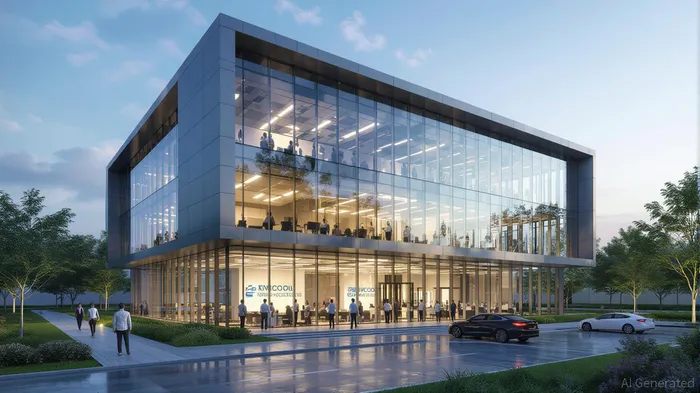
The recent leadership transition at Shenzhen Envicool Technology Co. Ltd. has sparked renewed interest in the company's governance structure and long-term strategic direction. On September 12, 2025, the board elected Qi Yong as chairman, a role he already held as General Manager since 2013[1]. This internal promotion underscores a deliberate emphasis on continuity, aligning with the company's ongoing focus on precision temperature control and energy-saving solutions. While the absence of an official statement on the transition leaves some ambiguity, the appointment of Qi Yong—whose tenure has been marked by strategic expansions and partnerships—suggests a governance model prioritizing stability and operational momentum[2].
Corporate Governance: Continuity Over Disruption
Shenzhen Envicool's leadership shift appears to reinforce existing governance frameworks rather than introduce radical changes. Qi Yong's dual role as chairman and general manager, a structure maintained since 2013[3], reflects a centralized leadership approach that has historically driven the company's innovation in energy-efficient technologies. This continuity is critical in an industry where long-term R&D investments and partnerships are essential for competitive advantage. For instance, the company's collaboration with KJTS Group and its subsidiary Green AI Sdn Bhd to deliver energy-efficient data center cooling solutions in the ASEAN region[4] highlights its ability to leverage existing leadership expertise for strategic growth.
The lack of detailed public commentary on the transition may raise questions about transparency, but Qi Yong's prolonged tenure suggests a governance model that values institutional knowledge. According to a report by Marketscreener, the board's decision to retain Qi Yong as chairman aligns with his track record of steering the company through strategic partnerships, including its recent collaboration with SOFAR to expand direct expansion (DX) cooling applications in energy storage systems[5]. Such initiatives demonstrate a governance strategy focused on incremental innovation and market expansion rather than disruptive overhauls.
Operational Momentum: Partnerships as a Growth Engine
The company's operational momentum is closely tied to its ability to form strategic alliances that amplify its core competencies. The partnership with KJTS Group, for example, combines Shenzhen Envicool's expertise in temperature control with Green AI's project leadership capabilities, positioning the duo to capitalize on the ASEAN region's growing demand for energy-efficient infrastructure. This collaboration not only diversifies Shenzhen Envicool's geographic footprint but also aligns with global climate goals, a factor increasingly valued by investors.
Data from Reuters indicates that Shenzhen Envicool has consistently prioritized partnerships as a growth lever, with its recent ventures in data center cooling and rail transit air conditioning underscoring its adaptability to emerging markets. Qi Yong's leadership has been instrumental in these efforts, as evidenced by his role in expanding the company's DX cooling applications in industrial energy storage. By maintaining his leadership, the board signals confidence in his ability to sustain this momentum while navigating regulatory and market challenges.
Shareholder Value: Balancing Stability and Innovation
For shareholders, the leadership transition presents a nuanced outlook. On one hand, the continuity of Qi Yong's leadership reduces the risk of strategic misalignment, which is particularly valuable in capital-intensive sectors like energy-efficient cooling. On the other, the absence of new leadership could limit the infusion of fresh perspectives needed to address evolving market dynamics. However, the company's recent partnerships and its focus on long-term climate goals suggest that its governance model is calibrated to balance stability with incremental innovation.
A visual representation of Shenzhen Envicool's revenue growth and partnership expansion over the past five years would provide further clarity on the correlation between leadership continuity and operational performance.
Conclusion
The leadership shift at Shenzhen Envicool, while seemingly low-key, reinforces a governance strategy centered on continuity and operational resilience. Qi Yong's continued leadership, coupled with strategic partnerships in high-growth sectors like data center cooling, positions the company to sustain its trajectory of innovation and market expansion. For investors, the challenge lies in assessing whether this stability will suffice to drive long-term shareholder value in an increasingly competitive landscape.







Comentarios
Aún no hay comentarios