
Leadership Influence in ESG-Focused Firms: The Role of Executive Recognition in Shaping Investor Sentiment and Stock Performance
In the evolving landscape of ESG investing, leadership has emerged as a pivotal driver of corporate sustainability and financial performance. Executive recognition—whether through awards, public acknowledgment, or incentive structures—has increasingly been linked to shifts in investor sentiment and stock price dynamics. This article synthesizes recent academic and industry research to explore how executive recognition in ESG-focused firms influences market perceptions and valuation outcomes.
Executive Recognition and ESG Performance: A Dual-Edged Sword
Research underscores that non-compensation-based recognition, such as ESG awards, can significantly enhance corporate ESG performance. A 2025 study on Chinese A-share companies found that CEOs receiving prestigious ESG accolades drove improvements in green innovation efficiency and environmental disclosure, mediated by increased media coverage and reduced financial constraints [5]. However, the same study noted a caveat: such recognition could foster overconfidence in executives, potentially undermining long-term ESG commitments.
Compensation-linked incentives further complicate this dynamic. While tying executive pay to ESG metrics has been shown to boost sustainability outcomes, the effects are contingent on governance structures. For instance, firms with higher independent director representation experienced stronger ESG performance gains from incentive plans, whereas increased management shareholding diluted these benefits [6]. This duality highlights the importance of aligning recognition mechanisms with robust corporate governance.
Investor Sentiment: A Mediator of Market Reactions
Investor sentiment plays a critical role in translating executive recognition into stock performance. A 2024 EY survey revealed that 88% of institutional investors increased their use of ESG data, yet 92% expressed concerns that ESG initiatives might harm short-term profitability [1]. This tension between long-term sustainability and immediate financial returns shapes how investors interpret ESG recognition.
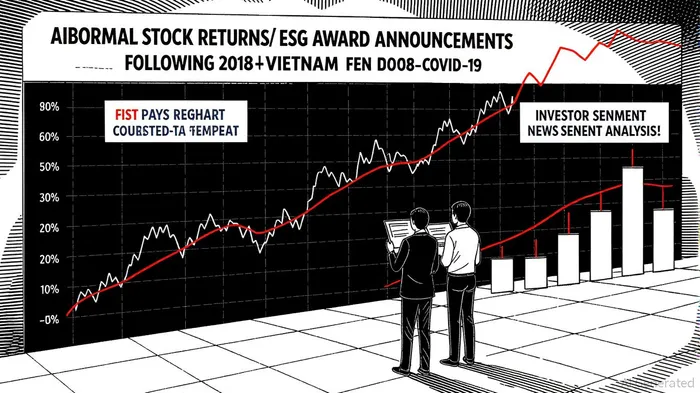
Event studies provide further clarity. In Vietnam, firms awarded the Sustainability Reporting Award (SRA) saw average abnormal returns of +3.2% in the five days post-announcement, reflecting a positive market reaction [4]. However, this effect waned post-COVID-19, suggesting that broader economic uncertainties can dampen investor enthusiasm for ESG signals. Conversely, Japanese firms showed minimal market response to ESG brand designations, underscoring regional differences in ESG perception [1].
The credibility of ESG signals also matters. A 2023 study found that stock prices in Brazil reacted strongly to financially material ESG news (as defined by SASB standards), but ignored less relevant disclosures [3]. This implies that investors prioritize ESG information with tangible operational or financial implications, rather than symbolic recognition.
Stock Performance: Mixed Evidence and Contextual Factors
The relationship between executive recognition and stock performance remains nuanced. While Vietnamese SRA winners experienced short-term gains, Indian firms receiving ESG awards saw negative or statistically insignificant abnormal returns between 2018–2023 [5]. These divergent outcomes highlight the influence of regulatory environments, market maturity, and investor sophistication.
Longitudinal data from China further complicates the narrative. During the 2022 heatwave, firms with strong ESG performance demonstrated enhanced organizational resilience, particularly in non-state-owned enterprises and low-carbon pilot cities [4]. This suggests that ESG recognition may act as a buffer during crises, though its impact on stock prices depends on the firm’s operational context.
Strategic Implications for Investors and Corporations
For investors, the evidence points to a need for discernment. While ESG awards and executive recognition can signal commitment to sustainability, their financial materiality varies. Firms with transparent, auditable ESG practices—and those operating in regions with stringent climate policies—appear to derive greater market value from recognition [2]. Conversely, greenwashing or superficial ESG initiatives may fail to resonate, especially as investor scrutiny intensifies.
Corporations must balance recognition strategies with authentic ESG integration. Overreliance on awards without substantive sustainability efforts risks reputational damage, as seen in the U.S., where 80% of corporations are reworking ESG strategies amid political and regulatory pushback [1]. Aligning executive incentives with measurable ESG outcomes, while ensuring board independence, offers a more sustainable path to value creation.
Conclusion
Executive recognition in ESG-focused firms is neither a panacea nor a guaranteed driver of stock performance. Its impact hinges on governance frameworks, market conditions, and the credibility of ESG practices. As the ESG landscape evolves, investors must look beyond symbolic awards to assess the depth of a firm’s sustainability commitment. For corporations, the lesson is clear: recognition must be rooted in authentic, long-term ESG strategies to meaningfully influence investor sentiment and financial outcomes.
Source:
[1] EY Global Institutional Investor Survey 2024 [https://www.ey.com/en_gl/insights/climate-change-sustainability-services/institutional-investor-survey]
[2] ESG Rating Events and Stock Market Reactions [https://www.researchgate.net/publication/350764611_ESG_Rating_Events_and_Stock_Market_Reactions]
[3] Stock Price Reaction to Environmental, Social, and ... [https://www.mdpi.com/2071-1050/16/7/2839]
[4] Sustainability Reporting Awards and Market Reaction: The Case of Vietnam [https://onlinelibrary.wiley.com/doi/full/10.1002/csr.3135]
[5] Do ESG and CSR Awards and Recognitions Influence the Stock Market? Evidence from India [https://www.researchgate.net/publication/395050384_Do_ESG_and_CSR_Awards_and_Recognitions_Influence_the_Stock_Market_Evidence_from_India]
[6] Executive compensation and corporate sustainability [https://pmc.ncbi.nlm.nih.gov/articles/PMC11211889/]







Comentarios
Aún no hay comentarios