
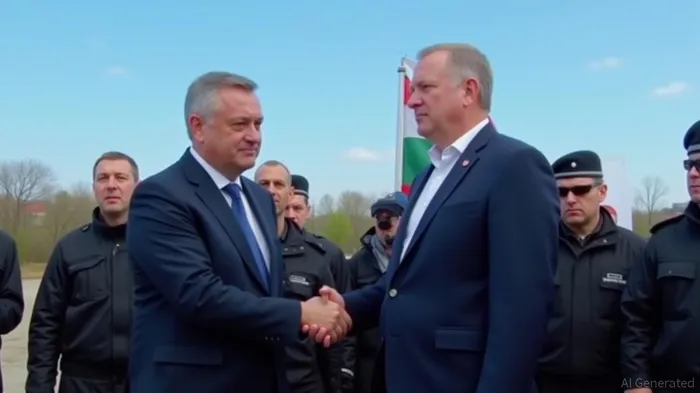
The leaders of Hungary and Slovakia made a joint show of defiance over pressure to quit Russian oil at the border separating the two countries on Sunday.
PorAinvest
domingo, 28 de septiembre de 2025, 9:46 am ET1 min de lectura
The leaders of Hungary and Slovakia made a joint show of defiance over pressure to quit Russian oil at the border separating the two countries on Sunday.
Hungary and Slovakia, two European Union (EU) member states, have jointly demonstrated their defiance over pressure to halt Russian oil imports at the border separating the two countries. This stance was evident during a meeting held on Sunday, September 12, 2025.The leaders of Hungary and Slovakia have maintained their position despite increasing international pressure, including demands from U.S. President Donald Trump. Trump has repeatedly urged Nato allies to cease all energy purchases from Russia, particularly oil and gas, in an effort to strengthen Western sanctions against Moscow.
Hungary's Prime Minister Viktor Orbán and Slovakia's Prime Minister Peter Pellegrini have both emphasized that their countries' reliance on Russian energy is due to infrastructure limitations and the lack of viable alternatives. Orbán has defended Hungary's position by framing it as a matter of energy security rather than politics. He has stated that Hungary's energy supplies are a "purely physical question" and that the country cannot ensure a safe energy supply without Russian oil or gas sources .
Similarly, Slovakia's Prime Minister Peter Pellegrini has stated that his country cannot replace Russian energy overnight and needs technical and logistical help before any major shift. He has emphasized that Slovakia needs multiple sources of gas and energy to diversify its supply chain .
Both leaders have cited the need for time and resources to find and implement alternative energy routes and sources. This stance reflects the countries' heavy reliance on the Soviet-era Druzhba network and the fact that most of their energy infrastructure is geared towards imports from the east.
The leaders' defiance has been met with criticism from some quarters, who argue that continuing to purchase Russian energy is effectively financing Moscow's war in Ukraine. However, Orbán and Pellegrini maintain that their countries have no feasible alternatives and that cutting ties with Russia would threaten the stability of their energy grids and economies.
This situation highlights the complex interplay between political and economic factors in EU energy policy. While the EU has been working to reduce its dependence on Russian energy, the reality on the ground is more complex, with some countries facing significant infrastructure challenges in transitioning to alternative energy sources.


Divulgación editorial y transparencia de la IA: Ainvest News utiliza tecnología avanzada de Modelos de Lenguaje Largo (LLM) para sintetizar y analizar datos de mercado en tiempo real. Para garantizar los más altos estándares de integridad, cada artículo se somete a un riguroso proceso de verificación con participación humana.
Mientras la IA asiste en el procesamiento de datos y la redacción inicial, un miembro editorial profesional de Ainvest revisa, verifica y aprueba de forma independiente todo el contenido para garantizar su precisión y cumplimiento con los estándares editoriales de Ainvest Fintech Inc. Esta supervisión humana está diseñada para mitigar las alucinaciones de la IA y garantizar el contexto financiero.
Advertencia sobre inversiones: Este contenido se proporciona únicamente con fines informativos y no constituye asesoramiento profesional de inversión, legal o financiero. Los mercados conllevan riesgos inherentes. Se recomienda a los usuarios que realicen una investigación independiente o consulten a un asesor financiero certificado antes de tomar cualquier decisión. Ainvest Fintech Inc. se exime de toda responsabilidad por las acciones tomadas con base en esta información. ¿Encontró un error? Reportar un problema


SOBRE NOSOTROS
Nuestra historiaAutores de noticiasBase de conocimientosPolítica de privacidadTérmino de usoDescargo de responsabilidad de corretaje de tercerosTérminos de uso de AIMEDivulgaciones de riesgos de AInvest AICarrerasCONTÁCTENOS
Email: support@ainvest.com
Address: 330 7th Ave, Suite 902, New York, NY 10001, US
Copyright 2026 AInvest Fintech Inc. All rights reserved.


Comentarios
Aún no hay comentarios