
Layer-2 Scaling Solutions and the Coinbase Imperative: How Ethereum's Ecosystem is Reshaping Crypto Exchange Growth
Layer-2 Scaling Solutions and the CoinbaseCOIN-- Imperative: How Ethereum's Ecosystem is Reshaping Crypto Exchange Growth
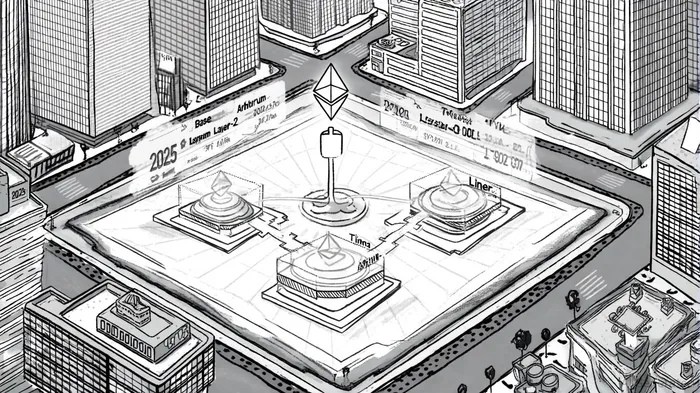
Coinbase's recent inclusion of Linea-a zero-knowledge EthereumETH-- Layer-2 (L2) solution-into its asset listing roadmap marks a pivotal moment in the crypto exchange's strategic pivot toward Ethereum-based scalability. This move, announced for October 6, 2025, underscores a broader industry shift toward L2 solutions, according to Coinbase's roadmap.
The Strategic Logic of Layer-2 Adoption
Layer-2 scaling solutions have become the bedrock of Ethereum's growth narrative in 2025. By processing transactions off-chain and verifying them on-chain via cryptographic proofs, these networks reduce costs and increase throughput. For instance, Optimistic Rollups and zkEVMs like LineaLINEA-- now enable over 40,000 transactions per second (TPS), dwarfing Ethereum's mainnet capacity of ~15–30 TPS, according to an altsignals analysis. This has slashed average transaction fees to $0.05–$0.50 on L2s, compared to $15–$30 on the mainnet, as noted in the CoinCryptoRank guide. Such efficiency has attracted both retail users and institutions, with platforms like ArbitrumARB-- and Polygon supporting decentralized applications (dApps) that were previously constrained by Ethereum's limitations.
Coinbase's Base, an optimistic rollup launched in 2023, exemplifies this trend. By Q2 2025, Base had surpassed $15.2 billion in Total Value Locked (TVL) and 1 million daily active users, according to BSC News. Its roadmap-targeting 1 million TPS, sub-$0.01 fees, and 200ms confirmation times-positions it to rival high-throughput chains like SolanaSOL-- and SuiSUI--, as outlined in a CoinRepublic piece. These ambitions are notNOT-- just technical; they reflect a strategic bet on Ethereum's future. As Vitalik Buterin noted, Base's non-custodial design and integration with Coinbase's 120 million monthly users, according to Coinbase user statistics, create a direct on-ramp for mainstream adoption, aligning with Ethereum's vision of a decentralized financial ecosystem.
Linea's Role in Coinbase's Ecosystem Expansion
Linea, developed by ConsenSys, adds another dimension to Coinbase's L2 strategy. As a zkEVM, Linea offers full Ethereum equivalence, enabling seamless interoperability with existing dApps and smart contracts. Its inclusion on Coinbase's platform-alongside a $30 million MetaMask airdrop and a SWIFT partnership for cross-border settlements-signals a dual focus on retail liquidity and institutional credibility. By Q2 2025, Linea's TVL had already reached $1 billion, with daily trading volumes averaging $140 million. These metrics suggest that Linea's integration could further diversify Coinbase's revenue streams while attracting developers and users seeking cost-effective alternatives to the mainnet.
The competitive landscape reinforces this logic. While Arbitrum leads in TVL ($18.09 billion) and DeFi maturity, and OptimismOP-- excels in governance innovation, Base's rapid user growth (25 million targeted by year-end) and Coinbase's infrastructure give it a unique edge. This fragmentation of the L2 market into specialized niches-consumer-facing applications for Base, DeFi for Arbitrum, and infrastructure scalability for Optimism-highlights the maturation of Ethereum's ecosystem, as shown in a BloxBytes analysis.
Institutional Legitimacy and Regulatory Alignment
Layer-2 adoption also addresses regulatory concerns that have long plagued crypto. By reducing energy consumption and centralization risks, L2s align with global regulatory priorities. For example, Base's non-custodial model-where Coinbase does not control user funds-has been praised for mitigating centralization critiques. Similarly, Linea's collaboration with SWIFT and Microsoft signals growing institutional trust in blockchain's utility for cross-border finance and enterprise applications.
This legitimacy is translating into tangible outcomes. In 2025, tokenized funds and ETFs leveraging L2s have surged, with institutions allocating capital to platforms offering high throughput and low costs. Coinbase's institutional custody assets, now exceeding $245.7 billion, reflect this trend, as the exchange positions itself as a bridge between traditional finance and decentralized infrastructure.
Risks and Fragmentation Challenges
Despite these gains, challenges persist. Liquidity fragmentation across L2s-where assets are siloed in rollups like Base, Arbitrum, and Linea-limits capital efficiency, as argued in a Mitosis paper. Solutions like Mitosis's Ecosystem-Owned Liquidity (EOL) aim to address this, but interoperability remains a work in progress. Additionally, the proliferation of L2s could dilute user growth if platforms fail to differentiate their value propositions.
For Coinbase, the key will be balancing innovation with user experience. While Base's FlashBlocks and Linea's zk-SNARKs offer technical advantages, the exchange must ensure these tools translate into tangible benefits for traders, developers, and institutional clients.
Conclusion: A New Era for Ethereum and Crypto Exchanges
Coinbase's embrace of Linea and its aggressive scaling of Base signal a strategic recalibration toward Ethereum's Layer-2 ecosystem. By leveraging these solutions, the exchange is not only addressing scalability bottlenecks but also positioning itself at the forefront of a broader industry shift. As L2s continue to drive down costs, increase throughput, and attract institutional capital, platforms that integrate these technologies-like Coinbase-stand to capture significant market share. For investors, this represents a compelling case: Ethereum's scalability narrative is no longer theoretical; it is being operationalized through real-world adoption, with Coinbase playing a central role.





Comentarios
Aún no hay comentarios