
Larry Ellison's $40.4B Guarantee and the Implications for Paramount Skydance's Takeover of Warner Bros. Discovery
The proposed takeover of Warner Bros.WBD-- Discovery by Paramount SkydancePSKY--, backed by OracleORCL-- CEO Larry Ellison's $40.4 billion guarantee, represents one of the most ambitious leveraged buyouts (LBOs) in modern media history. While specific financial terms of the guarantee-such as debt/equity structure, interest rates, and repayment conditions-remain undisclosed, the sheer scale of Ellison's involvement raises critical questions about the strategic and valuation implications of high-net-worth individual (HNI) backing in such transactions. This analysis explores how Ellison's intervention could reshape the media landscape, the risks inherent in HNI-driven LBOs, and the broader valuation dynamics at play.
Strategic Implications: Synergy, Control, and Long-Term Vision
Ellison's guarantee signals a strategic bet on the convergence of technology and media. 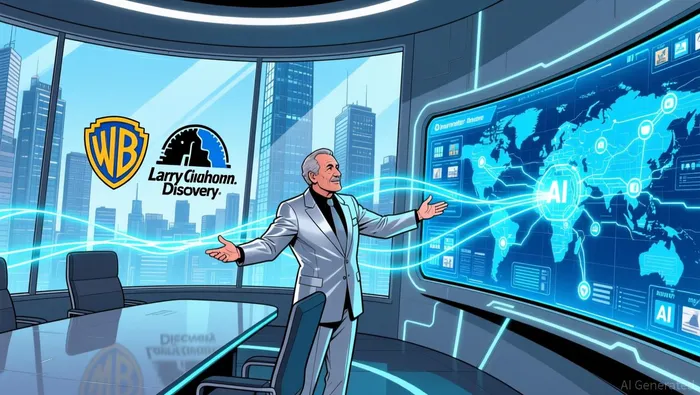 By injecting capital into Paramount Skydance, Oracle gains a unique opportunity to integrate its cloud infrastructure with Warner Bros. Discovery's vast content library and global distribution networks. This alignment could accelerate the digitization of media production, enhance data-driven content creation, and streamline streaming operations-key priorities in an industry grappling with declining ad revenues and subscriber fatigue.
Historically, HNIs like Ellison bring more than just capital; they offer operational expertise and long-term vision. For instance, Steve Jobs' influence on Disney's Pixar acquisition or Jeff Bezos' strategic overhauls at Amazon exemplify how HNIs can drive innovation and efficiency. In this case, Ellison's tech-centric approach may prioritize AI-driven content personalization, cloud-based collaboration tools for creatives, and cybersecurity enhancements for intellectual property-all of which could differentiate the merged entity in a crowded market.
However, the absence of detailed financing terms complicates risk assessment. If Ellison's guarantee is structured as debt, it could amplify financial leverage, increasing pressure to deliver short-term returns. Conversely, an equity stake might dilute existing shareholders but provide greater flexibility for reinvestment. Without clarity on these terms, the strategic roadmap remains partially obscured.
Valuation Dynamics: Confidence, Leverage, and Market Sentiment
The valuation of the combined entity hinges on how markets perceive Ellison's guarantee. Large HNI-backed LBOs often trigger a "halo effect," where the credibility of the backer inflates asset valuations. For example, Microsoft's $7.5 billion acquisition of LinkedIn in 2016 was partly justified by Bill Gates' endorsement, which reassured investors about the deal's strategic logic. Similarly, Ellison's involvement may signal confidence in the media sector's recovery, potentially attracting institutional investors and stabilizing stock prices during the transition.
Yet, valuation optimism must be tempered with caution. A $40.4 billion guarantee-regardless of structure-introduces significant debt servicing costs. If the merged entity's cash flows fall short of projections, interest expenses could erode profitability and downgrade credit ratings. This risk is amplified in a sector marked by declining linear TV revenues and rising competition from niche streaming platforms. Analysts would likely scrutinize the debt-to-EBITDA ratio post-merger, with anything above 6x raising red flags.
Risks and Challenges: Integration, Regulatory, and Market Volatility
The success of this takeover also depends on seamless integration. Merging two media giants with distinct corporate cultures-Paramount's Hollywood-centric ethos and Warner Bros. Discovery's diversified portfolio-requires meticulous planning. Ellison's tech-driven approach may clash with traditional creative workflows, risking talent attrition or production delays.
Regulatory hurdles further complicate the deal. Antitrust regulators in the U.S. and EU are increasingly wary of media consolidation, particularly in a market already dominated by Netflix, Disney, and Amazon. A $40.4 billion guarantee could draw scrutiny over market concentration, potentially leading to asset divestitures or operational restrictions.
Lastly, macroeconomic headwinds-such as rising interest rates and inflation-pose a wildcard. If borrowing costs remain elevated, the cost of servicing Ellison's guarantee could strain the merged entity's balance sheet, limiting reinvestment in growth areas like international expansion or original content.
Conclusion: A High-Stakes Bet on Media's Future
Larry Ellison's $40.4 billion guarantee underscores the growing role of HNIs in reshaping industries through large-scale LBOs. While the lack of detailed financial terms limits precise analysis, the strategic and valuation implications are clear: the deal could catalyze a tech-media renaissance or serve as a cautionary tale of overleveraging. For investors, the key will be monitoring how effectively the merged entity balances Ellison's technological ambitions with the financial realities of a volatile media landscape.
In the absence of official disclosures, this analysis relies on general principles of LBO dynamics and historical precedents. As more details emerge, stakeholders must remain vigilant to both the transformative potential and the inherent risks of this unprecedented transaction.





Comentarios
Aún no hay comentarios