
Large-Scale ETH Accumulation and Market Implications: The Rise of Institutional Influence in Crypto
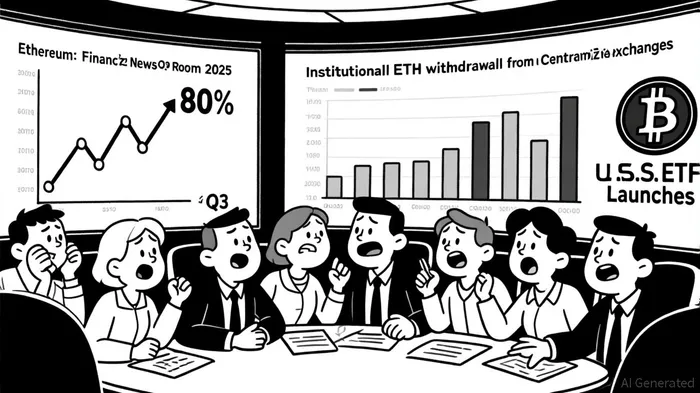
The cryptocurrency market is undergoing a seismic shift as institutional investors increasingly position EthereumETH-- (ETH) as a cornerstone of their portfolios. In Q3 2025 alone, ETHETH-- has surged by approximately 80% quarter-to-date, driven by heavy institutional accumulation[4]. This trend, marked by strategic withdrawals of over $230 million worth of ETH from centralized exchanges by major players like Matrixport and Abraxas Capital[3], signals a maturation of the crypto asset class and a redefinition of market dynamics.
Institutional Drivers: Upgrades, ETFs, and Strategic Positioning
Ethereum's appeal to institutions is rooted in its technological evolution and regulatory clarity. The Dencun upgrade (EIP-4844), implemented in June 2025, significantly reduced Layer-2 transaction fees and enhanced scalability, making Ethereum a more viable base layer for institutional-grade applications[1]. Coupled with the introduction of U.S. spot Ether ETFs in July 2024, which provided compliant access to Ethereum for large investors[1], these developments have redirected institutional strategies from speculative trading toward yield capture and infrastructure fees.
The shift is evident in on-chain activity. Institutions are increasingly withdrawing ETH from exchanges to stake it or hold it long-term, reducing circulating supply and reinforcing price stability[3]. This behavior contrasts with retail-driven volatility, as institutions leverage block trading and RFQ networks to execute large orders discreetly, tightening bid-ask spreads and fostering more orderly price discovery[1].
Market Implications: Altcoin Season and Structural Changes
The institutional embrace of ETH has broader implications. As confidence in Ethereum's stability grows, it has catalyzed a potential altcoin season, with projects like MAGACOIN FINANCE gaining traction as Ethereum's ecosystem expands[2]. Moreover, the influx of institutional capital is reshaping market structure. With reduced volatility and deeper liquidity, Ethereum is increasingly viewed as a “safe haven” within crypto, akin to gold's role in traditional markets.
However, challenges persist. Competing blockchains offering lower fees and faster speeds threaten Ethereum's dominance, while regulatory scrutiny around staking and custody remains a wildcard[3]. Institutions must also navigate the risks of overconcentration in a single asset, even as ETH's role in DeFi and payments solidifies[4].
Looking Ahead: A New Benchmark for Ethereum?
If current trends continue, Ethereum could break its all-time high, surpassing even the $4,878 peak of 2021. The combination of institutional demand, network upgrades, and ETF-driven inflows creates a self-reinforcing cycle of value creation. Yet, as with any asset class, sustainability will depend on balancing innovation with governance and regulatory alignment.
For investors, the takeaway is clear: Ethereum's institutional adoption is not a fleeting trend but a structural shift. Those who recognize this early may find themselves positioned to capitalize on a market that is rapidly evolving from speculative frenzy to institutional-grade infrastructure.






Comentarios
Aún no hay comentarios