
Large Cap Value Investing in an ESG-Driven Market: Uncovering Hidden Gems
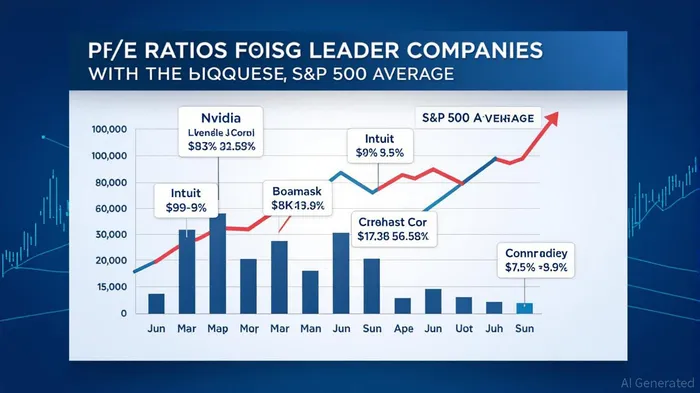
The intersection of environmental, social, and governance (ESG) investing and value-oriented strategies has become a focal point for investors seeking long-term outperformance. While ESG leaders often command premium valuations, recent data suggests that certain large-cap companies with strong ESG credentials are trading at attractive multiples, offering a unique opportunity to balance sustainability goals with financial returns. This analysis explores how investors can identify undervalued ESG leaders and evaluate their potential for sustained growth.
The ESG-Value Paradox: Premiums and Opportunities
High-quality U.S. large-cap stocks, including many ESG leaders, have historically traded at elevated valuations. A report by T. Rowe Price notes that these stocks are currently near historically expensive levels, raising concerns about near-term underperformance[3]. However, this does not negate the long-term appeal of ESG leaders. For instance, Nvidia and Intuit—both highlighted in The Motley Fool's list of top ESG stocks—have delivered annualized returns exceeding 50% and 100%, respectively, over the past decade[1]. Despite their strong ESG ratings and financial performance, these companies face challenges such as regulatory scrutiny (e.g., Intuit's deceptive advertising practices case[1]), which may temporarily depress valuations.
Undervalued ESG Leaders: A Closer Look
While ESG leaders like NvidiaNVDA-- and IntuitINTU-- are well-known, other large-cap companies with robust ESG profiles are trading at compelling valuations. LevelFields' analysis identifies Comcast Corp and Devon Energy Corp as undervalued plays[2]. ComcastCMCSA--, with a forward P/E of 10.2, offers a low multiple relative to its peers and a strong ESG score driven by its commitment to digital inclusion and renewable energy initiatives. Similarly, Devon EnergyDVN--, a leader in responsible oil and gas production, trades at a forward P/E of 6.8, reflecting its discounted valuation despite improving ESG metrics and a focus on carbon reduction[2].
Balancing ESG and Value: Strategic Considerations
Investors must navigate the tension between ESG premiums and value-oriented metrics. For example, Idexx Laboratories, a healthcare innovator with high ESG ratings, trades at a P/E of 22.5, below its 5-year average of 28. This discount may stem from sector-specific challenges, such as regulatory delays in veterinary diagnostics, but also presents an entry point for investors who value its long-term sustainability-driven innovation[1].
However, the broader market context matters. As T. Rowe Price cautions, a potential rotation toward value and small-cap stocks could benefit undervalued ESG leaders like Devon Energy and Comcast[3]. These companies combine defensive characteristics (e.g., stable cash flows) with ESG-aligned operations, positioning them to outperform in a shifting market environment.
Risks and Mitigation
The primary risk lies in the volatility of ESG metrics themselves. Regulatory changes, such as the FTC's scrutiny of Intuit[1], or sector-specific headwinds (e.g., energy transition costs for Devon Energy) could impact both ESG scores and financial performance. Investors should prioritize companies with transparent ESG reporting and diversified revenue streams. For example, Comcast's blend of media, technology, and broadband services provides resilience against sector-specific downturns[2].
Conclusion: A Path Forward
The search for undervalued ESG leaders requires a nuanced approach. While many ESG champions trade at premiums, companies like Devon Energy, Comcast, and Idexx LaboratoriesIDXX-- demonstrate that value and sustainability can coexist. By leveraging forward-looking metrics (e.g., forward P/E ratios[2]) and ESG performance analyses, investors can identify opportunities that align with both ethical and financial objectives. As the market evolves, these stocks may emerge as the next generation of ESG-driven outperformers.





Comentarios
Aún no hay comentarios