
Lantheus Navigates Strategic Shifts Amid Revised Outlook
Lantheus Health’s first-quarter 2025 earnings call revealed a company in transition, balancing near-term financial pressures with long-term ambitions to dominate the PET radiopharmaceutical market. While revenue edged up 0.8% year-over-year to $372.8 million, profitability metrics retreated, with GAAP EPS dropping 45.5% to $1.02. The downward revision to full-year 2025 guidance—lowering adjusted EPS to $6.60–$6.70 from $7.00–$7.20—underscores the challenges of executing a sweeping strategic overhaul.
The shift is clear: Lantheus is divesting slower-growing SPECT imaging businesses to focus on faster-growing PET radiodiagnostics and therapeutics. This pivot is both a strategic bet and a necessity. The 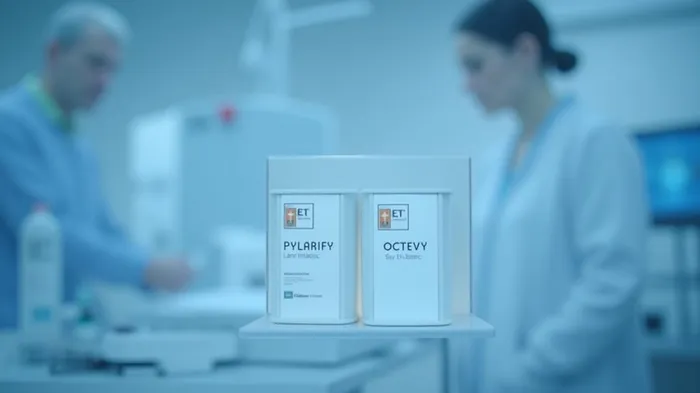 highlights the company’s vision. But investors must weigh whether the near-term pain of restructuring—lowered margins, operational risks—will pay off in a stronger, more focused enterprise.
Financials: Growth Hurdles and Cash Reserves
Despite modest revenue growth, Lantheus’ profitability metrics tell a cautionary tale. Adjusted operating income fell 7.1% to $144.3 million, while free cash flow dropped 16.9% to $98.8 million. The decline in cash flow reflects higher costs tied to acquisitions and divestitures, though the company’s total cash reserves rose to $938.5 million after a $50 million prepayment for the Evergreen acquisition. This liquidity provides a cushion for strategic moves, but shareholders will watch closely to ensure capital is deployed wisely.
Product Portfolio: Winners and Losers
- PYLARIFY (Pylarify™): The oncology imaging staple saw sales dip 0.5% to $257.7 million, pressured by pricing declines and competition. This is a critical product line, accounting for 70% of revenue, so sustaining its performance will be vital.
- DEFINITY (Definity®): Echocardiography sales rose 3.5% to $79.2 million, a bright spot in a mixed portfolio.
- TechneLite: The SPECT product’s 9.2% sales drop to $19.7 million reinforces the rationale for its divestiture to SHINE Technologies.
The $10.7 million jump in strategic partnership revenue, up 65%, signals progress in expanding research collaborations—a positive sign for future pipeline growth.
Strategic Shifts: Acquisitions and Divestitures
Lantheus’ moves in Q1-Q2 2025 redefine its business model:
- Evergreen Theragnostics Acquisition: Adding OCTEVY, a PET imaging agent for neuroendocrine tumors, and a radioligand therapy facility strengthens Lantheus’ position in theranostics—the convergence of diagnostics and therapy.
- Life Molecular Imaging Deal: Neuraceq®, an Alzheimer’s imaging agent, aligns with the company’s focus on neurology diagnostics. Combined with its tau imaging agent MK-6240 (see below), this positions Lantheus as a leader in neurodegenerative disease diagnostics.
- SPECT Divestiture: Selling its SPECT business to SHINE by end-2025 removes a drag on margins while freeing resources for high-growth PET assets.
These moves come with risks. Integrating Evergreen and LMI’s operations will test Lantheus’ execution, while competition for PYLARIFY remains a persistent threat.
Pipeline Momentum: A Tau Imaging Breakthrough?
The star of Lantheus’ pipeline is MK-6240, a tau protein imaging agent for Alzheimer’s. With pivotal studies meeting primary endpoints, an FDA NDA submission by Q3 2025 is on track. If approved, MK-6240 could capture a $1 billion+ market, complementing its beta-amyloid imaging offerings.
Meanwhile, LNTH-2503, a lutetium-177 theranostic pair for small cell lung cancer, secured EMA Phase 1 approval, advancing its therapeutic potential. However, the abandonment of PNT2002—due to trial complexities—highlights the risks inherent in clinical development.
Risks and Challenges
- Pipeline Execution: Delays in MK-6240’s NDA or LNTH-2503’s trials could disrupt growth plans.
- Integration Risks: Smooth assimilation of Evergreen and LMI’s teams and facilities is non-negotiable.
- Competitive Pressure: PYLARIFY’s sales stagnation underscores the need for Lantheus to differentiate in an increasingly crowded oncology imaging space.
Conclusion: A High-Reward, High-Risk Play
Lantheus’ lowered guidance reflects short-term growing pains, but its strategic realignment positions it to capitalize on the $4.5 billion global PET radiopharmaceutical market, projected to grow at 8.5% annually. With $938.5 million in cash and a robust pipeline—led by the potentially game-changing MK-6240—Lantheus could emerge as a dominant player.
However, investors must remain patient. The company’s execution on integration, regulatory approvals, and margin improvement will determine whether this transition delivers long-term value. For now, Lantheus is a speculative bet on its ability to turn strategic vision into sustainable growth.
In a sector where precision medicine is reshaping diagnostics, Lantheus’ focus on PET and theranostics aligns with industry trends. The question remains: Can it navigate the near-term turbulence to realize its ambitious potential? The answer could come sooner than expected, with MK-6240’s NDA decision—and its implications for Lantheus’ future—hanging in the balance.





Comentarios
Aún no hay comentarios