
Lands' End's Distributed Commerce Strategy and the Quest for Undervalued Retail Assets in a Post-Pandemic Market
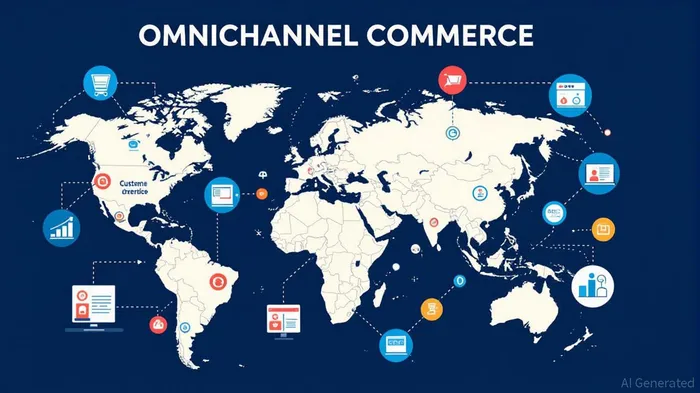
In the post-pandemic retail landscape, Lands' End, Inc. (NASDAQ: LE) has emerged as a case study in strategic reinvention. By pivoting to a distributed commerce model—prioritizing e-commerce, third-party partnerships, and digital innovation—the company has navigated economic volatility while positioning itself to capitalize on undervalued retail assets. This analysis explores how Lands' End's operational agility and asset-light approach align with broader market trends, and whether its financial metrics and real estate strategy justify a reevaluation of its valuation.
A Distributed Commerce Model: Resilience Through Digital and Partnership-Driven Growth
Lands' End's shift to distributed commerce has been a lifeline in the post-pandemic era. By 2020, the company had already transitioned 95% of its revenue to e-commerce, with 80% of that coming from direct-to-consumer (DTC) sales[1]. This digital-first strategy allowed it to avoid the operational crises faced by brick-and-mortar-heavy competitors during lockdowns. In 2025, the company is further refining this model by expanding its presence on third-party platforms like Kohl'sKSS-- and Amazon[1], leveraging its strong online performance to reach new customer segments.
The company's focus on mobile shopping—now the preferred channel for long-term customer engagement—reflects a broader industry trend toward seamless, tech-enabled experiences[1]. Additionally, Lands' End's product lineup, emphasizing comfort, value, and functionality, aligns with post-pandemic consumer preferences for home-centric and multifunctional goods[1]. These strategic choices have enabled the company to maintain profitability despite macroeconomic headwinds, including tariff-related pressures and inflationary costs[2].
Financial Metrics: A Mixed Picture of Valuation and Resilience
Lands' End's valuation story is complex. On one hand, its price-to-earnings (P/E) ratio of 15.2 in 2025 is significantly lower than the retail industry average of 20[4], suggesting potential undervaluation. This discrepancy may stem from the market's cautious outlook on the retail sector, which has been weighed down by high vacancy rates and shifting consumer behaviors[3]. On the other hand, the company's EBITDA is projected to decline from $84.7 million in 2024 to $75 million in 2025[2], raising concerns about its ability to sustain growth.
Peer comparisons add nuance to this debate. While Lands' End trails competitors like GenescoGCO-- and Citi TrendsCTRN-- in revenue growth and profitability metrics[5], its asset-light model and disciplined inventory management—reducing inventory for nine consecutive quarters—highlight operational efficiency[2]. Analysts have set a 12-month price target of $20.00 for Lands' End, implying a 38.89% upside[5], but caution remains due to its high volatility and sensitivity to market conditions[2].
Undervalued Retail Assets: Strategic Repurposing in a Transformed Market
Lands' End's limited physical retail footprint—26 company-operated stores as of 2020[1]—has historically been viewed as a weakness. However, the post-pandemic shift toward adaptive reuse and experiential retail has turned this into an opportunity. The company's 163 retail locations (as of 2025[2]) could be repositioned as experiential hubs or community-centric spaces, aligning with trends that prioritize flexibility and multi-use properties[3].
The broader commercial real estate market supports this argument. Retail properties, particularly those in urban and suburban areas with strong foot traffic, are seeing renewed interest as investors seek undervalued assets[3]. For example, grocery-anchored centers and mixed-use developments are outperforming traditional retail spaces[6], suggesting that Lands' End's properties could gain value through strategic repurposing. This aligns with the company's partnerships with third-party platforms, which reduce reliance on physical locations while expanding its reach[1].
Conclusion: A Case for Strategic Investment
Lands' End's distributed commerce strategy and asset-light model position it to thrive in a post-pandemic market where agility and digital innovation are paramount. While its financial metrics suggest undervaluation—particularly when compared to industry averages—the company's ability to adapt to shifting consumer demands and repurpose its retail assets could unlock long-term value. Investors should monitor its progress in leveraging third-party partnerships, optimizing inventory efficiency, and capitalizing on the evolving real estate landscape. For now, Lands' End remains a high-risk, high-reward proposition, with its valuation hinging on its capacity to execute its digital and physical transformation strategies.





Comentarios
Aún no hay comentarios