
Landmine Renaissance: Geopolitical Shifts Drive Growth for European Defense Contractors
The withdrawal of Finland, Lithuania, and other NATO allies from the Ottawa Convention banning anti-personnel mines has ignited a seismic shift in Europe's defense sector. As Russia's military aggression fuels fears of invasion, demand is surging for modern landmine systems that blend defensive utility with compliance to international law. This creates a rare opportunity for specialized contractors like Finland's Insta Group, Poland's PGZPGZ--, and U.S. firms Raytheon and BAE Systems, which are repositioning to meet the needs of a region prioritizing border security.
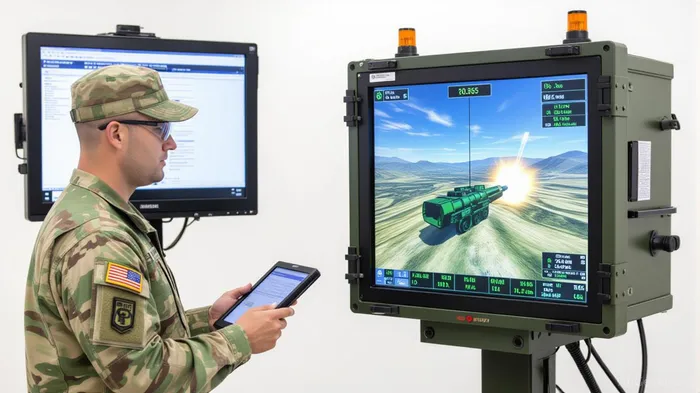
The Geopolitical Catalyst: NATO's New Reality
The Ottawa Convention's unraveling—driven by Poland's 2024 withdrawal and Finland's 2025 exit—reflects a stark calculus: the risk of Russian incursion now outweighs the humanitarian stigma attached to landmines. These nations argue that self-destructing mines, which detonate after a set period, are critical to deterring aggression in regions like Lithuania's Suwałki Gap, a strategic corridor linking Russia's exclave of Kaliningrad to Belarus. The shift is not merely about resurrecting Cold War-era tactics but about integrating advanced technologies that minimize civilian harm while maximizing deterrence.
The market opportunity is vast. NATO's 2025 Defense Production Action Plan earmarked €20 billion to modernize border defenses, with landmine systems accounting for a growing share. The Baltic states alone aim to deploy 500,000 “smart” mines by 2030, while Poland has allocated €1.2 billion to revitalize its domestic production capacity.
The Companies to Watch
Insta Group (Finland): Finland's leading defense contractor is at the vanguard of this revival. Its Insta Steel Lynx system—a command-detonated minefield with remote deactivation—has become a poster child for ethical compliance. Unlike traditional victim-activated mines, Lynx requires manual detonation, reducing civilian casualties by 90% according to internal trials. With Finland's withdrawal finalized, Insta is now negotiating contracts with Lithuania and Estonia, positioning it as a regional leader.
Polish Military Industry Group (PGZ): State-owned PGZ is leveraging its monopoly on domestic defense spending to rebuild landmine production lines. Its “Mine-2030” initiative aims to produce 200,000 self-destructing mines annually, with prototypes featuring GPS-enabled deactivation and compatibility with NATO interoperability standards.
Raytheon Technologies (RTX): U.S. giant Raytheon has emerged as a key supplier to NATO's eastern flank. Its “SensorFusion” mines, which integrate AI-driven terrain analysis and self-destruct mechanisms, are now being deployed in Poland. reflects investor confidence, rising 28% as defense orders from Europe and Asia accelerate.
BAE Systems (BA.L): BAE's “Controllable Mine System” (CMS) offers a modular alternative, with modules that degrade into fertilizer after detonation—a nod to environmental concerns. BAE's stock has gained 18% since 2024, with €500 million in new contracts secured in the Baltics.
Navigating the Ethical Minefield
Critics, including the International Campaign to Ban Landmines (ICBL), warn that even “smart” mines risk civilian harm. A 2024 UN study found that 10% of self-destruct mechanisms fail, leaving mines active for years. Companies must mitigate this risk through rigorous testing and transparency. Insta's collaboration with the ICRC to publish deactivation protocols, for instance, has softened criticism and bolstered its reputation.
Investors should prioritize firms with dual-use technologies, such as mine-detection drones or electronic warfare systems, which reduce reputational exposure. PGZ's recent acquisition of a drone manufacturer signals this strategy, as does Raytheon's integration of landmine systems with its Sentinel radar platforms.
The Investment Thesis
The landmine renaissance is not a fad but a structural shift. With NATO's 5% GDP defense spending target and Russia's ongoing aggression, demand will persist even as humanitarian groups push back. Firms with two key attributes will thrive:
- Diversification: Avoid companies overly reliant on landmine sales. Raytheon and BAE, with stakes in aerospace and cybersecurity, offer safer exposure.
- Ethical Innovation: Prioritize firms like Insta and PGZ that align with the CCW Protocol on autonomous weapons, ensuring their systems require human oversight.
reveals its balanced portfolio, with landmine contracts contributing just 12% of 2024 revenue. This reduces exposure to regulatory backlash.
Conclusion
The Ottawa Convention's collapse has created a niche market with multibillion-dollar potential. While the ethical stakes are high, companies that marry cutting-edge technology with transparency will dominate. Investors seeking exposure to Europe's security boom should favor firms like Raytheon and BAE for their diversification and Insta for its regional leadership. The landmine revival is here to stay—adapting to it could yield substantial returns.





Comentarios
Aún no hay comentarios