
LandBridge's Strategic Pivot into Renewable Energy: Assessing Long-Term Value in the U.S. Solar Boom
The U.S. solar energy sector is at a pivotal juncture, navigating a landscape of rapid growth, policy uncertainty, and evolving market dynamics. For LandBridgeLB-- Co LLC, a Permian Basin-focused land management and development company, the transition to renewable energy represents both a strategic imperative and a calculated risk. With a portfolio of over 273,000 surface acres in one of the nation's most energy-rich regions, LandBridge has positioned itself to capitalize on the solar boom while mitigating exposure to the volatility of traditional fossil fuel markets. This analysis evaluates LandBridge's renewable energy initiatives, sector positioning, and long-term value creation potential amid the challenges and opportunities of the 2025–2030 solar growth cycle.
Strategic Transactions and Renewable Energy Expansion
LandBridge's recent transactions underscore its commitment to leveraging land assets for renewable energy. In October 2025, the company finalized the sale of a 250 MW solar project on 3,000 acres in Reeves County, Texas, to a leading energy infrastructure developer. This deal included an upfront cash payment and contingent future payments tied to developmental milestones, providing immediate liquidity while retaining upside potential, according to a Morningstar release. Simultaneously, LandBridge partnered with NRG Energy to explore a 1,100 MW natural gas-powered plant in the same region, designed to support a data center project, as described in a LandBridge press release. While natural gas is not a renewable resource, this hybrid approach aligns with LandBridge's "powered land" strategy, which seeks to monetize land through diversified energy infrastructure, including both clean and transitional energy solutions.
These moves reflect a broader industry trend: the integration of renewable energy with digital infrastructure. As data centers-high-consumption energy users-expand across the U.S., companies like LandBridge are uniquely positioned to offer tailored power solutions. By pairing solar generation with natural gas backup, LandBridge addresses reliability concerns while adhering to regional energy demands, as noted in a Sahm Capital analysis.
Sector Positioning in a Shifting Market
The U.S. solar market faces a complex outlook. According to the Solar Market Insight Report Q3 2025, the sector is projected to grow at an average annual rate of 3% from 2025 to 2030, installing approximately 246 gigawatts direct current (GWdc) of capacity. However, this forecast reflects a downward revision due to policy shifts, including the earlier phase-out of federal tax credits under the One Big Beautiful Bill Act (OBBBA) and permitting challenges. Despite these headwinds, solar remains the dominant source of new electricity generation, accounting for 56% of additions in the first half of 2025.
LandBridge's geographic focus in Texas-a state with robust solar adoption and transmission infrastructure-positions it to outperform peers. Texas alone is expected to lead U.S. solar growth, driven by low land costs, favorable regulations, and high irradiance levels, according to a GuruFocus analysis. LandBridge's 273,000-acre portfolio in the Permian Basin provides a scalable platform for solar projects, with existing infrastructure reducing development costs and timelines.
Long-Term Value Creation and Risk Mitigation
LandBridge's value proposition lies in its ability to generate recurring revenue through land-based energy assets. The solar project sale in Reeves County, for instance, combines immediate cash flow with future earnings, creating a "double-lease" model that enhances asset utilization, as described in the Morningstar release. This approach contrasts with traditional land management, where income is primarily derived from oil and gas royalties. By diversifying into renewables, LandBridge reduces its exposure to commodity price swings while aligning with global decarbonization trends, as noted by Farrelly Mitchell.
However, the company's long-term success hinges on navigating policy risks. The U.S. government's recent prioritization of fossil fuel development-exemplified by expedited permitting for oil projects and suspended offshore wind leases-introduces uncertainty for renewable energy players, a point analyzed in a Morgan Lewis analysis. LandBridge's partnership with NRG Energy, which includes a natural gas component, may serve as a hedge against these policy shifts. Additionally, the company's capital-light model-selling developed projects while retaining future payments-limits upfront investment risks, a strategy highlighted by Sahm Capital.
Competitive Landscape and Financial Outlook
LandBridge's competitors in the renewable energy space, such as NextEra Energy and Invenergy, benefit from larger balance sheets and established project pipelines. However, LandBridge's niche in land management offers a unique advantage: its ability to rapidly deploy projects on pre-acquired assets without the need for extensive land acquisition. This agility is critical in a sector where permitting delays and supply chain bottlenecks are prevalent, according to SEIA.
Financially, LandBridge's Q3 2025 results, while not fully disclosed, suggest resilience. Analysts estimate the company's fair value at $69.43, implying a 17.5% undervaluation based on current stock prices, per Sahm Capital. This valuation assumes successful execution of its DBR Solar initiative and continued diversification into energy infrastructure. However, LandBridge's reliance on the Permian Basin remains a vulnerability; any slowdown in regional energy demand could disproportionately impact its revenue streams, a concern raised in the Morgan Lewis analysis.
Conclusion: A Calculated Bet on the Future
LandBridge's pivot into renewable energy is a strategic response to both market opportunities and industry risks. By leveraging its land holdings for solar and hybrid energy projects, the company is positioning itself as a bridge between traditional and clean energy economies. While the U.S. solar market faces near-term headwinds, LandBridge's geographic focus, transactional flexibility, and partnerships with developers like NRG Energy provide a strong foundation for long-term value creation.
For investors, the key question is whether LandBridge can maintain its momentum amid policy volatility and sector-wide challenges. The company's recent transactions and strategic adaptability suggest optimism, but success will depend on its ability to scale renewable projects while balancing transitional energy needs. In a sector defined by uncertainty, LandBridge's hybrid approach may prove to be its most enduring strength. 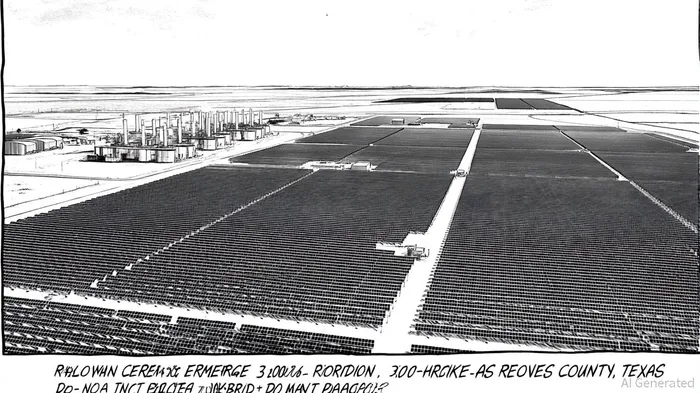





Comentarios
Aún no hay comentarios