
Lamar Advertising's Q3 2025 Earnings Outlook: Navigating Digital Transformation and Macroeconomic Headwinds in a Resilient Outdoor Advertising Sector
The outdoor advertising sector is at a pivotal inflection point in 2025, driven by rapid digitalization and macroeconomic pressures that are reshaping revenue dynamics for companies like Lamar Advertising CompanyLAMR-- (Nasdaq: LAMR). As the third-quarter earnings season approaches, investors are scrutinizing whether Lamar's aggressive digital transformation can offset broader economic uncertainties and sustain its growth trajectory.
Lamar's Q3 2025 Earnings: A Barometer for Strategic Resilience
Lamar Advertising is scheduled to release its Q3 2025 earnings on November 6, 2025, with a conference call to follow. The company's Q2 2025 performance set a high bar: it reported revenue of $579.3 million, exceeding estimates of $571.7 million, and adjusted funds from operations (AFFO) of $1.52 per share, surpassing the projected $1.45, according to the Lamar SWOT analysis. LamarLAMR-- subsequently raised its full-year 2025 AFFO guidance to $8.1–$8.2 per share, reflecting confidence in its operational execution. However, Q1 2025 revenue ($505.43 million) saw a 12.8% sequential decline, underscoring volatility in the sector as noted in the Lamar earnings transcript.
The critical question for Q3 is whether Lamar can maintain its Q2 momentum amid macroeconomic headwinds. The company's digital transformation initiatives-such as converting static billboards to digital displays and expanding programmatic advertising-will be key differentiators. Lamar aims to add 350 new digital units in 2025 and achieve 15% of digital revenue from programmatic channels, a segment that grew 30% year-over-year in Q1, as discussed on the earnings call. These efforts align with industry trends, as digital out-of-home (DOOH) advertising now accounts for 55% of global outdoor ad spend, growing at a 12% CAGR according to an Outdoor Advertising Market report.
Historical data from 14 earnings releases between 2022 and 2025 shows that LAMRLAMR-- has delivered an average cumulative excess return of +1.5% at the 10-day mark compared to the benchmark, with a win rate of 60–70% in the first two weeks post-announcement. However, these results lack statistical significance at the 95% confidence level, and any alpha generated appears modest after accounting for transaction costs.
Digital Transformation: Lamar's Strategic Lifeline
Lamar's pivot to digital is not merely a response to technological trends but a necessity for survival in a sector where static billboards yield only a fraction of the revenue potential of their digital counterparts. According to the company's strategic plan, the company aims to increase digital display counts by 12% in top 50 designated market areas (DMAs) and achieve 99.5% operational uptime for its digital network, as outlined in the Lamar SWOT analysis. This focus on reliability and scalability is critical, as DOOH's ability to deliver dynamic content and real-time analytics has made it a preferred medium for advertisers seeking measurable ROI.
Moreover, Lamar's self-serve programmatic platform, set to launch in late 2025, could unlock new revenue streams by enabling advertisers to automate ad buying. Programmatic advertising already contributes 10% of Lamar's digital revenue, and the company's goal to reach 15% by year-end underscores its commitment to this channel, consistent with the Lamar strategic plan. This aligns with broader industry adoption, as programmatic DOOH is projected to grow at a 20% CAGR through 2030, per a Mordor Intelligence analysis.
Macroeconomic Headwinds and Sector-Wide Challenges
Despite Lamar's strategic agility, macroeconomic pressures loom large. The outdoor advertising industry, while resilient, faces headwinds from cautious corporate spending amid inflationary pressures and recession risks. Lamar's CEO noted in Q2 that while national and local advertising proposals are increasing, many advertisers remain hesitant to commit to long-term contracts, a point reflected in the earnings transcript. This hesitancy is echoed across the sector: global outdoor ad spending grew by only 3.2% in 2025, below the 5.7% CAGR projected for the 2025–2032 period in the Outdoor Advertising Market report.
Additionally, Lamar must contend with competition from digital media giants like Google and Meta, which are siphoning ad budgets with their data-driven targeting capabilities. However, Lamar's localized sales force and premium real-estate portfolio-its billboards account for 88.4% of revenue, per the LAMR revenue breakdown-provide a competitive moat. The company's focus on AI-driven dynamic pricing and partnerships with mobility data providers to enhance audience targeting further strengthens its position, as discussed in the Lamar strategic plan.
Industry Tailwinds: A $63.89 Billion Opportunity by 2032
The broader outdoor advertising sector remains a compelling long-term story. The global market, valued at $43.34 billion in 2025, is projected to reach $63.89 billion by 2032, driven by smart city initiatives and the proliferation of interactive DOOH displays, according to the Outdoor Advertising Market report. Lamar's digital billboards, which generate 4–6 times the revenue of static counterparts, are well-positioned to capture this growth. For instance, its focus on high-traffic urban areas-where digital billboards can leverage real-time data to adjust content-mirrors the industry's shift toward data-driven engagement, as discussed on the earnings call.
Regulatory challenges, such as Europe's visual pollution laws, could limit new billboard permits but are also driving innovation in premium locations. Lamar's strategy to retrofit existing structures with digital capabilities aligns with this trend, as seen in its 99.5% uptime target for digital networks described in the Lamar strategic plan.
Conclusion: A Calculated Bet on Digital Resilience
Lamar Advertising's Q3 2025 earnings will serve as a critical test of its ability to balance short-term macroeconomic pressures with long-term digital transformation. While the company's Q2 results and revised AFFO guidance suggest operational strength, the path to $8.1–$8.2 per share in full-year AFFO hinges on the success of its digital initiatives. Investors should watch for updates on digital unit deployments, programmatic revenue growth, and capital allocation efficiency.
In a sector poised for $63.89 billion in value by 2032, Lamar's strategic focus on DOOH and programmatic advertising positions it to outperform peers. However, the company must navigate near-term economic caution and competitive threats with disciplined execution. For now, the data suggests that Lamar's digital pivot is not just a defensive play-it's a calculated bet on the future of outdoor advertising.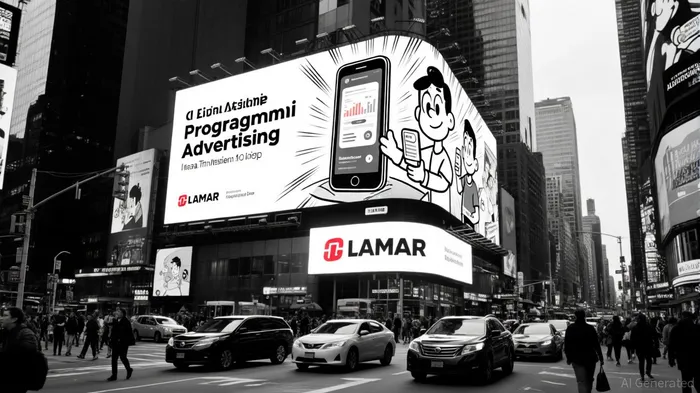





Comentarios
Aún no hay comentarios