
The Labor Quality Dilemma: How Small Business Pain Points Signal Strategic Investment Opportunities in 2025
The global economy in 2025 is defined by a paradox: small businesses remain optimistic about growth despite persistent labor quality challenges. According to a report by the National Federation of Independent Business (NFIB), 21% of small business owners cite labor quality as their most pressing issue, a figure unchanged since July 2024[1]. This stagnation is compounded by a 32% rate of unfilled job openings in August 2025, far above historical averages[1]. While 81% of hiring businesses report a lack of qualified applicants[5], the broader economic context—rising operating costs and restrictive immigration policies—further exacerbates the problem[1]. Yet, this crisis is not merely a drag on growth; it is a catalyst for innovation and a signal of undervalued sectors ripe for strategic investment.
Labor Shortages as a Catalyst for Automation
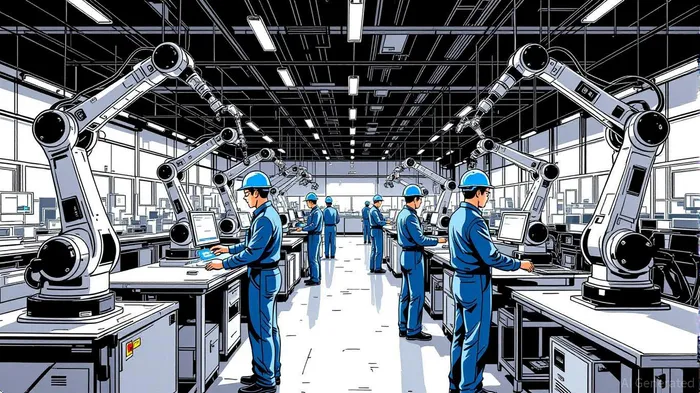
The labor quality dilemma is most acute in labor-intensive industries such as construction, manufacturing, and logistics. In construction, nearly half of small businesses report unfilled roles[1], while 34% of SMEs globally face production bottlenecks due to workforce shortages[1]. These challenges are driving a critical shift: the adoption of automation and AI. However, progress is uneven. Only 12% of SMEs have integrated robotics, compared to 60% of large manufacturers[1]. The primary barrier? Upfront costs, cited by 43% of SMEs[1]. Yet, as leasing models, government grants, and modular automation solutions emerge, the cost barrier is eroding.
For instance, FANUC's “lights-out” factories in Japan demonstrate how AI-driven systems can operate with minimal human intervention, while Philips' razor manufacturing plant in the Netherlands uses 128 robots alongside nine human workers for quality assurance[4]. These hybrid models highlight a key insight: automation is not a replacement for labor but a complement to it. Humans remain essential for oversight, maintenance, and quality control, particularly in high-stakes industries like aerospace and medical device manufacturing[4].
Undervalued Sectors and Investment Opportunities
Beyond construction, three sectors stand out as both labor-challenged and automation-ready: industrial automation, healthcare, and logistics.
Industrial Automation: The industrial automation controls market is projected to grow from $59.6 billion in 2024 to $104.9 billion by 2033, driven by the need for productivity and supply chain resilience[5]. SMEs in manufacturing are increasingly adopting collaborative robots (cobots) for tasks like packaging and welding, which require lower upfront investment and offer quick ROI[1]. The integration of AI with robotics is also accelerating, enabling systems to adapt to dynamic variables and optimize production in real time[3].
Healthcare: AI is transforming diagnostics, drug development, and clinical workflows. Companies like Tempus and PathAI are leveraging machine learning to improve diagnostic accuracy and personalize treatment plans[5]. Labor shortages in healthcare—particularly in nursing and diagnostics—are creating demand for AI tools that reduce human workload while maintaining quality.
Logistics: AI-powered supply chain platforms are addressing disruptions caused by trade wars and natural disasters. IBM's cognitive supply chain system, for example, achieved 100% order fulfillment during the pandemic by dynamically rerouting resources[4]. With 32% of small businesses reporting logistics-related job openings[1], investments in AI-driven inventory management and autonomous delivery systems are gaining urgency.
Strategic Implications for Investors
The labor quality dilemma is not a dead end but a pivot point. For investors, the key lies in identifying sectors where automation adoption is accelerating due to labor constraints. Industrial automation, healthcare, and logistics are prime examples, but the opportunities extend further. Energy and education, for instance, are leveraging AI to streamline compliance workflows[5] and personalize learning[5], respectively.
However, success requires nuance. Automation is not a panacea; it demands integration with human expertise and legacy systems[1]. Tesla's struggles with excessive automation in Model 3 production underscore the risks of overreliance on technology[4]. Investors must prioritize companies that balance AI adoption with workforce upskilling and hybrid operational models.
Conclusion
The labor quality crisis facing small businesses is a mirror reflecting broader structural shifts in the global economy. While the pain points are real, they are also a roadmap to opportunity. By targeting undervalued sectors where automation is addressing labor gaps—industrial automation, healthcare, and logistics—investors can capitalize on the convergence of necessity and innovation. As the NFIB notes, small business optimismOP-- remains resilient[1], but the path to growth is increasingly defined by those who embrace the tools to overcome their most pressing challenges.






Comentarios
Aún no hay comentarios