
U.S. Labor Market Reporting Uncertainty: A Volatility Catalyst and Strategic Asset Allocation Imperative
The U.S. labor market has become a focal point of economic and financial uncertainty, with recent revisions to employment data and delayed reports exacerbating market volatility. In July 2025, the Bureau of Labor Statistics (BLS) reported a mere 73,000 jobs added, far below expectations, while the unemployment rate climbed to 4.3%, the highest in nearly three years[2]. These figures, compounded by downward revisions to prior months' data—such as May and June 2025 showing just 19,000 and 14,000 jobs added, respectively—have raised alarms about a potential economic slowdown[2]. Such uncertainty has triggered a shift in investor behavior, with defensive assets and international equities gaining traction as traditional equity markets face headwinds[5].
Historical Precedents: 2008 and 2020
The 2008 financial crisis and 2020 pandemic offer critical lessons on how delayed labor data and economic shocks reshape asset allocation and policy responses. During the 2008 crisis, the Federal Reserve slashed interest rates to near-zero and launched quantitative easing (QE) to stabilize markets[1]. However, delayed labor reports—such as the prolonged unemployment peak of 10% in late 2009—compounded uncertainty, leading to a protracted recovery[3]. Investors shifted toward safer assets, with the 60/40 portfolio (60% equities, 40% bonds) becoming a cornerstone of risk management[2].
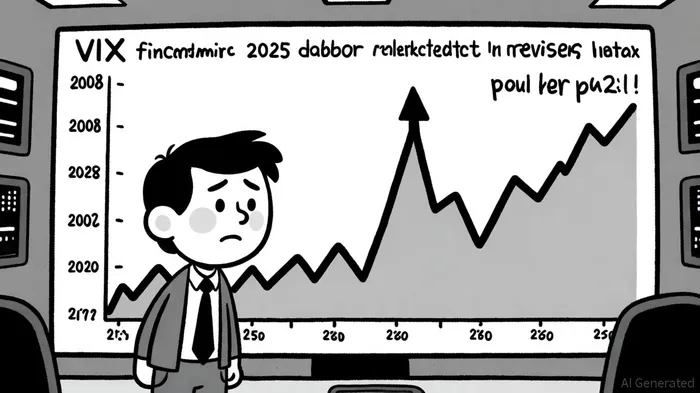
The 2020 pandemic, by contrast, saw an abrupt 14.8% unemployment spike in April 2020, the highest since 1948[2]. The Fed's rapid response included emergency lending facilities and asset purchases, while fiscal stimulus—like direct payments to individuals—helped cushion the blow[1]. Despite these measures, delayed labor data during the pandemic's early stages fueled volatility, with the VIX (volatility index) peaking at 82.69 in March 2020[5]. Asset allocation strategies adapted by emphasizing liquidity and diversification, with investors increasingly turning to commodities and real estate to hedge against inflation and geopolitical risks[2].
Current Challenges: Policy Uncertainty and Structural Weaknesses
Today's labor market faces a unique confluence of challenges. The BLS has faced operational hurdles, including a 30-minute delay in releasing the August 2024 preliminary benchmark revision[3], raising concerns about the reliability of key economic indicators. Structural issues—such as a 20% reduction in BLS staffing since 2017 and outdated systems—further strain the agency's capacity[1]. These delays, coupled with policy uncertainties like Trump-era tariffs and immigration restrictions, have created a “perfect storm” of volatility[2].
The Federal Reserve's cautious stance—hinting at potential rate cuts in response to weak labor data—reflects the central bank's dilemma: balancing inflation control with the risk of a recession[5]. Meanwhile, investors are recalibrating portfolios. A 60/40 strategy, once a staple, now faces headwinds due to the erosion of the equity-bond negative correlation[4]. As a result, allocations to alternatives like real estate, commodities, and private equity are rising[4].
Strategic Implications for Investors
The evolving landscape demands a nuanced approach to asset allocation. Historical data suggests that during periods of labor market uncertainty, defensive sectors (e.g., utilities, healthcare) and international equities outperform[5]. Additionally, hedging tools like volatility-linked options and inflation-protected bonds (TIPS) can mitigate downside risks[2]. For institutional investors, dynamic rebalancing and scenario analysis are critical to navigating policy-driven shocks[1].
Conclusion
The U.S. labor market's reporting uncertainties underscore the need for adaptive investment strategies. While historical crises like 2008 and 2020 provide a blueprint for resilience, today's environment demands greater agility. Investors must prioritize diversification, liquidity, and macroeconomic agility to navigate the interplay of delayed data, policy shifts, and structural labor market weaknesses. As the Fed contemplates rate cuts and policymakers grapple with trade-offs, the markets will remain a barometer of both economic fundamentals and institutional credibility.







Comentarios
Aún no hay comentarios