
U.S. Labor Market Dynamics and Immigration Policy Shifts: Short-Term Sectoral Impacts on Agriculture, Tech, and Healthcare
The U.S. labor market in 2025 is navigating a critical inflection point shaped by evolving immigration policies and their sectoral ripple effects. As industries reliant on foreign labor—particularly agriculture, technology, and healthcare—face mounting pressures, investors must assess how policy-driven labor shortages and mechanization trends could reshape market dynamics in the short term.
Agriculture: A Perfect Storm of Enforcement and Demand
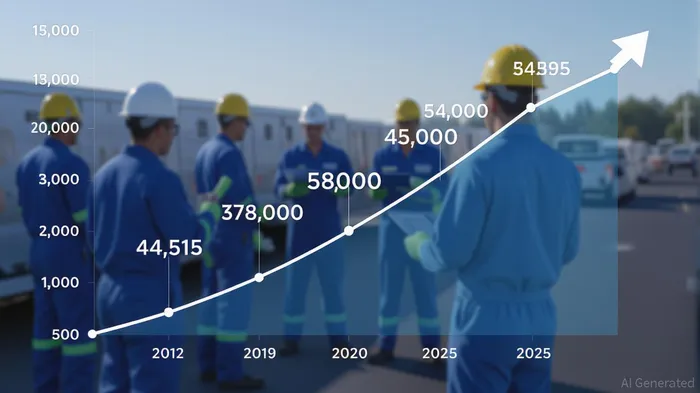
The agricultural sector remains the most visibly impacted by immigration policy shifts. According to a report by the American Enterprise Institute, the H-2A visa program—which facilitates temporary foreign labor for seasonal farming—has seen a meteoric rise in demand, with guest worker numbers surging from 85,000 in 2012 to over 378,000 by 2023, and projections exceeding 400,000 in 2025 [1]. This growth reflects a sector where undocumented immigrants currently constitute 50-70% of the workforce, leaving it highly vulnerable to interior enforcement policies prioritized in 2024 [3].
The 2024 policy focus on deportations and workplace raids threatens to displace unauthorized workers, exacerbating existing labor shortages. Farms may respond by accelerating investments in mechanized harvesting technologies, particularly for delicate crops like fruits and vegetables. However, such transitions are capital-intensive and unlikely to offset immediate labor gaps. In the short term, reduced labor availability could drive up food prices and shrink domestic production of labor-intensive crops, creating volatility for agribusiness stakeholders [1].
Technology and Healthcare: Skills Gaps and Policy Uncertainty
While agriculture grapples with unskilled labor shortages, the tech and healthcare sectors face a parallel crisis in skilled labor. The H-1B visa program, which allows U.S. employers to hire foreign workers in specialty occupations, is under strain due to an aging domestic workforce and insufficient STEM education pipelines. A 2024 analysis by the Center for Strategic & International Studies (CSIS) highlights that immigration reforms—such as expanding green card quotas for high-skilled workers—could alleviate these shortages by providing a more predictable labor supply .
However, proposed restrictions on H-1B visas, coupled with bureaucratic delays, risk deepening talent gaps in critical fields like artificial intelligence, cybersecurity, and geriatric care. For investors, this uncertainty underscores the need to monitor legislative developments and their potential to disrupt innovation cycles or inflate labor costs in tech and healthcare firms.
Broader Economic Implications and Investment Strategies
The U.S. labor market's fragility is compounded by demographic headwinds, including an aging population and declining birth rates, which amplify immigration's role in sustaining economic growth . For industries reliant on foreign labor, the coming months will test their adaptability:
- Agriculture: Investors may find opportunities in agri-tech startups developing labor-saving machinery or in supply chains for crops less dependent on manual labor (e.g., grains). Conversely, food retailers and processors could face margin pressures from higher input costs.
- Tech and Healthcare: Sectors may benefit from policy-driven demand for automation and AI solutions. However, firms with heavy reliance on H-1B workers should be evaluated for exposure to regulatory volatility.
Conclusion
As 2025 unfolds, immigration policy will remain a pivotal force shaping labor market dynamics. For investors, the key lies in balancing short-term risks—such as agricultural labor disruptions and tech-sector talent gaps—with long-term opportunities in automation and policy-driven innovation. Staying attuned to sector-specific regulatory shifts and their economic consequences will be critical for navigating this complex landscape.







Comentarios
Aún no hay comentarios