
Labor Dynamics and Shareholder Value: Assessing the Risks and Opportunities in Industrial Sectors
Manufacturing: Trade Uncertainty and Digital Transformation
In the manufacturing sector, trade policy uncertainty has emerged as a dominant concern, with 78% of manufacturers identifying it as their top issue in 2025. Labor unions play a pivotal role in shaping capital allocation decisions, particularly in response to external pressures. For instance, firms with active unions often face adverse market reactions to seasoned equity offerings (SEOs), including lower announcement returns and reduced underpricing. This reflects investor concerns about potential misallocation of funds under union pressure, as well as the strategic communication strategies firms adopt to manage these perceptions according to research.
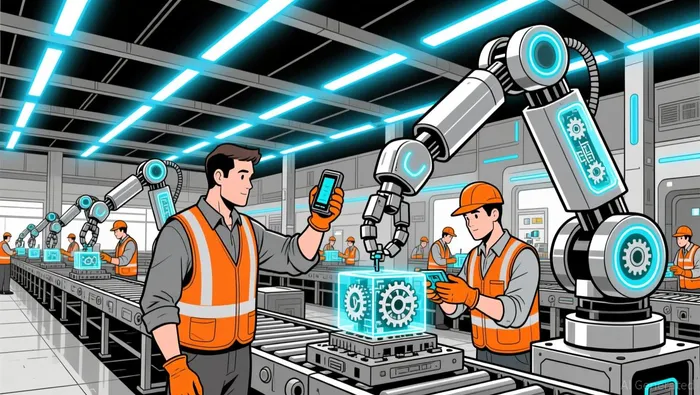
Simultaneously, digital transformation is reshaping labor dynamics. The adoption of AIoT (Artificial Intelligence of Things) technologies is being driven by persistent labor shortages and the need for automation according to industry reports. However, while digital investments in manufacturing require high upfront costs and yield slow returns, they often fail to improve job quality, exacerbating labor shortages and operational risks. This highlights a tension between technological modernization and workforce stability, where unions may advocate for policies that balance automation with job security.
Energy: Transition Risks and Capital Discipline
The energy sector's shift toward renewable sources presents both challenges and opportunities for labor governance. Unions are critical in ensuring a "just transition" for workers displaced by the decline of fossil fuel industries. For example, retraining programs and reskilling initiatives are essential to address the mismatch between traditional energy sector skills and those required in renewable energy according to union reports. However, the renewable energy sector itself faces issues such as low wages and precarious working conditions, underscoring the need for stronger union representation to protect workers according to union reports.
Capital allocation in energy has also evolved. In 2025, U.S. oil and gas companies prioritized disciplined capital allocation, returning up to 70% of free cash flow to shareholders through dividends and buybacks while reinvesting in operational efficiency according to industry analysis. This strategic realignment reflects a broader maturation of the sector, where financial stability and investor returns take precedence over aggressive production growth. However, geopolitical tensions and regulatory shifts continue to complicate capital planning, particularly for firms navigating supply chain disruptions according to research.
Transportation: Safety, Unionization, and Operational Resilience
In the transportation sector, union activities have a measurable impact on operational risk. A 2012 study found that unionized motor carriers demonstrated significantly better safety performance, with fewer crashes attributed to improved driver and vehicle safety protocols. This underscores the role of unions in mitigating operational risks through collective bargaining and safety-focused governance.
Recent case studies also highlight the interplay between union negotiations and capital allocation. For example, the adoption of electric vehicles and public transit systems has created new employment opportunities, but these roles often lack the stability of traditional transportation jobs. Unions must adapt by advocating for policies that ensure sustainable, high-quality jobs during this transition according to union reports. Additionally, supply chain disruptions caused by labor strikes or geopolitical tensions-such as those affecting key manufacturing partners-remain a significant economic risk according to industry analysis.
Balancing Risks and Opportunities
While unions can pose challenges to capital allocation according to research, they also offer opportunities to reduce operational risks and enhance long-term value. For instance, union-driven safety improvements in transportation according to research and retraining programs in energy according to union reports demonstrate how labor governance can align with corporate resilience. Conversely, the lack of a direct causal link between unionization and firm risk, as observed in some studies according to research, suggests that investor perceptions may play a larger role in shaping market outcomes than actual operational metrics.
Conclusion
Labor dynamics are a double-edged sword for industrial sectors. Unions can both constrain capital allocation through market perceptions and enhance operational resilience through safety and retraining initiatives. As industries navigate digital transformation, energy transitions, and global supply chain challenges, the ability to balance union demands with strategic capital planning will be critical. Investors must assess these dynamics not as binary risks or opportunities but as interconnected factors that shape the long-term viability of industrial enterprises.







Comentarios
Aún no hay comentarios