
Labor Cost Pressures and Equity Valuations: Navigating Minimum Wage Hikes in 2025
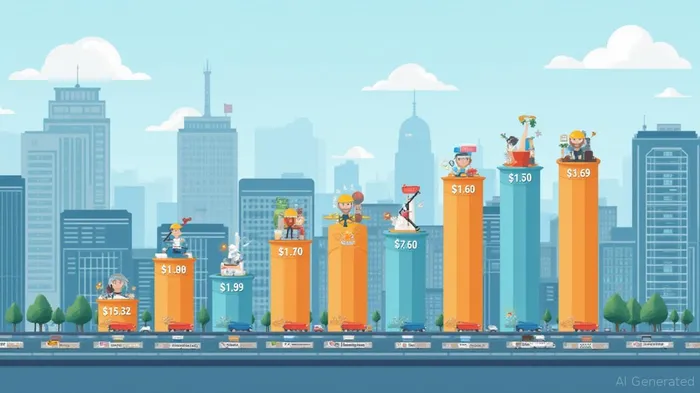
The U.S. labor market is undergoing a seismic shift as state and municipal minimum wage hikes accelerate in 2025, with over 30 states and regions exceeding the federal $7.25 hourly rate. From California's $16.50 baseline to Alaska's $13.00 jump this July, these adjustments are reshaping profit margins for industries like hospitality, retail, and healthcare. For investors, this presents both risks and opportunities—requiring a sharp focus on companies with pricing power, automation capabilities, or geographic flexibility.
Sector-Specific Labor Cost Pressures
Hospitality: Ground Zero for Margin Squeeze
Hotel chains and restaurants face the steepest headwinds. Cities like Los Angeles and Santa Monica have mandated $22.50 for hotel workers in large properties (≥60 rooms), while D.C.'s tipped wage hike to $12.00 (delayed to October) adds further pressure.Risk: Companies with thin margins, such as budget hotels and casual dining chains, may struggle.
- Data: .
Opportunity: Luxury hospitality brands (e.g., HyattH--, Four Seasons) with pricing power to pass costs to consumers could outperform.
Retail: Automation or Exit High-Cost Markets
Big-box retailers like WalmartWMT-- and Target face rising labor costs in high-wage regions. California's Alameda County raised its minimum wage to $17.46 in July 2025, while Washington's Tukwila mandates $21.10 for mid-sized employers.Risk: Low-margin retailers in these areas may see profit erosion.
- Solution: Automation (e.g., self-checkout kiosks) and relocation to lower-wage states like Texas or Missouri (projected $15 by 2026).
Investment Play: Companies like AmazonAMZN-- (with automation investments) or Home DepotHD-- (strong pricing discipline) could thrive.
Healthcare: Staffing Challenges and Regional Disparities
Healthcare workers in California now earn up to $24.00 hourly in certain facilities, while Oregon's three-tier system complicates staffing costs.Risk: Staffing agencies (e.g., AMN Healthcare) may face margin pressures.
- Opportunity: Hospitals in lower-wage regions (e.g., the Midwest) or those with bundled payment models (e.g., UnitedHealthcare) could stabilize margins.
Data-Driven Investment Strategies
1. Prioritize Pricing Power
Companies in sectors with inelastic demand—luxury goods, software, or utilities—can absorb labor costs via price hikes.
- Example: .
2. Invest in Automation Leaders
Robotics and AI-driven solutions are critical for reducing labor dependency.
- Example: Amazon Robotics (part of AMZN) and warehouse automation firms like Locus Robotics (LCRS) are poised for growth.
3. Geographic Diversification
Companies with operations in states with slower wage growth (e.g., Georgia, South Dakota) or those leveraging remote work may outperform.
- Data: .
Caution: Avoid Overexposed Firms
- Budget Hotels: Motel 6's parent company (Wyndham) has a 2025 EBITDA margin forecast of 15%, down from 18% in 2024 due to wage pressures.
- Fast Food Chains: McDonald'sMCD-- U.S. same-store sales dipped 1.2% in Q2 2025 as labor costs ate into profitability.
Conclusion: Rotate Toward Resilience
The Economic Policy Institute estimates that minimum wage hikes could reduce restaurant profit margins by up to 5% in high-cost regions. Investors should rotate out of labor-intensive businesses without pricing power and into firms with automation, geographic flexibility, or premium pricing. The next 12 months will separate the winners—like Hyatt (H) and Amazon (AMZN)—from the losers clinging to outdated business models.

The era of $7.25 is over. Equity valuations in 2025 will reward investors who anticipate how labor costs reshape industries—and bet on the companies ready to adapt.





Comentarios
Aún no hay comentarios