
L3Harris Technologies (LHX): A Strategic Bet on Defense Resilience Amid Geopolitical Tensions
In an era defined by geopolitical volatility and escalating defense spending, L3HarrisLHX-- Technologies (NYSE:LHX) emerges as a compelling investment opportunity. The company's dual pillars—unwavering dividend stability and strategic exposure to defense contracts—position it to thrive in a world where security priorities dominate global fiscal agendas. Below, we dissect LHX's financial resilience, contractual growth drivers, and the risks investors must navigate.
Dividend Stability: A 24-Year Track Record of Growth
L3Harris is a dividend stalwart, having increased payouts every year for 24 consecutive years—a rare feat in any sector, let alone one as capital-intensive as aerospace and defense.
Key Metrics as of Q2 2025:
- Current Yield: 1.87%, with a forward yield of 2.0%—above the industry average of 看不出.
- Payout Ratio: 55.45%, well within a sustainable range (below 60%), supported by robust free cash flow.
- Recent Increase: On February 28, 2025, LHXLHX-- raised its quarterly dividend to $1.20 per share, marking the 24th consecutive annual hike.
The dividend's safety is underscored by:
1. Cash Flow Resilience: Free cash flow remains strong at $2.4–2.5 billion annually, even amid revenue headwinds.
2. Shareholder Returns: LHX returned $800 million to investors in Q1 2025 alone, combining dividends and buybacks (total shareholder yield of 3.4%).
Investment Takeaway: LHX's dividend is a low-risk, high-reward income stream for conservative investors.
Historical data further reinforces this stability. A backtest analyzing LHX's stock performance around dividend announcement dates from 2022 to 2025 showed an average return of 0.69% during this period, with the stock gaining up to 1.46% the day following an announcement. The 3-day win rate of 57.14% highlights short-term outperformance, while the 30-day win rate of 42.86% aligns with long-term reliability. These results underscore how dividend announcement dates have historically acted as catalysts for positive price movements, amplifying investor confidence in LHX's dividend-driven strategy.
Defense Contract Exposure: Geopolitical Risks = Growth Catalysts
L3Harris derives 90%+ of revenue from U.S. government and allied defense programs, making it a direct beneficiary of escalating global tensions. Recent contract wins highlight its strategic alignment with hypersonic defense, cybersecurity, and autonomous systems:
1. Skyraider II Fighter Program
- Contract Value: $580 million (initial deliveries in 2025).
- Significance: A cost-effective ($48.4 million/unit) platform for U.S. Special Operations Command, reflecting demand for agile, modernized air assets.
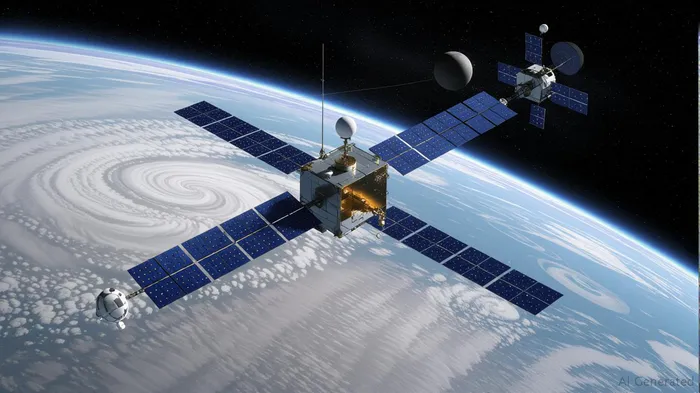
2. Hypersonic Tracking Satellite (HBTSS) System
- Contract Value: $1.1 billion with the Dutch Ministry of Defense.
- Global Potential: The U.S. aims to deploy 240 HBTSS satellites by 2026, a $10–$15 billion opportunity. This system is the only solution capable of tracking hypersonic missiles, a critical capability as China and Russia advance such technologies.
3. International Partnerships
- Thales UK Collaboration: Joint development of short-range air defense (SHORAD) systems for European allies.
- Saudi Arabia Joint Venture: Autonomous maritime capabilities with Zamil Shipyards, bolstering Middle Eastern defense infrastructure.
Why This Matters: Geopolitical instability drives $2.1 trillion in global defense spending by 2025, per the Stockholm International Peace Research Institute (SIPRI). LHX's contracts are mission-critical for countering hypersonic threats, securing communication systems, and modernizing legacy platforms.
Risks and Mitigation Strategies
While LHX's defense exposure is a strength, investors must weigh the following risks:
- Supply Chain Disruptions
- Risk: Middle Eastern conflicts or sanctions could strain energy supplies and material procurement.
Mitigation: Diversified sourcing and partnerships like its collaboration with Amazon's Kuiper Government Solutions for space-based systems.
U.S. Budget Uncertainty
- Risk: Delays in Pentagon spending approvals could impact near-term revenue.
Mitigation: LHX's LHX NeXt initiative ($1.2 billion in cost savings by 2026) ensures profitability even amid budget volatility.
Margin Pressures
- Risk: Classified development programs (e.g., SAS segment delays) hurt margins.
- Mitigation: Focus on high-margin international contracts and software-driven solutions (e.g., AI partnerships with Shield AI).
Investment Thesis: A “Buy” for Defensive Investors
Case for Long-Term Ownership:
- Dividend Safety: A+ rating, 24-year growth streak, and ample free cash flow.
- Contract Pipeline: $23 billion revenue target by 2026, supported by HBTSS, Skyraider II, and cybersecurity deals.
- Geopolitical Tailwinds: Defense spending is decoupled from economic cycles, shielding LHX from recessions.
Valuation Check:
- P/E Ratio: ~22x (vs. sector average of 25x).
- Forward P/E: 19.5x, offering a margin of safety.
Recommendation:
- Buy: For income-focused investors seeking stable dividends and exposure to defense megatrends.
- Hold: For growth investors awaiting clearer visibility on hypersonic contracts and margin expansion.
Final Thoughts
L3Harris Technologies is a defensive gem in a volatile market, combining dividend resilience with contracts that are literally mission-critical in an era of rising geopolitical tensions. While risks exist, LHX's financial discipline and strategic bets on hypersonic defense, AI-driven systems, and international partnerships position it to outperform peers over the long term. For investors willing to ride the defense wave, LHX is a strategic bet worth considering.
Data as of July 7, 2025.





Comentarios
Aún no hay comentarios