
Kyrgyzstan's Crypto Revolution: State-Run Mining and Regulatory Sandboxes Redefine Emerging Market Opportunities
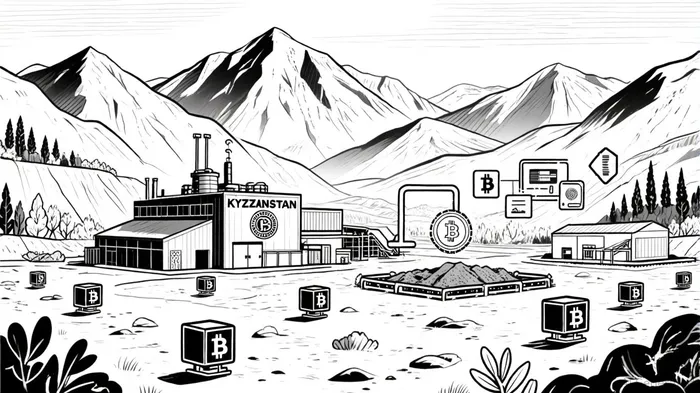
Kyrgyzstan's recent legislative overhaul of its cryptocurrency sector marks a bold departure from traditional financial paradigms, positioning the Central Asian nation as a vanguard of state-driven digital asset innovation. The new law, passed by the Kyrgyz Parliament in 2025, establishes a state-backed BitcoinBTC-- reserve, centralizes regulatory oversight under presidential control, and introduces a regulatory sandbox to test crypto technologies[1]. These measures reflect a strategic pivot toward financial diversification and technological sovereignty, but they also raise critical questions about investment risks and opportunities in emerging markets.
State-Run Mining: Balancing Energy Abundance and Fiscal Prudence
Kyrgyzstan's state-run mining operations are designed to leverage the country's abundant hydroelectric resources while avoiding the pitfalls of energy misallocation. According to a report by iCOBench, the government has mandated that state and private miners pay identical electricity rates, ensuring no preferential treatment and preserving energy for essential services[1]. This approach mitigates the risk of energy grid instability, a common concern in resource-rich emerging markets. However, the long-term viability of state mining hinges on geopolitical factors, such as regional energy prices and the volatility of Bitcoin's value. For instance, if Bitcoin's price dips below the breakeven cost of mining, the state reserve could face liquidity challenges, potentially undermining investor confidence.
The regulatory sandbox, meanwhile, offers a controlled environment for startups and foreign firms to experiment with blockchain-based solutions. As outlined in the National Development Program, this framework aligns with global trends, such as Ghana's 2024 Digital Asset Guidelines and the UNCTAD-endorsed privacy-by-design models[3]. By reducing compliance burdens for early-stage projects, Kyrgyzstan aims to attract capital and talent, but the sandbox's success will depend on its ability to scale innovations into broader markets without regulatory friction.
Investment Risks: Geopolitical Uncertainty and Regulatory Volatility
While Kyrgyzstan's crypto ambitions are ambitious, they are not without risks. Emerging markets often face sudden regulatory shifts, and Kyrgyzstan's centralized oversight model—where the president directly controls the new regulatory body—could lead to policy instability. For example, if the government pivots toward stricter controls in response to external pressures (e.g., U.S. sanctions or regional economic crises), foreign investors may face abrupt operational hurdles.
Energy dependency is another vulnerability. Kyrgyzstan's mining operations rely heavily on hydroelectric power, which is susceptible to seasonal fluctuations and climate change. A prolonged drought, for instance, could force the government to ration energy, indirectly impacting mining output and the state reserve's growth. Data from Coinpedia highlights that Kyrgyzstan's crypto trading volume surged to 1 trillion soms in the first half of 2025[2], but this growth could stall if energy constraints disrupt operations.
Opportunities: A Regional Hub for Digital Finance
Despite these risks, Kyrgyzstan's crypto strategy presents compelling opportunities. The state-backed reserve and planned central bank digital currency (CBDC)—the “digital som”—position the country as a potential regional hub for cross-border payments and tokenized assets[3]. By integrating stablecoins and real-world assets into its reserve, Kyrgyzstan is experimenting with a hybrid model that could attract institutional investors seeking diversification.
The regulatory sandbox further enhances this appeal. Unlike rigid frameworks in developed markets, Kyrgyzstan's sandbox allows rapid iteration, enabling startups to test decentralized finance (DeFi) protocols or tokenized securities with minimal upfront costs. This agility could attract venture capital and foster a local tech ecosystem. For example, a 2025 BIS report notes that tokenization could reduce cross-border payment costs by up to 70%[2], a metric Kyrgyzstan could leverage to become a gateway for Eurasian digital finance.
Conclusion: A Calculated Bet on the Future
Kyrgyzstan's crypto law represents a calculated bet on the future of digital finance, blending state intervention with market-driven innovation. While energy constraints and regulatory volatility pose risks, the country's strategic use of a regulatory sandbox and CBDC development offers a blueprint for emerging markets seeking to balance growth with stability. Investors should monitor the government's ability to scale the sandbox, manage energy resources, and navigate geopolitical dynamics. For those willing to tolerate short-term uncertainties, Kyrgyzstan's crypto revolution could yield long-term rewards in a rapidly evolving digital economy.






Comentarios
Aún no hay comentarios