
Kyowa Kirin's Valuation Implications via Kura Oncology's KOMZIFTI Approval and Milestone Payments
Structure and Financial Upside
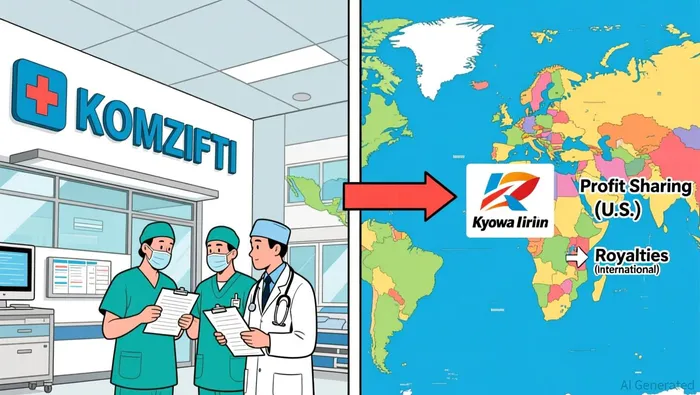
The collaboration between Kyowa Kirin and Kura Oncology is a textbook example of risk-sharing and revenue optimization in . Kura leads U.S. development and commercialization, while Kyowa Kirin handles international operations, with profits and losses split equally in the U.S. and tiered royalties for Kura outside the U.S.. This structure aligns incentives while minimizing capital exposure for both parties.
Critically, , including . These payments are tied to clinical and , such as Phase 3 trial enrollment and additional approvals. For Kyowa Kirin, the partnership reduces R&D costs while securing exclusive global rights to a drug targeting a high-unmet-need patient population. , .
Market Reaction and Undervaluation Potential
Despite the FDA approval, Kura Oncology's stock remained flat, suggesting the market may have already priced in the drug's potential according to market analysis. This muted reaction contrasts with the $1.53 billion valuation of the partnership itself, which includes future milestones and commercialization upside. For Kyowa Kirin, the lack of immediate stock volatility could indicate undervaluation, particularly given the drug's differentiation in a crowded AML space.
The 's projected growth further amplifies this potential. With AML therapies expected to expand due to aging populations and rising cancer incidence, KOMZIFTI's niche targeting of patients positions it as a high-margin asset. Moreover, Kyowa Kirin's access to Kura's U.S. commercial infrastructure-where it shares 50% profits-could drive faster market penetration than standalone efforts.
Valuation Benchmarks and Industry Context
often hinge on milestone-driven revenue streams, yet Kyowa Kirin's current financial metrics lack specificity. While the company's 2025 market cap and P/E ratio remain undisclosed in available data, industry benchmarks suggest partnerships with robust and clear revenue triggers typically command premium valuations. For instance, highlights how positive clinical data can rapidly re-rate a company's valuation.
Kyowa Kirin's KOMZIFTI partnership, however, stands apart due to its dual focus on innovation (first-in-class mechanism) and commercial scalability. The drug's boxed warning for -though not QTc prolongation-limits its risk profile compared to other AML therapies, further enhancing its appeal to payers and providers.
Conclusion: A Case for Strategic Optimism
Kyowa Kirin's collaboration with Kura Oncology exemplifies the power of biotech partnerships to de-risk innovation while maximizing returns. , the partnership offers a clear path to value creation. The flat stock reaction post-approval for Kura suggests the market may be underestimating the long-term upside, particularly as Kyowa Kirin leverages its global commercial footprint to scale KOMZIFTI's adoption. For investors, this represents a compelling case of undervaluation in a sector poised for explosive growth.







Comentarios
Aún no hay comentarios