
The Do Kwon Sentencing and the Dawn of Regulatory Accountability in Crypto Innovation
The sentencing of Do Kwon, co-founder of Terraform Labs, to 12 years in prison for his role in the $40 billion TerraUSD (UST) and Luna collapse marks a pivotal moment in the evolution of cryptocurrency regulation. This case, which culminated in a guilty plea for commodities fraud, securities fraud, and wire fraud, underscores a global shift toward accountability for crypto founders. As regulators grapple with the complexities of digital assets, Kwon's sentencing-coupled with broader regulatory trends-signals a new era where innovation must align with transparency and investor protection.
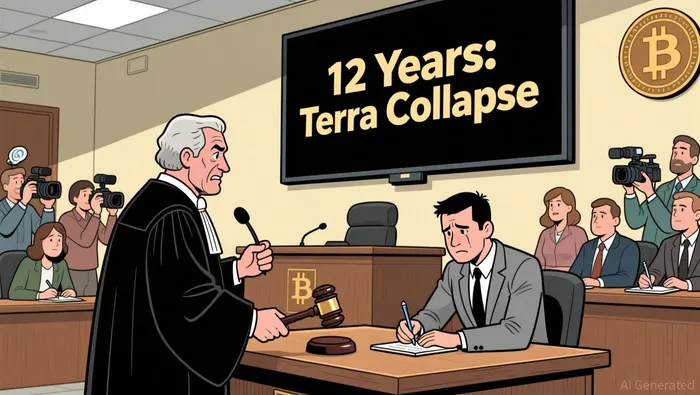
The Kwon Case: A Legal and Regulatory Milestone
Kwon's fraudulent activities, which included misleading investors about the stability mechanisms of UST and Luna, directly precipitated the May 2022 market crash, causing over $40 billion in losses according to reports. His guilty plea in August 2025 and subsequent sentencing by U.S. District Judge Paul A. Engelmayer on December 11, 2025, reflect a judicial commitment to holding crypto innovators accountable for systemic harm. Prosecutors emphasized the "colossal" nature of the fraud, noting its cascading effects on the crypto market, including the collapse of FTX. The plea agreement also required Kwon to forfeit $19 million in criminal proceeds and liquidate personal assets setting a precedent for financial penalties alongside incarceration.
This case is not merely a legal reckoning but a regulatory signal. As Todd Snyder, appointed by U.S. authorities to oversee Terraform Labs' liquidation, stated, the guilty plea represents a critical moment for accountability in the digital asset sector. The U.S. Securities and Exchange Commission (SEC) further reinforced this stance by securing a $4.5 billion settlement with Terraform and Kwon, affirming that the economic realities of a product-not its marketing-determine its classification as a security.
Global Regulatory Trends: From Fragmentation to Coordination
The Kwon case has accelerated a global trend toward harmonized crypto regulation. In 2025, over 70% of jurisdictions reviewed by TRM Labs advanced new stablecoin frameworks, with the U.S. GENIUS Act and the EU's Markets in Crypto-Assets (MiCA) regulation emerging as cornerstones of this effort according to the review. These frameworks prioritize transparency, particularly for algorithmic stablecoins like UST, which collapsed due to opaque mechanisms. The Financial Action Task Force (FATF) and Financial Stability Board (FSB) have also stressed the risks of regulatory inconsistencies, urging cross-jurisdictional coordination to combat financial crime.
Institutional adoption of digital assets has surged in tandem with these regulatory advancements. By 2025, 80% of jurisdictions with active crypto markets saw financial institutions announce digital asset initiatives, reflecting growing confidence in a more structured environment according to recent updates. However, challenges persist. The collapse of UST and the North Korea-led Bybit hack highlight vulnerabilities in unregulated or lightly supervised technologies, prompting regulators to emphasize real-time information sharing and stricter oversight.
Investor Implications: Navigating a New Risk Landscape
For investors, the Kwon case and evolving regulatory landscape necessitate a recalibration of risk assessment. The SEC's enforcement actions, including the $4.5 billion settlement, demonstrate a willingness to pursue both individuals and institutions for misleading claims. This trend is likely to continue under SEC Chair Paul Atkins, who has advocated for reducing regulatory burdens while promoting innovation-a balance that remains contentious according to analysis.
Investors must also contend with the dual risks of innovation and enforcement. While regulatory clarity fosters market integrity, it also raises compliance costs for startups. The UST collapse serves as a cautionary tale: projects that prioritize speed over transparency may face not only financial ruin but also criminal liability for their founders. As Bloomberg Law notes, 2026 will likely see further legislative efforts to "make crypto regulation less cryptic," with a focus on stablecoins and cross-border coordination according to the outlook.
Conclusion: Accountability as a Catalyst for Sustainable Innovation
Do Kwon's sentencing is more than a punitive measure; it is a catalyst for a regulatory framework that balances innovation with accountability. The case has set legal precedents for prosecuting crypto fraud, while global regulatory trends-such as MiCA and the GENIUS Act-aim to create a level playing field for compliant innovators. For investors, the takeaway is clear: the era of unregulated experimentation is ending. Success in crypto now hinges on adherence to evolving standards, transparency in operations, and a commitment to investor protection.
As the industry moves forward, the Kwon case will be remembered not just as a cautionary tale but as a turning point-a moment when regulators and markets alike recognized that the future of crypto depends on accountability as much as innovation.







Comentarios
Aún no hay comentarios