
KwaZulu-Natal's Political Turmoil and Its Impact on Investment: Navigating Risks Ahead of 2026 Elections
The political landscape in KwaZulu-Natal (KZN) has become a microcosm of South Africa's broader governance challenges, with the uMkhonto weSizwe Party (MKP)'s failed attempt to oust Premier Thamsanqa Ntuli underscoring the fragility of coalition politics. As the 2026 municipal elections loom, investors and policymakers must grapple with how this instability affects infrastructure, economic development, and investor confidence. The interplay between political maneuvering and economic outcomes in KZN offers critical lessons for stakeholders navigating a province at a crossroads.
The No-Confidence Vote and Coalition Fragility
The MKP's recent motion of no confidence against Ntuli, submitted by chief whip Bonginkosi Mngadi, has exposed deep fissures within the Government of Provincial Unity (GPU). While the MKP argues that Ntuli's leadership has led to "financial mismanagement and poor service delivery," according to reports, the premier has dismissed the move as a destabilizing tactic ahead of the 2026 elections. The GPU, a coalition of the Inkatha Freedom Party (IFP), African National Congress (ANC), Democratic Alliance (DA), and National Freedom Party (NFP), remains technically intact, but its cohesion is increasingly tested.
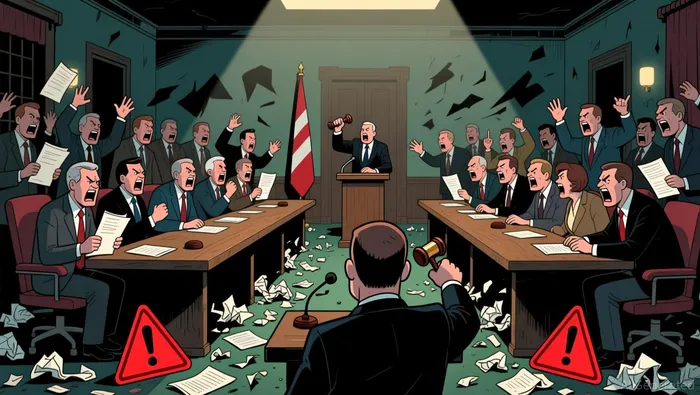 Ntuli's administration claims to have attracted R100 billion in investment and created 54,000 jobs since 2024, according to the financial report, yet the MKP and its allies reject these figures as "systems of inequality" perpetuated by a "DA-led government." The Financial Mail reports that the figures are inconsistent with independent analysis. The lack of a majority for the MKP-holding 37 of 80 seats-means its success hinges on securing support from the NFP or dissenting IFP members. However, the Economic Freedom Fighters (EFF) and DA have both refused to back the motion, as reported by Insider Metro, with DA leader Francois Rodgers calling it a "non-starter." This political deadlock highlights the risks of fragmented governance, where policy continuity is threatened by short-term strategic calculations.
Infrastructure Stalls and Investor Sentiment
KZN's infrastructure projects, critical to its economic ambitions, have suffered from years of mismanagement and political instability. According to a report by The Witness, 75 major projects worth R1.3 billion are stalled, with delays stretching up to a decade. Corruption allegations, including collusion between contractors and officials, have exacerbated the crisis, while the appointment of MEC Martin Meyer has introduced a renewed focus on accountability. A Rapid Response Team (RRT) has been established to address inefficiencies, but progress remains slow. For instance, the R269 million Umzinto Slum Clearance Housing Project has only 500 of 1,925 units completed due to unresolved sanitation issues, and the Cedera Housing Project (R44 million) remains blocked by encroachment and bulk service shortages. The Witness reports that the province's public works department has launched an investigation into project delays.
Investor confidence, already fragile, is further strained by these delays. The 2025 KZN Investment Conference, which secured R95 billion in pledges, emphasized infrastructure readiness as a priority, with Transnet, Eskom, and SANRAL playing key roles. However, business leaders have warned that political uncertainty-exemplified by the no-confidence vote-could derail these efforts. Business leaders warn that "periods of political instability correlate with stalled projects and reduced investment," a trend that risks undermining the province's economic transformation.
### Economic Forecasts and the Shadow of 2026
The 2026 municipal elections are shaping up as a pivotal battleground, with the MKP positioning itself as a strong contender despite its lack of municipal governance experience. The DA, meanwhile, anticipates a challenge in key metro areas like eThekwini, where the MKP has made inroads. The ANC, having lost significant support in 2024, is attempting to rebrand through service delivery improvements and investor-friendly initiatives.
Economic forecasts for KZN remain mixed. While the province's 2026/27 budget emphasizes enterprise development and tourism, according to the MEC's statement, the national context complicates matters. South Africa's ten-party coalition government (GNU) has introduced policy uncertainty, with the 2024 Expropriation Act-a tool enabling land expropriation without compensation-raising concerns about property rights. As noted in the U.S. Department of State's 2025 Investment Climate Statement, these factors create an environment of unpredictability, with political risks likely to influence investment decisions in the lead-up to 2026.
Conclusion: Balancing Risks and Opportunities
For investors, KZN presents a paradox: a province with significant economic potential but plagued by political instability and infrastructure bottlenecks. The outcome of the no-confidence vote against Ntuli may not alter the GPU's structure, but it underscores the fragility of coalition governance. Investors must weigh the risks of political interference against the province's strategic advantages, including its coastal location and recent investment pledges.
The 2026 elections will be a litmus test for KZN's governance model. If the province can stabilize its political environment and deliver on infrastructure commitments, it may yet attract the investment needed to drive inclusive growth. However, without addressing systemic corruption and bureaucratic inertia, KZN risks remaining a cautionary tale of how political instability can stifle economic progress.







Comentarios
Aún no hay comentarios