
Kuwait's Potential $7 Billion Pipeline Deal and Its Implications for Sovereign Wealth Fund Diversification
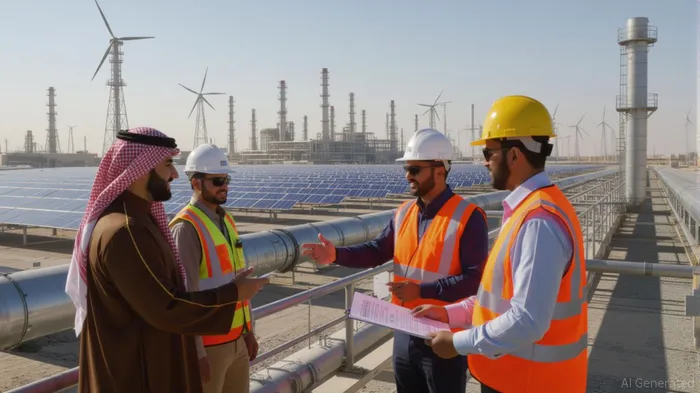
Kuwait's rumored $7 billion pipeline deal has sparked speculation about its potential to reshape the country's economic trajectory. While specifics about the project remain opaque, the broader context of Kuwait's strategic infrastructure investments offers critical insights into how sovereign wealth funds (SWFs) in emerging markets can leverage such initiatives to secure long-term returns. By aligning infrastructure development with SWF diversification goals, Kuwait is navigating a delicate balance between mitigating oil dependency and fostering resilient, non-hydrocarbon revenue streams.
Strategic Infrastructure as a Diversification Tool
Kuwait's Fund for Future Generations, a cornerstone of its SWF, has prioritized saving at least 10% of annual oil revenue since 2020 to cushion against price volatility . However, merely accumulating reserves is insufficient for long-term stability; these funds must be strategically deployed to generate returns. Infrastructure projects, particularly in energy and industrial sectors, offer a dual advantage: they stabilize cash flows through operational revenues and catalyze broader economic development by enabling private-sector participation.
For instance, cross-border pipeline projects could integrate Kuwait into regional energy corridors, enhancing its role as a transit hub for hydrocarbons or renewable energy. Such infrastructure not only diversifies the SWF's asset base but also aligns with global trends where SWFs increasingly allocate capital to infrastructure—Bloomberg data shows that global SWFs have directed over $1.2 trillion into infrastructure since 2010, with emerging markets accounting for 40% of these investments.
Challenges and Opportunities
Despite Kuwait's ambitions, political fragmentation and limited private-sector engagement have slowed progress. According to a report by CountryReports, political uncertainties have hindered the implementation of economic reforms, even as the government emphasizes infrastructure as a growth lever . This highlights a critical challenge: infrastructure projects require sustained policy coherence and regulatory frameworks to attract both domestic and foreign capital.
The proposed pipeline deal, if executed, could signal a shift. By anchoring the project within the SWF's portfolio, Kuwait could de-risk investments through long-term revenue guarantees, a strategy employed by Norway's Government Pension Fund. For example, the fund's 2023 allocation to infrastructure yielded a 7.2% annualized return, underscoring the asset class's potential for stable, inflation-protected yields.
Regional and Global Implications
Kuwait's approach mirrors a broader trend among emerging-market SWFs to invest in infrastructure that bridges regional gaps. The Asian Infrastructure Investment Bank (AIIB) estimates that Asia alone requires $1.5 trillion annually in infrastructure investment through 2030. By positioning itself as a key player in this arena, Kuwait's SWF could capitalize on high-growth corridors, such as Gulf-Africa energy partnerships or digital infrastructure in the Middle East.
Conclusion
While the $7 billion pipeline deal remains unconfirmed, its potential underscores a pivotal question: How can emerging-market SWFs transform infrastructure from a cost center into a profit engine? Kuwait's experience suggests that success hinges on three factors: political stability to ensure policy continuity, regulatory reforms to attract private capital, and strategic alignment with regional infrastructure gaps. If executed effectively, such projects could redefine Kuwait's SWF as a model for sustainable, non-oil-driven growth.







Comentarios
Aún no hay comentarios