
Kursk's Uncertain Peace: Navigating Geopolitical Risks in Investment Decisions
The conflict in Ukraine has reached a pivotal juncture, with Russia’s claims of expelling Ukrainian forces from Kursk Oblast in late April 2025 sparking debates over whether this marks a turning point toward peace—or a new phase of escalation. While Moscow proclaims victory, Kyiv denies territorial losses, and independent verification remains elusive. For investors, the ambiguity presents both risks and opportunities, particularly in defense, energy, and geopolitical-linked sectors.
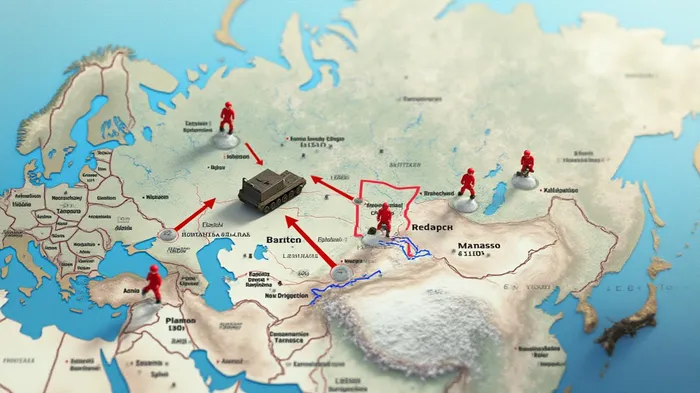
Geopolitical Uncertainties: A Battle of Narratives
Russia’s assertion of full control over Kursk hinges on unverified claims of liberating Gornal, the last Ukrainian-held village. Chief of the General Staff Valery Gerasimov even credited North Korean troops—a first official acknowledgment of their involvement—for “significant assistance” in the operation. Meanwhile, Ukraine’s military insists it retains defensive positions and repelled multiple Russian assaults as of late April. The U.S.-based Institute for the Study of War notes ongoing combat but stops short of confirming territorial outcomes, leaving investors to parse conflicting signals.
The stakes extend beyond the battlefield. U.S. President Donald Trump’s abrupt abandonment of a 100-day peace deadline and his push to cede Crimea to Russia has strained relations with Kyiv. Volodymyr Zelensky’s refusal to accept territorial concessions underscores the diplomatic rift, which could destabilize markets if aid conditions are tied to diplomatic compromises.
Defense Contractors: Winners in Prolonged Conflict
The conflict’s persistence has been a lifeline for defense firms. Since 2022, the U.S. has provided over $100 billion in military aid to Ukraine, with contracts flowing to companies like . These firms supply artillery, drones, and air defense systems critical to Kyiv’s defense. Should aid flows remain steady—or even expand—shares in defense contractors could continue to outperform broader markets.
However, Trump’s threat to withhold aid unless Kyiv accepts concessions introduces volatility. A sudden cut in funding could send Lockheed MartinLMT-- and Raytheon stocks tumbling, particularly if investors anticipate reduced demand for weapons systems. The opposite scenario—a protracted war requiring more Western arms—would favor these stocks, though risks of geopolitical overreach persist.
Energy and Commodities: Playing the Volatility
The region’s energy infrastructure is another key focus. Russia’s reliance on Ukrainian territory for oil and gas transit, combined with NATO’s sanctions, has kept energy prices volatile. A peace deal might ease supply chain pressures, but only if it stabilizes the Black Sea—a critical corridor for Ukrainian grain and Russian hydrocarbons.
Investors in commodities like aluminum and palladium, which Russia dominates, face dual risks. A U.S.-Russia rapprochement could lift sanctions and boost Russian exports, depressing prices. Conversely, continued conflict might tighten supply, benefiting firms like Nornickel (NILSY) and Alcoa (AA).
The Human Cost: A Drag on Long-Term Recovery
With over 14.6 million Ukrainians requiring humanitarian aid and 6.8 million displaced, the conflict’s economic toll is staggering. A rushed peace deal that cedes territory could weaken Kyiv’s bargaining power, deterring foreign investment in sectors like mining and agriculture. The stalled U.S.-Ukraine mineral resource agreement—potentially worth $300 billion—highlights the uncertainty. Until territorial disputes are resolved, investors in Ukrainian equities or infrastructure projects will face heightened risk.
Conclusion: A High-Reward, High-Risk Landscape
The Kursk standoff underscores a critical truth for investors: this conflict’s outcome is as much about narrative as it is about territory. While defense contractors and energy firms may profit from prolonged hostilities, the potential for a “bad peace deal”—one that weakens Ukraine’s sovereignty—could trigger a broader geopolitical reckoning.
The data is stark: has surged, but its stock has lagged behind peers due to geopolitical uncertainty. Meanwhile, the MSCI Emerging Markets Index (EEM) has dipped as sanctions fears linger. For now, investors might consider hedging with defensive stocks or volatility ETFs (e.g., VIXY) until clarity emerges.
In the end, Kursk’s fate isn’t just about a single region—it’s about whether the world will accept territorial aggression or demand accountability. For portfolios, the answer will dictate everything from defense budgets to energy prices, making this a conflict investors cannot afford to ignore.







Comentarios
Aún no hay comentarios