
Kuroda: BOJ Stays on Rate Hike Path as Deflation Ends
Generado por agente de IATheodore Quinn
jueves, 6 de febrero de 2025, 3:34 am ET1 min de lectura
FISI--
The Bank of Japan (BOJ) remains committed to its rate hike path, as outgoing Governor Haruhiko Kuroda expressed confidence that deflation has finally ended. In his last press conference, Kuroda stated that the BOJ's aggressive monetary easing had successfully jolted Japan out of deflation and that its retention under new leadership is crucial for sustaining inflation expectations. The BOJ has been battling deflation and economic stagnation since the late 1990s, employing a combination of conventional and unconventional monetary policies, including zero or negative interest rates and large-scale asset purchases.
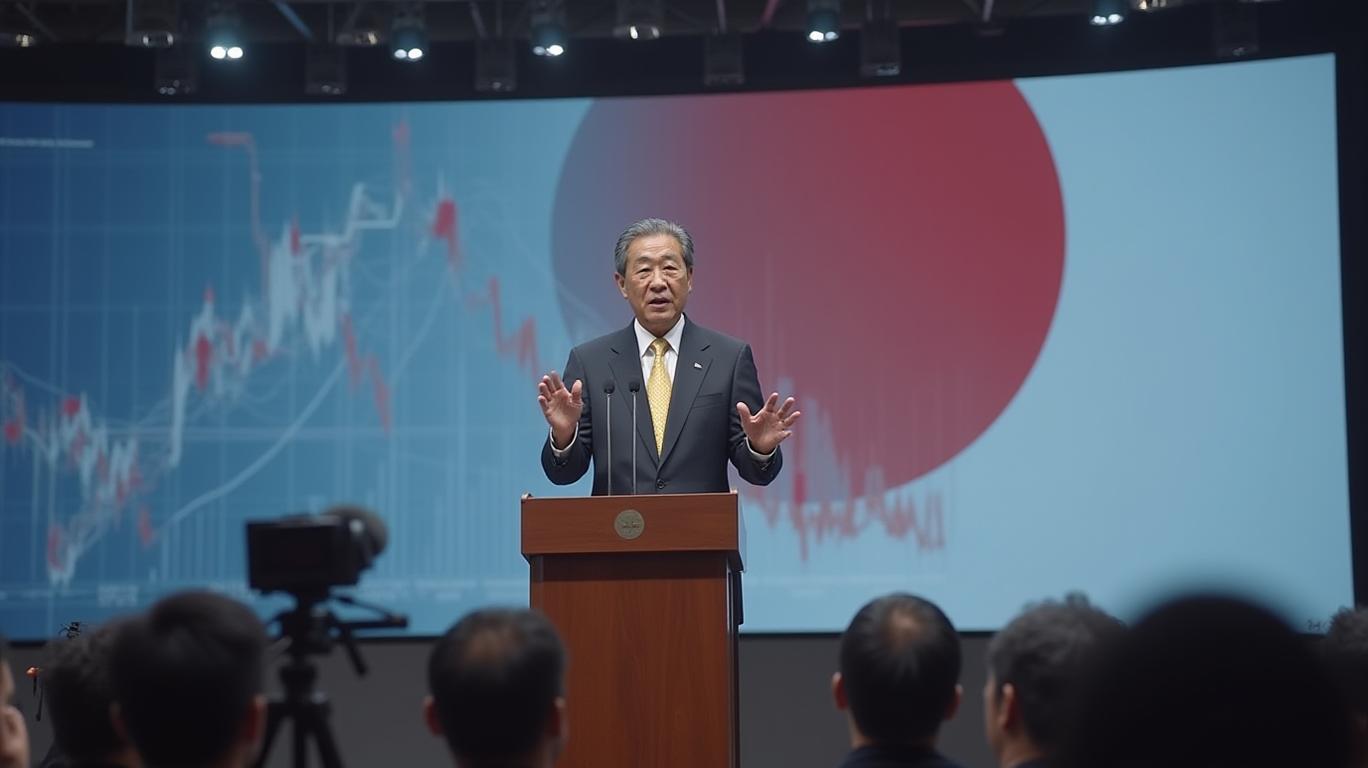
The BOJ's policy of quantitative and qualitative easing, including large-scale asset purchases and yield curve control, has been designed to achieve a 2% inflation target. This policy has had a substantial impact on various sectors in the Japanese economy. Financial institutions, such as banks and other financial institutions, have benefited from the BOJ's policy of negative interest rates and quantitative easing. This has allowed them to borrow money at low interest rates and invest in higher-yielding assets, leading to increased profitability. Additionally, the BOJ's yield curve control policy has helped to maintain a stable and predictable interest rate environment, which is favorable for financial institutions.
Exporters have also benefited from the BOJ's policy of yen depreciation, which has made Japanese exports more competitive in global markets. This has led to increased sales and profits for Japanese companies, particularly in the manufacturing sector. The BOJ's commitment to maintaining a 2% inflation target has also helped to boost consumer spending, which has further benefited exporters.
However, the BOJ's policy has also led to a decline in the purchasing power of savers and retirees, as well as an increase in the risk of pension fund insolvency. The BOJ's policy of quantitative easing has led to a decline in the yield on Japanese government bonds, which has made it more difficult for pension funds to meet their obligations. This has resulted in a decline in the purchasing power of pensioners and an increase in the risk of pension fund insolvency.

In conclusion, the BOJ's commitment to maintaining a 2% inflation target has had a significant impact on the long-term outlook for Japanese companies. While some sectors, such as financial institutions and exporters, have benefited from the BOJ's accommodative monetary policy, others, such as savers, pension funds, and importers, have been negatively impacted. As the BOJ continues to monitor the economy and adjust its policy accordingly, it is important for companies to adapt to the changing economic environment and take advantage of the opportunities that arise.
The Bank of Japan (BOJ) remains committed to its rate hike path, as outgoing Governor Haruhiko Kuroda expressed confidence that deflation has finally ended. In his last press conference, Kuroda stated that the BOJ's aggressive monetary easing had successfully jolted Japan out of deflation and that its retention under new leadership is crucial for sustaining inflation expectations. The BOJ has been battling deflation and economic stagnation since the late 1990s, employing a combination of conventional and unconventional monetary policies, including zero or negative interest rates and large-scale asset purchases.
The BOJ's policy of quantitative and qualitative easing, including large-scale asset purchases and yield curve control, has been designed to achieve a 2% inflation target. This policy has had a substantial impact on various sectors in the Japanese economy. Financial institutions, such as banks and other financial institutions, have benefited from the BOJ's policy of negative interest rates and quantitative easing. This has allowed them to borrow money at low interest rates and invest in higher-yielding assets, leading to increased profitability. Additionally, the BOJ's yield curve control policy has helped to maintain a stable and predictable interest rate environment, which is favorable for financial institutions.
Exporters have also benefited from the BOJ's policy of yen depreciation, which has made Japanese exports more competitive in global markets. This has led to increased sales and profits for Japanese companies, particularly in the manufacturing sector. The BOJ's commitment to maintaining a 2% inflation target has also helped to boost consumer spending, which has further benefited exporters.
However, the BOJ's policy has also led to a decline in the purchasing power of savers and retirees, as well as an increase in the risk of pension fund insolvency. The BOJ's policy of quantitative easing has led to a decline in the yield on Japanese government bonds, which has made it more difficult for pension funds to meet their obligations. This has resulted in a decline in the purchasing power of pensioners and an increase in the risk of pension fund insolvency.
In conclusion, the BOJ's commitment to maintaining a 2% inflation target has had a significant impact on the long-term outlook for Japanese companies. While some sectors, such as financial institutions and exporters, have benefited from the BOJ's accommodative monetary policy, others, such as savers, pension funds, and importers, have been negatively impacted. As the BOJ continues to monitor the economy and adjust its policy accordingly, it is important for companies to adapt to the changing economic environment and take advantage of the opportunities that arise.

Divulgación editorial y transparencia de la IA: Ainvest News utiliza tecnología avanzada de Modelos de Lenguaje Largo (LLM) para sintetizar y analizar datos de mercado en tiempo real. Para garantizar los más altos estándares de integridad, cada artículo se somete a un riguroso proceso de verificación con participación humana.
Mientras la IA asiste en el procesamiento de datos y la redacción inicial, un miembro editorial profesional de Ainvest revisa, verifica y aprueba de forma independiente todo el contenido para garantizar su precisión y cumplimiento con los estándares editoriales de Ainvest Fintech Inc. Esta supervisión humana está diseñada para mitigar las alucinaciones de la IA y garantizar el contexto financiero.
Advertencia sobre inversiones: Este contenido se proporciona únicamente con fines informativos y no constituye asesoramiento profesional de inversión, legal o financiero. Los mercados conllevan riesgos inherentes. Se recomienda a los usuarios que realicen una investigación independiente o consulten a un asesor financiero certificado antes de tomar cualquier decisión. Ainvest Fintech Inc. se exime de toda responsabilidad por las acciones tomadas con base en esta información. ¿Encontró un error? Reportar un problema




Comentarios
Aún no hay comentarios