
KuCoin's Expansion into Brazil via Pix Integration and the Growing Real-World Utility of Crypto
Pix: A Catalyst for Financial Inclusion and Economic Growth
Pix's success lies in its simplicity and accessibility. By enabling instant, low-cost transactions for both person-to-person (P2P) and person-to-business (P2B) payments, the system has democratized access to the digital economy. Over 170 million Brazilians-93% of the adult population-now use Pix, including millions who previously lacked traditional banking tools like credit cards. Merchants adopting Pix have reported an average 16% revenue increase and 25% customer-base growth within six months, underscoring its transformative economic impact.
This foundational infrastructure has also positioned Brazil as a prime market for crypto adoption. With Pix's P2B transactions surpassing P2P in late 2025, the stage was set for seamless integration with decentralized finance (DeFi) solutions.
Crypto Adoption in Brazil: A Surge in Utility
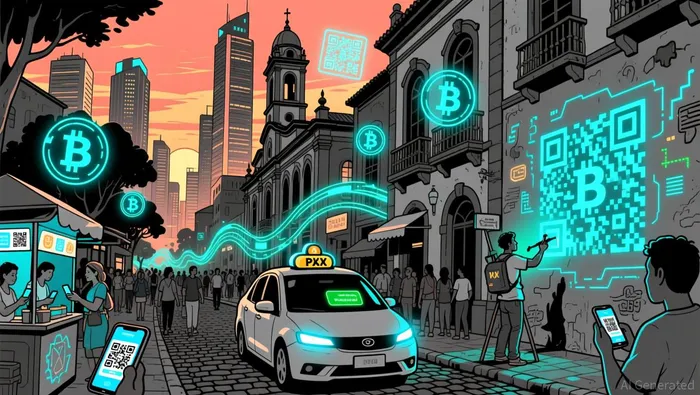
Brazil's crypto ecosystem has grown exponentially, with 26 million active users-12% of the population-engaging in crypto transactions. This growth is fueled by platforms like KuCoin Pay, which recently integrated with Pix to enable instant crypto payments. The feature allows users to convert over 50 cryptocurrencies into Brazilian reais (BRL) and pay merchants via Pix QR codes, effectively bridging the gap between crypto and traditional finance.
The economic scale of this shift is evident: Brazil's crypto sector reached 227 billion reais ($42.8 billion) in the first half of 2025, a 20% year-over-year increase. This surge reflects not only speculative interest but also a growing demand for crypto as a medium of exchange. For instance, KuCoin's integration aligns with Brazil's KYC standards, ensuring compliance while reducing friction for users.
Strategic Implications for Emerging Markets
KuCoin's move highlights a broader trend: the convergence of legacy payment systems and crypto infrastructure in emerging markets. By leveraging Pix's 93% penetration rate, crypto platforms can bypass the barriers of low credit-card adoption and fragmented banking systems. This model is replicable in other markets with robust digital payment ecosystems, such as India's UPI or Nigeria's eNaira.
Moreover, Brazil's regulatory environment is evolving to support this integration. The government's plan to tax cross-border crypto payments under the Imposto sobre Operações Financeiras (IOF) aligns the country with international standards like the OECD's Crypto-Asset Reporting Framework (CARF). Such measures signal a maturing market where crypto is no longer viewed as a speculative asset but as a legitimate component of the financial ecosystem.
Conclusion: A Blueprint for Global Expansion
KuCoin's expansion into Brazil via Pix integration is more than a regional play-it is a strategic blueprint for scaling crypto utility in emerging markets. By anchoring crypto transactions to a widely adopted payment system, the platform addresses two critical challenges: usability and regulatory compliance. As Brazil's crypto sector grows at a 20% annual rate, investors should monitor how similar integrations in other markets could catalyze global adoption.
For now, Brazil's experience underscores a key insight: the future of crypto lies not in replacing traditional finance but in enhancing it. As Pix and KuCoin demonstrate, the most compelling use cases emerge when innovation builds on existing infrastructure, creating a seamless bridge between the old and the new.







Comentarios
Aún no hay comentarios