
KT&G's Strategic European Expansion and Its Implications for Global Tobacco Market Dominance
In the evolving landscape of the global tobacco industry, KT&G's strategic foray into Europe represents a calculated move to consolidate its position as a leader in the superslim cigarette segment. By leveraging its partnership with KTKT-- International (KTI) and a localized distribution strategy, the South Korean conglomerate is not only expanding its geographic footprint but also reinforcing its brand equity in a highly regulated market. This analysis examines how KT&G's European expansion—anchored by its recent entry into Bulgaria—positions the company to drive long-term shareholder value through geographic diversification, brand strength, and operational agility.
The KTI Partnership Model: A Blueprint for Scalable Growth
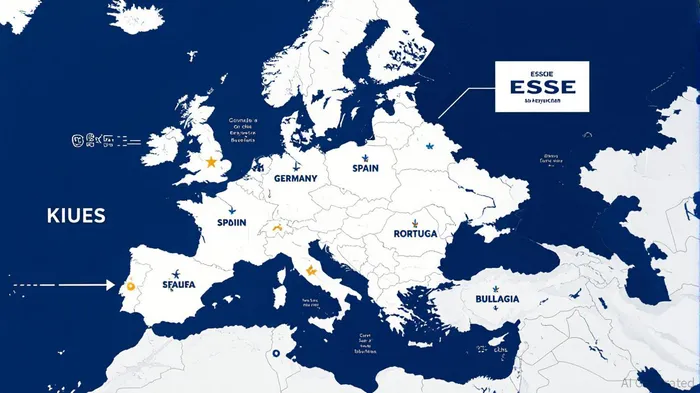
KT&G's collaboration with KTI, a subsidiary of KT Corporation, has been pivotal to its European ambitions. In October 2023, the two entities inked an exclusive manufacturing and distribution agreement, granting KTI the rights to produce and distribute KT&G's products across Europe, with a specific focus on the ESSE brand [3]. This partnership mitigates the risks associated with direct market entry by tapping into KTI's regional expertise and existing infrastructure. For instance, in Bulgaria, KTI has partnered with local distributor Tobacco Trade to ensure rapid market penetration, a strategy that mirrors its successful launches in Germany, Spain, Portugal, and Romania in 2024/25 [1].
The agreement's structure—combining KT&G's brand innovation with KTI's localized execution—creates a scalable model. By outsourcing production and distribution to KTI, KT&G avoids the capital-intensive costs of establishing new facilities while maintaining control over brand identity and quality. This approach aligns with broader industry trends, where multinational tobacco firms increasingly rely on joint ventures to navigate stringent regulations and cultural preferences in emerging markets.
ESSE's Superslim Dominance: Brand Strength as a Competitive Edge
The ESSE brand, a flagship product of KT&G, has long dominated the superslim cigarette segment in Asia and is now being positioned as a global challenger. While quantitative data on ESSE's European market share remains limited, its reputation for premium quality and design has already driven strong consumer reception in early markets. For example, in Germany and Spain, where KTI launched ESSE in 2024, the brand's sleek packaging and consistent product quality have resonated with health-conscious smokers seeking alternatives to traditional cigarettes [4].
The superslim segment itself is a growth driver, as it appeals to consumers who prioritize aesthetics and perceived health benefits without fully transitioning to nicotine vapor products (NVPs). KT&G's confidence in ESSE's potential is evident in its decision to launch two new variants in Bulgaria—a market with untapped demand for premium cigarettes. By leveraging the brand's global recognition, KT&G aims to capture market share in a segment that is less saturated than traditional cigarettes but more mature than NVPs, thereby balancing growth with regulatory stability [5].
Geographic Diversification: Mitigating Risk in a Regulated Landscape
KT&G's expansion into Bulgaria and other European markets underscores its commitment to geographic diversification. The company's strategy is twofold: first, to reduce reliance on its domestic South Korean market, where tobacco demand is stagnant; and second, to hedge against regulatory risks in the U.S. and other mature markets. Bulgaria, with its growing middle class and underpenetrated premium cigarette segment, offers a strategic entry point into Eastern Europe—a region where tobacco consumption remains resilient despite global declines [2].
This diversification is further amplified by KTI's dual distribution channels. The Traditional Trade network ensures broad retail availability, while the Key Account network targets large retailers and convenience stores, maximizing visibility for ESSE. This dual approach mirrors KT&G's success in Asia, where it has maintained market leadership through a mix of mass-market and premium distribution strategies.
Implications for Global Market Positioning
KT&G's European expansion is not merely about incremental growth—it is a strategic repositioning to challenge industry giants in regulated markets. By focusing on the superslim segment, the company avoids direct competition with NVPs, which face uncertain regulatory futures, while still catering to shifting consumer preferences. Moreover, the KTI-led model allows KT&G to test and refine its European strategy without overexposure, creating a replicable framework for future markets.
For investors, the implications are clear: KT&G is transforming from a regional player into a global innovator. Its ability to combine brand strength, operational efficiency, and strategic partnerships positions it to outperform peers in a sector increasingly defined by niche innovation and regulatory agility.
Conclusion
KT&G's European expansion, anchored by the KTI partnership and ESSE's brand equity, represents a masterclass in strategic market entry. By targeting Bulgaria and other European markets, the company is not only diversifying its revenue streams but also reinforcing its position as a leader in the superslim segment—a category poised for sustained growth. For long-term investors, this initiative underscores KT&G's ability to adapt to global trends while delivering value through innovation and operational excellence.





Comentarios
Aún no hay comentarios