
Kroger's Strategic Resilience: A Pathway to Sustainable Dividend Growth in a Competitive Grocery Sector
In the evolving U.S. grocery sector, where inflationary pressures and digital disruption test even the most established players, The Kroger Co.KR-- (KR) has emerged as a resilient contender. With a 7.05% market share in the broader U.S. grocery sector and a commanding 40.73% dominance in the Grocery Stores Industry, according to CSIMarket, Kroger's strategic positioning reflects its ability to balance operational efficiency with shareholder returns. This analysis explores how Kroger's market leadership, disciplined capital allocation, and digital transformation efforts create a compelling case for sustainable dividend growth.
Market Leadership and Operational Resilience
Kroger's competitive edge is rooted in its regional dominance and customer-centric strategies. As of Q3 2025, the company captured 16% of all U.S. grocery store visits, with states like West Virginia and Utah seeing over 50% of visits directed to its banners, according to Placer.ai. This loyalty is bolstered by a 2.3% identical sales growth ex-fuel in Q3 2024, driven by private-label brands and optimized inventory management, as reported by MarketBeat. While trailing Amazon (31.52%), Walmart (31.06%), and Costco (12.64%), Kroger's focus on localized offerings and store-specific promotions has allowed it to maintain a loyal customer base even amid rising inflation.
The company's operational resilience is further underscored by its conservative financial management. A 31.54% EPS-based payout ratio and a 47.72% free cash flow-based payout ratio, per StockMarketOnline, provide ample flexibility to sustain dividends while reinvesting in growth. Kroger's $5.0 billion accelerated share repurchase program in 2024, reported by MarketBeat, also signals confidence in its long-term value, aligning with its target debt-to-EBITDA ratio of 2.30–2.50 as outlined in a Kroger investor release.
Digital Transformation: A Catalyst for Efficiency and Growth
Kroger's 2025 digital strategy is a cornerstone of its resilience. The creation of a dedicated eCommerce unit, coupled with investments in AI, robotics, and partnerships with Google Cloud and Ocado, positions the company to compete with Amazon's digital dominance, according to a GlobeNewswire release. Digital sales grew 11% year-over-year in Q3 2024, driven by enhanced fulfillment centers and personalized data analytics, as covered by Monexa. These initiatives not only improve customer retention but also reduce operational costs, a critical factor in an industry where margins are often squeezed by inflation.
A key innovation is Kroger's "digital shelf optimization," which uses advanced analytics to boost product visibility and drive sales, according to Snap Report. This approach complements its "Our Brands" portfolio, which introduced 900 new private-label items in 2025, as discussed by Monexa. By offering high-quality, low-cost alternatives to national brands, KrogerKR-- mitigates inflationary impacts while maintaining profit margins-a strategy that resonates with budget-conscious consumers.
Navigating Grocery Inflation: Pricing Power and Cost Discipline
The U.S. grocery sector faced a 3% inflation rate in Q3 2025, with categories like coffee (13% YOY price surge) and yogurt (7% YOY increase) driving the trend, according to Catalina. Kroger's response has been twofold: aggressive cost-cutting and strategic pricing. The company closed 60 underperforming stores in Q1 2025, as noted in the Fool transcript, reallocating capital to high-performing locations and digital infrastructure. Simultaneously, it introduced value-oriented promotions, revived paper coupons, and reduced prices on thousands of items, according to 1uptick. These measures have helped Kroger maintain a 14.22% average annual dividend growth over five years, per StockAnalysis, despite macroeconomic headwinds.
Conclusion: A Balanced Approach to Long-Term Value
Kroger's ability to harmonize dividend growth with operational resilience is a testament to its strategic agility. By leveraging digital innovation, private-label offerings, and disciplined capital allocation, the company has positioned itself to weather inflationary cycles while rewarding shareholders. For investors seeking a grocery sector play with a proven track record of sustainability, Kroger's 2.07% yield and robust balance sheet, as highlighted by eMarketer, present a compelling opportunity. 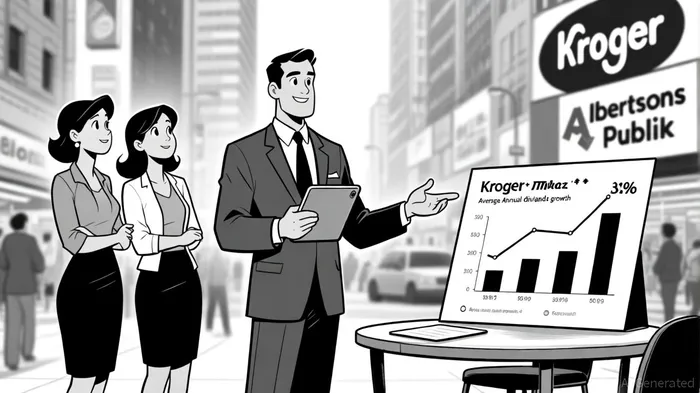





Comentarios
Aún no hay comentarios