
The Kroger Co.'s Q3 2026: Contradictions Emerge on Digital E-commerce Strategy, Pharmacy Drug Pricing, Consumer Behavior, Store Expansion, and E-commerce Profitability
Date of Call: December 4, 2025
Financials Results
- EPS: $1.05 adjusted EPS for Q3, up 7% YOY
- Gross Margin: FIFO gross margin rate increased 49 basis points YOY (increased 24 bps YOY excluding sale of Kroger Specialty Pharmacy)
- Operating Margin: Adjusted FIFO operating profit $1.1B, up 7% YOY; OG&A rate (ex-fuel/adjustments) increased 27 bps YOY (9 bps on an underlying basis excluding Specialty Pharmacy sale)
Guidance:
- Identical sales without fuel narrowed to 2.8%–3.0% for the full year.
- Raised full-year adjusted EPS guidance to $4.75–$4.80 (includes a $0.07 LIFO headwind vs start of year).
- E-commerce expected to be profitable in 2026 driven by approximately $400M of incremental operating profit from fulfillment changes.
- Inflation Reduction Act to lower Q4 identical sales w/o fuel ~30–40 bps but expected to have no earnings impact.
Business Commentary:
- E-commerce Model Review and Profitability:
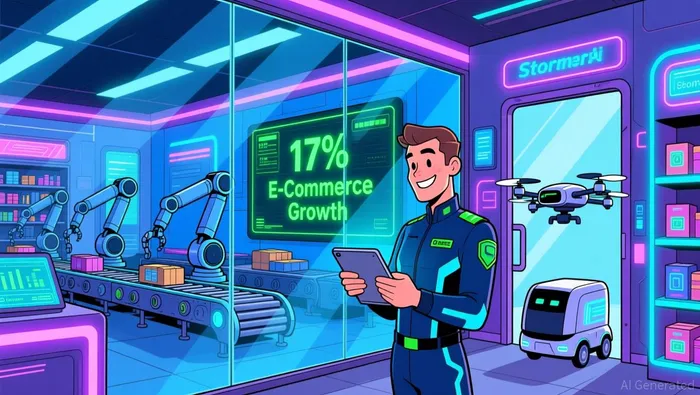
- Kroger's e-commerce business reported a
17%growth in Q3, reflecting the sixth consecutive quarter of double-digit sales growth. - The company evolved its hybrid fulfillment model to leverage automated fulfillment and store-based fulfillment, aimed at improving efficiency and profitability.
- The decision to close three automated fulfillment centers and rely more on store-based fulfillment is expected to contribute approximately
$400 millionin e-commerce profitability improvements in 2026.
- Store Operations and Customer Experience:
- Internal composite scores measuring key metrics like in-stocks and customer service continued to show steady improvement.
- Investments were made to improve store hours and in-stock levels to enhance checkout speed and customer service, resulting in significant year-over-year reductions in wait times.
The use of an AI-powered workforce management platform helped in proactively filling open shifts and ensuring optimal staffing during peak periods.
Challenges in Consumer Behavior and Market Share:
- Identical sales without fuel grew by
2.6%year-over-year, accelerated by4.9%on a 2-year stack basis. - Higher-income households continued strong spending while middle-income customers felt financial pressure, leading to smaller, more frequent trips and reduced discretionary purchases.
- The company increased price investments to support customer savings, particularly during periods of government shutdowns and SNAP benefit pauses.
- Pharmacy and E-commerce Sales Growth:
- Pharmacy sales contributed positively to overall gross profit growth, driven by strong growth in core pharmacy scripts and GLP-1s.
- E-commerce sales grew by
17%, led by delivery, with both pickup and delivery showing strong quarter-over-quarter improvement. - The partnership with DoorDash in its first month fulfilled
1 millionorders, indicating potential for new customer acquisition and incremental meal occasions.
Sentiment Analysis:
Overall Tone: Positive
- Management highlighted 'another quarter of strong results' with adjusted EPS up 7% YOY and adjusted FIFO operating profit of $1.1B. They narrowed identical-sales guidance and raised FY EPS range, and expect e-commerce to be profitable in 2026 driven by ~$400M of improvements, signaling constructive forward momentum despite a $2.6B impairment.
Q&A:
- Question from John Heinbockel (Guggenheim): Can you talk to the accelerated store program cadence and whether you will concentrate the footprint or exit/double down in certain markets?
Response: Kroger will accelerate store builds (break ground on 14 in Q4; +30% new-store builds in 2026), prioritize high-return locations and adjacent-market expansion (e.g., Jacksonville Harris Teeter entry) while evaluating acquisitions as appropriate.
- Question from John Heinbockel (Guggenheim): Follow-up — what characteristics are you and the Board seeking in the next CEO?
Response: Seeking an external CEO with deep retail-transformation experience, customer focus, scale operating skills and cultural fit; expect appointment in Q1 2026.
- Question from Edward Kelly (Wells Fargo): How should we think about current grocery identical-sales trends, competition, price investments and gross-margin stability going forward?
Response: Customers are cautious (government shutdown, SNAP pause); Kroger is increasing targeted price/promotional investments to drive traffic while offsetting margin impact via brand mix, sourcing and supply-chain improvements; Q4 tracking slightly ahead of guidance.
- Question from Michael Montani (Evercore ISI): Will the pharmacy drug-pricing headwind annualize to ~100 bps and what tailwinds (Express Scripts impact, DoorDash/Uber Eats) offset it?
Response: The Inflation Reduction Act will reduce Medicare prices materially (60–70% on first 10 negotiated drugs), lowering reported sales but manufacturers will rebate the difference so there is no EPS impact; e‑commerce partner growth, media and other initiatives are expected tailwinds.
- Question from Kelly Bania (BMO): Can you parse pharmacy's impact on the quarter, core grocery units/market share, and how e‑commerce savings will be reinvested (price vs. store standards)?
Response: Pharmacy performance was consistent with recent quarters; core unit trends slightly decelerated (discretionary and meat pressured; deli and natural/organic held up); e‑commerce savings will fund a mix of pricing, store/customer experience and tech investments, with allocation details to be provided with 2026 guidance.
- Question from Michael Lasser (UBS): How did you weigh the risk of relying on third‑party delivery for fulfillment and is e‑commerce profitability solely the $400M savings?
Response: Third‑party partners provide complementary capabilities (scale, immediacy, small‑basket speed) and are seen as incremental sales channels; e‑commerce profitability reflects both the ~$400M savings and ongoing pickup/delivery margin improvements, partner-driven incremental sales and media monetization.
- Question from Jacob Aiken-Phillips (Melius Research): As missions originate on partner platforms, how are relationships structured so Kroger retains first‑party data and comparable media economics?
Response: Retail media grew double digits in Q3 and partnerships were structured so Kroger participates favorably in media opportunities originating on partner platforms while preserving attractive economics; specifics were not disclosed.
- Question from Seth Sigman (Barclays): Are quarter‑to‑date trends improving and are price investments proving effective?
Response: Quarter‑to‑date performance is slightly above the midpoint of Q4 guidance and targeted promotional investments (e.g., lowered Thanksgiving bundle price) are driving traffic; Kroger will continue margin‑considered promotions.
- Question from Simeon Gutman (Morgan Stanley): Now that e‑commerce will be in the green next year, how scalable are incremental margins, and is there increased urgency under current leadership?
Response: E‑commerce is now profitable and expected to continue strong double‑digit growth while the leadership emphasizes speed, decisive actions and increased in‑office collaboration to accelerate execution with minimal anticipated disruption from the CEO transition.
- Question from Thomas Palmer (JPMorgan): How is the $400M e‑commerce benefit broken down and how much funds reinvestment versus preplanned spend?
Response: The ~$400M is split across operating/cash improvements and depreciation reductions; it funds both investments that were likely planned and additional initiatives, providing incremental flexibility—more detail to come with 2026 guidance.
- Question from Rupesh Parikh (Oppenheimer): Does accelerated store opening and the e‑commerce strategy change baseline CapEx?
Response: Near‑term baseline CapEx is unchanged, but the mix will shift toward more store investment to improve ROIC.
- Question from Charles Cerankosky (Northcoast Research): Have mid‑tier customers pulled back and what does that mean for banners like Fred Meyer with higher general‑merchandise exposure?
Response: Middle‑income customers are trading down and making smaller, more frequent trips, which pressures discretionary/GM‑heavy banners, but Fred Meyer is performing well and Kroger will continue to test and deploy multiple store formats (e.g., ~123k and ~99k sq ft).
Contradiction Point 1
Digital E-commerce Strategy and Sustainability
It involves changes in the company's strategy and investment priorities for digital e-commerce, which directly impacts technological advancements and customer satisfaction.
2026Q3: We're excited about store investments, focusing on the right location and market. We're building new stores, and our expansion into Jacksonville with Harris Teeter is significant. We plan to be a national retailer and are open to acquisitions. - Ronald Sargent(CEO)
How do you plan to implement e-commerce fulfillment by leveraging stores, and what details can you share regarding timing and cost? - Leah Jordan(Goldman Sachs Group, Inc., Research Division)
2025Q2: E-commerce is crucial for customer experience and profitability. Stores adjust volumes all the time, and we're seeing delivery growth, especially in shorter windows. - Ronald Sargent(CEO)
Contradiction Point 2
Pharmacy Drug Pricing and Margin Stability
It highlights changes in the company's approach to pharmacy drug pricing and its impact on gross margin stability, which are crucial for financial forecasting and investor confidence.
Will pharmacy drug pricing headwinds annualize closer to 100 bps next year? - Michael Montani(Evercore ISI Institutional Equities, Research Division)
2026Q3: The pharmacy headwind impacts sales but not margin. The 10 highly utilized drugs will see reduced prices, but we'll receive rebates to offset this. - David John Kennerley(CFO)
Has the competitive environment changed? How do you view the price gap? - Leah Jordan(Goldman Sachs Group, Inc., Research Division)
2025Q2: Pharmacy mix impacts gross margin. We're balanced in keeping gross margins stable. - Ronald Sargent(CEO)
Contradiction Point 3
Consumer Behavior and Pricing Strategy
It reflects differing views on consumer behavior and pricing strategy, which directly affect the company's ability to meet customer expectations and maintain market competitiveness.
What are your thoughts on the current grocery ID trend? How do you see gross margin stability evolving? - Edward Kelly(Wells Fargo Securities, LLC, Research Division)
2026Q3: Sales are trending slightly below expectations due to consumer caution and government shutdown impacts. We're focusing on value and serving customers during uncertain times. - Ronald Sargent(CEO)
Has the competitive environment changed? How do you assess the current pricing gap? - Leah Jordan(Goldman Sachs Group, Inc., Research Division)
2025Q2: The competitive backdrop remains rational. Our priorities are to simplify pricing and lower prices, absorbing cost increases as much as possible. - Ronald Sargent(CEO)
Contradiction Point 4
Store Expansion and Investment Strategy
It involves the company's strategic approach to store openings and closures, which directly impacts business growth and market presence.
Can you discuss the cadence of the accelerated store program? Are there opportunities to exit certain locations or double down in others as part of the store effort? - John Heinbockel (Guggenheim Securities, LLC, Research Division)
2026Q3: We plan to be a national retailer and are open to acquisitions. - Ronald Sargent(CEO)
Can you discuss the strategy for store closures and openings, including geographic focus and preferred formats? - Chuck Cerankosky (Northcoast Research)
2026Q1: We're closing 60 stores over 18 months across various geography. Openings are planned to accelerate, focusing on marketplace store formats in high-growth areas. - Ronald Sargent(CEO)
Contradiction Point 5
E-commerce Profitability and Strategic Partnerships
It highlights the company's approach to e-commerce profitability and strategic partnerships, which are critical for future business growth and competitive positioning.
What are the risks of relying heavily on third-party providers for e-commerce fulfillment? Is e-commerce profitability solely due to the $400 million losses disappearing? - Michael Lasser (UBS Investment Bank, Research Division)
2026Q3: E-commerce will be profitable due to strategic decisions and new partnerships, not just from closing fulfillment centers. - Ronald Sargent(CEO)
What drove the acceleration in digital sales, and what role do Instacart and Ocado play? - Kelly Bania (BMO Capital Markets Equity Research)
2026Q1: We are accelerating our e-commerce growth strategy, taking bold steps to improve profitability. We're addressing the underlying cost structure, aligning e-commerce and fulfillment to optimize operations, and enhancing the digital customer experience to differentiate our value proposition. - Ronald Sargent(CEO)







Comentarios
Aún no hay comentarios