
Kroger's Private Selection: A Strategic Powerhouse in the Premium Private-Label Sector
In the evolving landscape of the grocery sector, private-label brands have emerged as critical drivers of profitability and customer loyalty. Among these, Kroger's Private Selection stands out as a strategic cornerstone of the retailer's premium private-label portfolio. With a 22% share of the premium food and beverage tier in 2025, according to a Supermarket Perimeter report, Kroger's Private Selection has not only capitalized on shifting consumer preferences but also outpaced national brands in key categories, signaling its long-term value creation potential.
Market Trends: The Rise of Private Labels
The grocery industry is witnessing a seismic shift in consumer behavior, with private-label brands increasingly perceived as equal to or superior to national brands. According to a 2025 Supermarket Perimeter report, 69% of shoppers now view private-label products as offering comparable or better quality at a lower price. This sentiment is reflected in Kroger's performance: its Private Selection brand achieved mid-single-digit growth in Q3 2024, outpacing national brands in categories like gourmet snacks and fresh produce, as Grocery Dive reports.
Kroger's broader "Our Brands" portfolio, which includes over 13,000 items and generates $30 billion in annual sales, underscores the retailer's commitment to private-label dominance, according to the Supermarket Perimeter report. By offering a multi-tiered strategy-from budget-friendly Smart Way to premium Private Selection-Kroger has captured 90% of customer households purchasing private-label products, according to Food Business News. This diversification not only strengthens margins but also insulates the company from pricing pressures in the national brand segment.
Competitive Positioning: Outpacing Rivals
Kroger's Private Selection faces stiff competition from rivals like Whole Foods 365 and Albertsons Aloha, yet its market share remains robust. As of 2025, Kroger's private-label sales account for 32% of total revenue, significantly higher than Albertsons' 28% and Whole Foods' 15%, according to an Actowizmetrics analysis. This edge stems from Kroger's ability to blend innovation, quality, and affordability.
Whole Foods 365, while emphasizing ethical sourcing and premium quality, has faced challenges post-Amazon acquisition, including reduced product offerings to prioritize Amazon's own brands, as noted in the Supermarket Perimeter piece. Albertsons, on the other hand, has focused on urban delivery convenience and sustainability, launching 500 new private-label products in 2025 according to an Albertsons strategy guide. However, Kroger's Field & Vine line of regionally grown berries and its peri peri sauces exemplify its unique value proposition: locally sourced, premium ingredients at a 20% price advantage over national brands, as Grocery Dive reported.
Innovation and Strategic Expansion
Kroger's 2025 strategy hinges on relentless innovation. The company plans to introduce 900 new private-label items, including limited-edition products like Private Selection Peanut Butter Cups and Fire Roasted Poblano Ranch Salad Dressing, according to a PR Newswire release. This aligns with consumer demand for novelty and quality, particularly among millennials and health-conscious shoppers.
Digitally, Kroger's investments in AI, robotics, and autonomous delivery have boosted digital sales by 11% in Q4 2024, with digitally engaged customers spending 30% more; these advancements enhance omnichannel capabilities, ensuring Private Selection remains competitive in an era where convenience and personalization are paramount.
Long-Term Value Creation
Kroger's Private Selection is not just a product line-it's a profit engine. With $2.9+ billion in annual sales and a portfolio of 3,600+ unique items, the brand contributes significantly to Kroger's EBITDA margins. Its success is underpinned by category-specific "deep dives" that identify innovation opportunities and price advantages, ensuring sustained growth.
Moreover, Kroger's focus on sustainability and ethical sourcing-such as the Sourced for Good program, which channels $10 million into farming communities-is highlighted in a Retail Today feature, and resonates with eco-conscious consumers, further solidifying brand loyalty.
Conclusion
Kroger's Private Selection exemplifies how a well-executed private-label strategy can drive profitability, customer retention, and market leadership. By leveraging innovation, digital transformation, and a tiered product portfolio, KrogerKR-- has positioned Private Selection as a premium yet accessible alternative to national brands. As the grocery sector continues to consolidate, Kroger's private-label dominance-bolstered by its 2025 expansion plans-suggests a compelling long-term investment opportunity.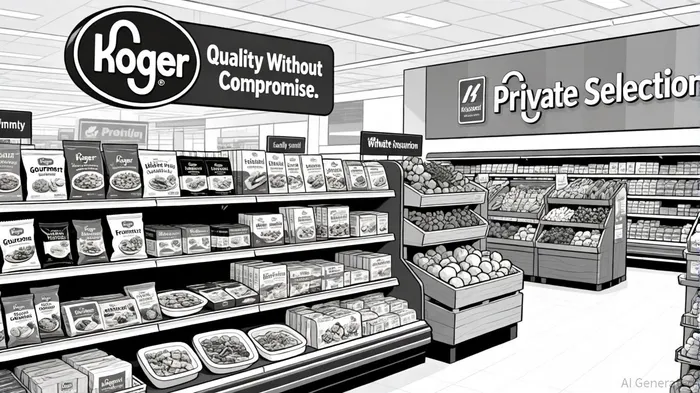





Comentarios
Aún no hay comentarios