
Kroger's Buyback and the Grocery Moat: A Value Investor's Assessment
The immediate signal is clear. Yesterday, Kroger's stock climbed +2.69% to $61.11, a move that outpaced the broader market. This pop followed a period of underperformance, as shares had fallen 5.82% over the previous month. The catalyst for this recent uptick appears to be a major capital return action. In December 2025, KrogerKR-- completed a significant buyback phase, purchasing about 14.2% of its stock for roughly US$6.60 billion. Then, on December 23, the company took a decisive step forward, lifting its total buyback authorization to about US$9.50 billion.
This sequence-aggressive repurchases followed by a substantial authorization hike-frames the core investment question. Is this a powerful vote of confidence from management, signaling they see intrinsic value below the current price? Or is it simply noise, a tactical move that does little to address the underlying business challenges? The expanded buyback capacity is a strategic tool, but its value hinges entirely on the company's ability to generate the cash flow to fund it and the durability of its competitive position. For a value investor, the stock's recent move is merely the starting point. The real analysis begins with evaluating whether this capital return strategy is being applied to a business with a wide and enduring moat, or one facing persistent margin pressure and costly transformation.
The Moat: Scale, Private Labels, and the Competitive Reality
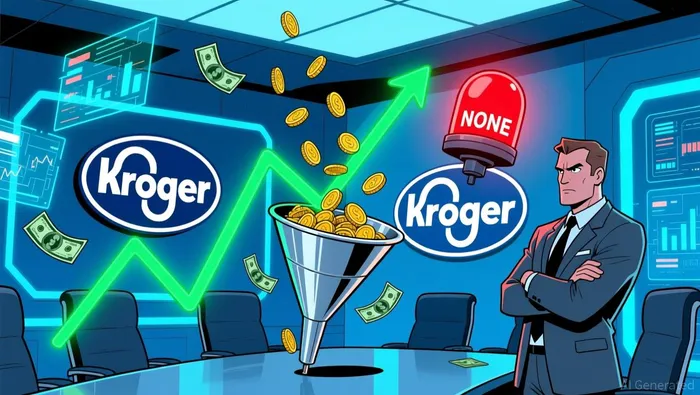
For a value investor, the most critical question is the durability of a business's competitive advantage. Kroger's economic moat, according to recent analysis, is rated as "None". This is a stark assessment. It suggests the company lacks a wide, sustainable barrier that protects its profits from competitors over the long term. In the Buffett/Munger framework, a "moat" is the fortress that allows a business to compound value for decades. Without one, the company is more exposed to price wars, shifting consumer preferences, and the relentless pressure of rivals.
Yet, Kroger does possess tangible advantages that provide a degree of pricing power and margin support. Its sheer scale and extensive private-label offerings are key. By manufacturing and selling its own store brands, Kroger captures higher margins than it would from national brands. This strategy is a classic lever for a retailer, allowing it to maintain profitability even when facing cost pressures. The company's omnichannel model, bolstered by partnerships like the one with Ocado, also provides operational efficiencies and a modern customer experience that a smaller competitor would struggle to replicate overnight.
The 2026 consumer backdrop offers a favorable tailwind for this model. As the year begins, the fundamental economic reality that people still need to eat supports steady underlying demand. With dining out remaining expensive relative to cooking at home, the grocery channel is positioned for resilience. This macro environment provides a stable sales foundation, which is essential for generating the cash flow needed to fund aggressive capital returns.
The implication of a "None" moat for long-term compounding is significant. It means the company's ability to grow earnings and reinvest profit at high returns is not guaranteed. Growth will likely be driven more by operational execution and capital allocation-like the recent buyback-than by an expanding moat. For a value investor, this shifts the focus from the quality of the business's earnings to the quality of its capital allocation. The strategy is sound only if management can consistently deploy cash at a high return, which is a harder task without a wide moat to protect the returns in the first place.
Capital Allocation and Intrinsic Value
The expanded buyback is a direct lever on per-share value. By purchasing about 14.2% of its stock for roughly US$6.60 billion and authorizing a total of $9.50 billion, Kroger is actively reducing its share count. This mechanically supports earnings per share (EPS) and provides a floor under the stock price. For a value investor, this is a classic capital allocation tool: buying back shares when management believes the intrinsic value exceeds the market price. The strategy is sound only if the company can generate sufficient cash flow to fund these repurchases without compromising its operational needs.
Yet, the market's reaction to this move is telling. Despite the buyback signal, the stock trades at a P/E ratio of 58.19, a significant premium to its own historical average. This valuation suggests the market is pricing in a successful turnaround, not just a capital return. The high multiple reflects optimism about Kroger's ability to convert steady grocery demand into improved profitability, particularly as it works through digital and labor cost pressures. For a value investor, such a premium leaves little margin of safety. The stock is not cheap; it is expensive relative to its past, meaning the company must execute flawlessly to justify the price.
The dividend adds another layer to the capital return story. Kroger offers a dividend yield of 2.29%, a steady income stream for shareholders. However, the payout ratio tells a more cautious tale. With a dividend payout ratio of 1.15, the company is paying out more in dividends than it earns in net income. This is not sustainable in the long term. It indicates the dividend is being funded by cash flow from operations or financing, not by core earnings. For a value investor, this is a red flag. A truly safe and compounding dividend should be fully covered by earnings, providing a durable income stream without straining the balance sheet.
The bottom line for a value investor is one of tension. The buyback is a disciplined use of capital that supports per-share value. But the current price, trading at a rich P/E multiple and funding an over-leveraged dividend, leaves no room for error. The market is paying for perfection in Kroger's turnaround story. Without a wide and durable moat to protect those returns, the risk is that the company's earnings growth will fail to meet the high expectations embedded in the stock price. The recent pop may be a tactical bounce, but for a long-term investor, the intrinsic value proposition remains uncertain.
Valuation and Key Risks
The numbers tell a story of high expectations meeting persistent skepticism. Analysts project full-year earnings of $4.79 per share, an increase of 7.16% from last year. This forecast supports the recent buyback strategy, as it implies the company can generate the cash flow to fund it. Yet, the market's reaction to this outlook has been one of doubt. Despite the buyback signal, the stock has fallen 15.84% over the past 120 days. This decline suggests underlying concerns about the company's ability to convert its scale into consistent, high returns above its cost of capital.
For a value investor, the current valuation is a major point of tension. The stock trades at a forward P/E of about 11, which seems reasonable on the surface. But this is a forward multiple, and the market is pricing in a successful turnaround. The real test is whether Kroger's financial health can support this premium. The company's "None" moat means its competitive advantages are not wide enough to guarantee those returns. The risk is that earnings growth stalls, failing to meet the high expectations embedded in the price.
Volatility underscores the uncertainty around fair value. The stock's 52-week high of $74.90 is 18.4% above the current price. This choppiness highlights the difficulty in assessing intrinsic value when the business faces significant headwinds. The primary risks are clear. First is commodity cost volatility, which pressures margins and is a constant battle for grocers. Second is the fundamental challenge of converting its massive scale into returns that exceed its cost of capital, a task made harder by the lack of a durable moat. Without a fortress to protect its profits, Kroger must execute flawlessly on operations and capital allocation to justify its price.
The bottom line is one of high stakes. The buyback is a disciplined use of capital, but it is being applied to a stock priced for perfection. For a value investor, the margin of safety is thin. The recent pop may be a tactical bounce, but the underlying financials and valuation suggest the market remains skeptical. The company must navigate cost pressures and prove it can generate sustainable, high returns to close the gap between its current price and its perceived fair value.
The Value Investor's Takeaway
The investment thesis for Kroger in 2026 is a study in tension between a disciplined capital return and a business with a narrow moat. For a value investor, the conclusion hinges on whether the current price offers a sufficient margin of safety given these realities.
The primary catalyst for the stock is operational execution. The company must accelerate its digital sales growth and effectively manage the persistent margin pressure from commodities. The 2026 consumer backdrop, with at-home eating remaining cheaper than dining out, provides a favorable tailwind for steady demand . This foundation is essential for generating the cash flow needed to fund the aggressive buyback program and, more importantly, for proving that Kroger can convert its scale into sustainable profits. The recent impairment charge has cleared a legal overhang, allowing management to focus squarely on this task.
The key risk is that Kroger cannot sustainably convert its scale and private-label strength into returns above its cost of capital. The company's "None" moat means it lacks a wide, durable competitive advantage to protect those returns. Without a fortress, the company is exposed to the relentless pressure of rivals and cost fluctuations. If earnings growth stalls, the intrinsic value of the business would erode, undermining the entire rationale for the current premium valuation.
For a value investor, the thesis is therefore a high-stakes bet on management's ability to execute flawlessly. The expanded buyback is a powerful tool to support per-share value, but it is being applied to a stock trading at a rich P/E ratio of 58.19. This premium leaves no room for error. The market is pricing in a successful turnaround, not just a capital return. Without a wide moat to guarantee those returns, the risk is that Kroger's earnings growth will fail to meet the high expectations embedded in the price. The recent pop may be a tactical bounce, but for a long-term investor, the intrinsic value proposition remains uncertain. The guardrail is clear: the stock's value is not in its moat, but in the flawless execution of its operational plan.





Comentarios
Aún no hay comentarios