
Kraken and Circle's Stablecoin Partnership: A Catalyst for Onchain Finance and Liquidity Growth
Strategic Infrastructure: Liquidity, Fees, and Global Reach
The Kraken-Circle partnership is structured around three core objectives: increasing liquidity, reducing conversion fees, and expanding stablecoin deployment across Kraken's platform, according to a Bitcoin.com report. By leveraging Circle's fully collateralized USDC and EURC stablecoins, Kraken aims to provide users with lower transaction costs and enhanced access to onchain financial tools. For instance, EURC's introduction to Kraken's platform marks a significant milestone for European users, offering a euro-pegged stablecoin that simplifies cross-border transactions and DeFi participation, as Cointribune reports.
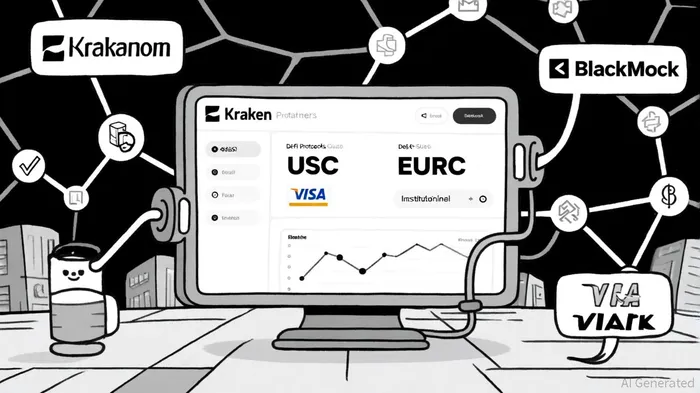
Circle's Arc testnet further amplifies this infrastructure push. As a proprietary Layer 1 blockchain, Arc is designed to support enterprise-grade financial services, including lending, capital markets, and global payments, with USDC as its native gasGAS-- token, according to a Yahoo Finance report. The testnet has already attracted major players like BlackRock, Visa, and AWS, signaling growing institutional confidence in stablecoin-based infrastructure. This development positions Circle as a key player in bridging traditional finance and decentralized systems, a trend that could drive sustained demand for its stablecoins.
Market Impact: Liquidity Growth and Onchain Adoption
Kraken's Q3 2025 financial report highlights the platform's expanding role in the stablecoin ecosystem. Total transaction volume reached $561.9 billion, a 23% increase from the previous quarter, according to Kraken's Q3 report. While specific metrics for USDC and EURC are not disclosed, the broader trend of rising stablecoin usage aligns with the partnership's goals. By reducing conversion fees and improving liquidity, Kraken is likely to attract both retail and institutional users seeking cost-effective onchain solutions.
The partnership also accelerates the adoption of onchain finance. For example, Kraken's integration of EURC into its trading pairs and DeFi tools could drive demand for stablecoin-based lending and staking protocols. Additionally, Kraken's recent launch of Bundles-a tool for diversified crypto portfolios-and its collaboration with Trust Wallet to tokenize stocks further demonstrate its commitment to expanding onchain use cases, as described in Circle's press release. These initiatives position Kraken as a hub for hybrid financial systems, blending traditional and decentralized markets.
Regulatory Challenges and Long-Term Outlook
Despite the partnership's potential, regulatory headwinds in the European Union could pose risks. Circle has warned that overlapping MiCA and Payment Services Directive regulations may require stablecoin providers to obtain two separate licenses by March 2026, according to Blockonomi. This complexity could slow adoption in the EEA and increase compliance costs for Kraken and Circle. However, the partnership's focus on EURC-a euro-pegged stablecoin-suggests a proactive approach to navigating these challenges, potentially setting a precedent for future regulatory alignment.
For investors, the Kraken-Circle collaboration represents a strategic bet on the infrastructure layer of the new internet financial system. By prioritizing liquidity, cross-border utility, and institutional-grade tools, the partnership addresses key barriers to mass adoption. While regulatory uncertainties persist, the growing demand for stablecoins in DeFi and global payments suggests that this alliance could drive long-term value creation.
Conclusion
The Kraken-Circle partnership is more than a market expansion play-it is a foundational investment in the infrastructure of onchain finance. By enhancing liquidity, reducing costs, and integrating stablecoins into a broader financial ecosystem, the collaboration addresses critical pain points for users and institutions alike. As the stablecoin market matures, investors should monitor Kraken's transaction volume trends, Circle's Arc testnet developments, and regulatory updates in the EU. For those with a long-term horizon, this partnership offers a compelling case for infrastructure-driven growth in the digital asset sector.





Comentarios
Aún no hay comentarios