
Can Kraft Heinz's Breakup Unlock Shareholder Value?
The latest twist in the saga of Kraft Heinz-a company synonymous with processed food staples-has sent ripples through the consumer goods sector. On September 2, 2025, the conglomerate announced its plan to split into two publicly traded entities: Global Taste Elevation Co. and North American Grocery Co. According to the company's announcement. The move, framed as a bid to reduce operational complexity and unlock value, has sparked a heated debate among investors. But in an industry where restructuring is as common as ketchup on a burger, can this breakup truly deliver on its promises?
The Rationale Behind the Split
Kraft Heinz's decision to spin off its brands into two distinct entities mirrors a familiar playbook in mature consumer staples. By separating its premium and global brands (Heinz, Philadelphia, Kraft Mac & Cheese) from its more commoditized U.S. offerings (Oscar Mayer, Lunchables), the company aims to create sharper strategic focus. According to the firm, Global Taste Elevation Co. , while North American Grocery Co. reported $10.4 billion in sales and $2.3 billion in EBITDA. 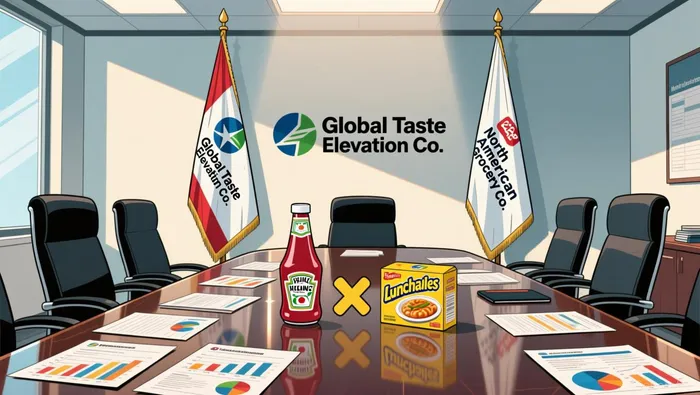 The logic is straightforward: each entity can tailor its innovation, marketing, and cost structures to its core markets.
This approach echoes Procter & Gamble's (P&G) "Organization 2005" restructuring, which streamlined operations by shifting from geographic to product-based units. While P&G's early efforts faltered under poor execution, the company eventually rebounded under , . The lesson? Restructuring works when paired with strong leadership and clear operational discipline. Kraft Heinz's appointment of Steve Cahillane, former CEO of Kellanova (formerly Kellogg's), as head of Global Taste Elevation Co. suggests the company is betting on seasoned expertise to avoid past missteps.
Market Reactions: A Mixed Bag
The announcement initially rattled investors. , a sharp reaction that hinted at skepticism. , whose Berkshire Hathaway holds a 10% stake in the company, publicly criticized the move, calling it a "defensive tactic" that fails to address deeper issues like declining sales volumes and shifting consumer preferences. His remarks underscore a critical question: Is this breakup a genuine value-creator or a distraction from structural challenges?
Yet, the data tells a more nuanced story. A discounted cash flow (DCF) model , implying a 64.4% discount to its current price. Meanwhile, its price-to-sales ratio of 1.15x . These metrics suggest the market may be overcorrecting, creating a potential buying opportunity for long-term investors who believe in the spin-off's success.
Success Factors: Can History Repeat?
For Kraft Heinz's breakup to work, it must align with the success factors seen in other consumer staples restructurings. PepsiCo and Estée Lauder, for instance, have thrived by embracing digital innovation and direct-to-consumer strategies. PepsiCo's automation-driven productivity initiatives and Estée Lauder's pivot to e-commerce highlight the importance of adapting to modern retail dynamics. Kraft Heinz's new entities will need to invest heavily in digital tools and agile supply chains to compete with upstarts like Beyond Meat or Oatly, which are reshaping the processed food landscape.
Another critical factor is pricing power. Procter & Gamble's ability to pass on cost increases during inflationary periods while maintaining brand loyalty offers a blueprint. Global Taste Elevation Co., with its premium brands, may have an edge here, but North American Grocery Co. could struggle if consumers continue to shift away from processed foods. Sustainability and purpose-driven branding, key themes in Nestlé's and Estée Lauder's recent restructurings, will also be vital.
The Bottom Line: A Calculated Gamble
Kraft Heinz's breakup is neither a magic bullet nor a death knell. It's a calculated gamble in a sector where stagnation is the real risk. The spin-off's success hinges on three pillars:
1. Leadership Execution: Cahillane's track record at Kellogg's and the transition plan for Carlos Abrams-Rivera will be critical.
2. Operational Efficiency: The separation must drive tangible cost savings without sacrificing innovation.
3. Market Adaptability: Both entities must pivot quickly to address trends like plant-based diets and e-commerce.
If these elements align, the breakup could unlock value by allowing each company to focus on its strengths. However, if the split merely papering over deeper issues-as Buffett fears-the market may revisit its skepticism. For now, the undervalued stock and historical precedents suggest a cautiously optimistic stance. Investors should monitor the 2026 separation closely, watching for early signs of operational clarity and margin expansion.





Comentarios
Aún no hay comentarios