
Kosmos 482's Fiery Return: A Warning Shot in the Space Debris Crisis
Subheading: The Soviet-Era Spacecraft’s Unplanned Journey Home Highlights the Growing Risks of Orbital Clutter—and Opportunities for Investors
The Indian Ocean’s watersWAT-- received an unexpected visitor on May 10, 2025: Kosmos 482, a Soviet-era spacecraft launched in 1972 to study Venus but stranded in Earth’s orbit after a rocket malfunction. Its uncontrolled reentry after 53 years in space—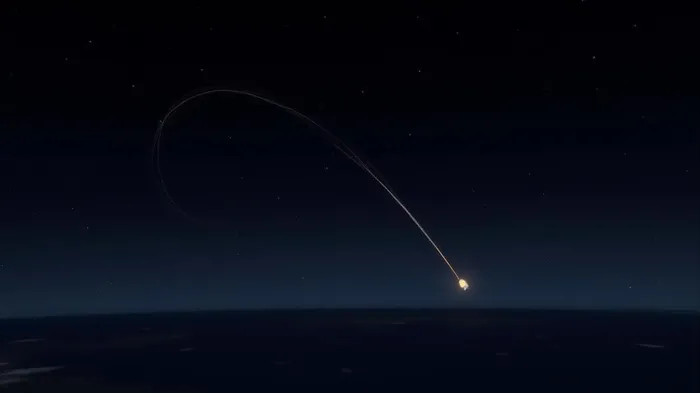 —has become a stark symbol of humanity’s growing space debris problem. For investors, this event isn’t just a historical footnote—it’s a wake-up call to the risks and opportunities in a rapidly commercializing space sector.
The Unplanned Homecoming
Kosmos 482 was no ordinary piece of space junk. Designed to withstand Venus’s 900°F surface temperatures and 90-atmosphere pressure, its 1-meter titanium shell and 1,190-pound mass made it far more durable than typical orbital debris. When it reentered Earth’s atmosphere, experts like Marco Langbroek of the European Space Agency (ESA) estimated it struck the ocean at 150 mph, releasing energy equivalent to a large meteorite fragment.
The spacecraft’s survival was no accident. Its robust construction—a relic of the Cold War’s “better-safe-than-sorry” engineering—meant it outlasted most modern satellites. But as the ESA noted, “What goes up must come down. What you put up in space today might affect us for decades to come.”
The Space Debris Time Bomb
Kosmos 482’s reentry is a microcosm of a macro problem. The ESA reports over 14,240 satellites currently in orbit, with only 11,400 operational. Megaconstellations like SpaceX’s Starlink (7,200 satellites) and Amazon’s Kuiper (3,200 satellites) are compounding the issue. ****
The risks are twofold:
1. Physical Hazards: Uncontrolled reentries could damage property or harm humans. The Aerospace Corporation estimated Kosmos 482 posed a 0.4 in 10,000 injury risk—low individually but rising collectively.
2. Environmental Impact: Burning debris could release toxic materials or deplete the ozone layer.
Investment Implications: Playing the Space Cleanup Game
The Kosmos 482 incident underscores opportunities in sectors addressing orbital congestion:
1. Space Debris Tracking & Mitigation
Companies like LeoLabs (LEOL) and Orbital Insight are pioneers in tracking orbital objects. As the ESA’s Space Surveillance and Tracking system expands, demand for real-time monitoring tools will surge.
2. Satellite Design Innovations
Firms designing satellites with self-destruct mechanisms or lightweight materials—such as Maxar Technologies (MAXR)—are reducing debris risks. Investors should watch for partnerships with regulatory bodies.
3. Insurance & Liability
The 1967 Outer Space Treaty assigns liability to nations for their spacecraft’s reentry. As incidents rise, insurers like AIG or Chubb may see demand for space liability policies, especially for commercial launches.
4. Regulatory Compliance Tech
The EU’s proposed Space Sustainability Rating system, which mandates environmental standards for satellites, favors companies like Airbus (AIR) that develop compliant tech.
Conclusion: Orbit’s New Economy
Kosmos 482’s return is a reminder that space is no longer a frontier—it’s a finite resource. With over 2,200 active satellites launched in 2024 alone, the cost of inaction is clear. Investors ignoring space debris mitigation risk missing out on a $100 billion market by 2030, per Euroconsult.
The actionable takeaway? Back firms solving orbital clutter—from tracking systems to sustainable satellite design. As the skies grow crowded, the cleanup crew will be the next space billionaires.
Data sources: ESA, The Aerospace Corporation, SpaceX/Kuiper project disclosures.







Comentarios
Aún no hay comentarios