
Korean Won Volatility: A Storm of Politics and Trade Fuels Uncertainty
The Bank of Korea (BOK) has issued a stark warning: volatility in the foreign exchange (FX) market is here to stay. Governor Rhee Chang-yong’s recent remarks, reported by Yonhap, underscore the fragile state of the South Korean economy amid global and domestic headwinds. From U.S. tariffs to a political leadership vacuum, the won’s value—fluctuating between 1,391.5 and 1,487.6 against the dollar—reflects a perfect storm of uncertainty.
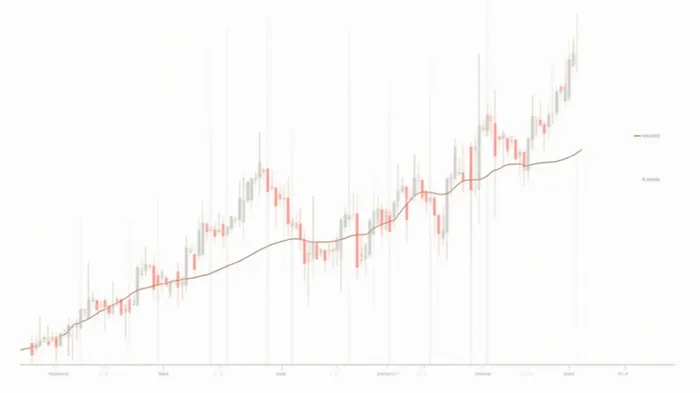
The FX Volatility Landscape
The won’s recent rebound to 1,391.5 per dollar in late April 2025—its strongest level since late November—masks deeper instability. Earlier in April, it hit a 14-month low of 1,487.6, driven by the U.S. imposition of country-specific reciprocal tariffs on South Korean goods. These tariffs, targeting sectors like automobiles and steel, have intensified trade tensions and weighed on investor confidence.
Rhee emphasized that the won’s trajectory remains unpredictable, noting, “It is still too early to say whether the currency exchange rate has hit the bottom.” The BOK chief pointed to two key drivers: global economic uncertainty, including U.S.-China trade dynamics, and domestic political turmoil, which has left South Korea in a leadership vacuum.
Political Instability: A Leadership Void
The resignation of former Prime Minister Han Duck-soo and ex-Finance Minister Choi Sang-mok—both now presidential candidates—has left critical roles unfilled just weeks before South Korea’s snapSNAP-- election on June 3. This vacuum has “significantly weighed on the economy,” Rhee said, with corporate investment and credit standing at risk.
Political paralysis has also stalled progress on addressing U.S. tariffs, which threaten key industries. The automotive sector, for instance, accounts for over 20% of South Korea’s exports, and U.S. tariffs could cut its competitiveness.
Trade Negotiations: A Delicate Dance
South Korea and the U.S. began bilateral trade talks in April 2025, with exchange rates now a central issue. Rhee expressed skepticism about U.S. intentions, asking, “We are not sure whether what the U.S. really wants is a strong dollar or a weak dollar.” The inclusion of currency discussions in trade negotiations adds another layer of complexity.
A resolution here could stabilize the won, but risks remain. If talks fail, South Korea’s exporters—already grappling with tariffs—face further headwinds.
Monetary Policy: Easing to Offset Headwinds
The BOK has committed to aggressive monetary easing, with Rhee vowing to “cut borrowing costs sufficiently” to support growth. This includes revising downward its growth forecast, which was already at a multi-year low of 1.5% for 2025 before the latest political turmoil.
Conclusion: Volatility to Persist Until Certainty Returns
South Korea’s FX market volatility is unlikely to subside until two critical uncertainties are resolved: political stability and U.S. trade policy. The snap election in June offers a potential turning point—if a new administration can stabilize governance and negotiate favorable trade terms with Washington.
Historical data reinforces this: during the 2017 election cycle, the won fell over 5% amid political uncertainty but rebounded 3% after a stable government was formed. This time, however, global pressures—like U.S.-China trade tensions—add another layer of risk.
Investors should brace for continued volatility. The won’s value is now a barometer of South Korea’s ability to navigate this perfect storm. Until clarity emerges, expect further swings—and a BOK forced to walk a tightrope between growth support and currency defense.
Data sources: Bank of Korea statements, Yonhap News Agency, U.S. Trade Representative reports.







Comentarios
Aún no hay comentarios