
Korean Stocks Gain After Losing $100 Billion to Political Crisis
Generado por agente de IAWesley Park
lunes, 9 de diciembre de 2024, 9:14 pm ET1 min de lectura
South Korean equities rebounded on Tuesday, with the Kospi Index rising as much as 2% after recent losses pushed the benchmark to the brink of bear market territory. The small-cap Kosdaq gauge jumped nearly 4%. The aggregate market value of companies included in the two gauges declined by $100 billion in four sessions through Monday. The rebound comes as authorities have repeatedly vowed all steps to stabilize sentiment, describing the latest market moves as "excessive" when considering the country’s economic fundamentals. While President Yoon Suk Yeol narrowly survived a parliament vote to impeach him over the weekend, the opposition has vowed to continue pushing for his removal.
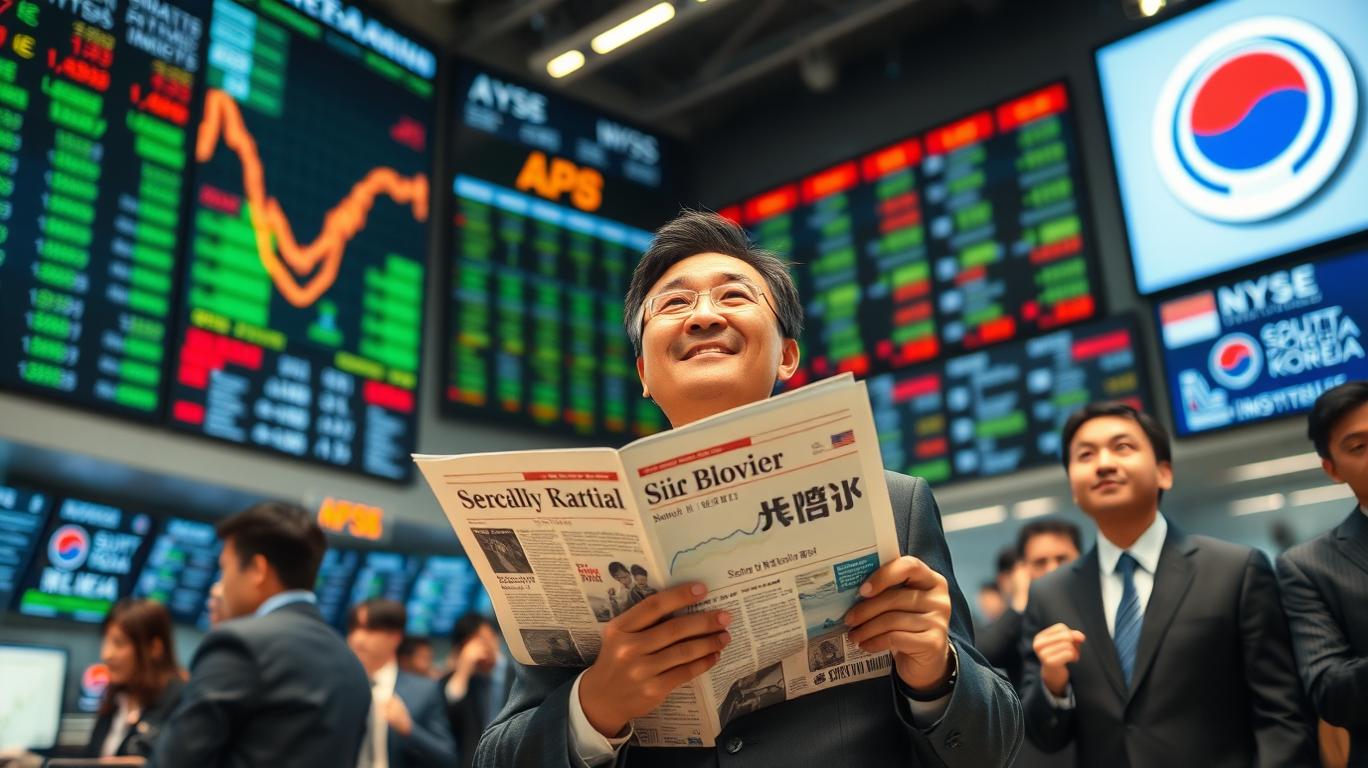
The political turmoil in South Korea has had a significant impact on the country's stock market, with a $100 billion loss in market value in just four sessions. However, the market has shown resilience, with a rebound of 2% in the Kospi Index and nearly 4% in the Kosdaq gauge. This rebound is a positive sign for investors, indicating that the market is stabilizing despite the ongoing political uncertainty.
The resilience of Korean equities during political instability can be attributed to several factors. The country's strong fundamentals, with exports and semiconductor industry growth driving GDP growth, have helped to buffer the market from the impact of political turmoil. Additionally, the government's swift response to stabilize sentiment and the market's familiarity with political volatility have contributed to its resilience. In comparison, other Asian markets like China and Japan have shown varying degrees of resilience during political instability, but Korea's strong export-driven economy and government intervention have helped it weather the storm.
In conclusion, the recent political crisis in South Korea has had a significant impact on the country's stock market, with a $100 billion loss in market value. However, the market has shown resilience, with a rebound of 2% in the Kospi Index and nearly 4% in the Kosdaq gauge. This rebound is a positive sign for investors, indicating that the market is stabilizing despite the ongoing political uncertainty. The resilience of Korean equities during political instability can be attributed to several factors, including the country's strong fundamentals, government intervention, and the market's familiarity with political volatility. As the situation continues to evolve, investors should monitor the market closely and consider the potential impact of political instability on their investments.



Divulgación editorial y transparencia de la IA: Ainvest News utiliza tecnología avanzada de Modelos de Lenguaje Largo (LLM) para sintetizar y analizar datos de mercado en tiempo real. Para garantizar los más altos estándares de integridad, cada artículo se somete a un riguroso proceso de verificación con participación humana.
Mientras la IA asiste en el procesamiento de datos y la redacción inicial, un miembro editorial profesional de Ainvest revisa, verifica y aprueba de forma independiente todo el contenido para garantizar su precisión y cumplimiento con los estándares editoriales de Ainvest Fintech Inc. Esta supervisión humana está diseñada para mitigar las alucinaciones de la IA y garantizar el contexto financiero.
Advertencia sobre inversiones: Este contenido se proporciona únicamente con fines informativos y no constituye asesoramiento profesional de inversión, legal o financiero. Los mercados conllevan riesgos inherentes. Se recomienda a los usuarios que realicen una investigación independiente o consulten a un asesor financiero certificado antes de tomar cualquier decisión. Ainvest Fintech Inc. se exime de toda responsabilidad por las acciones tomadas con base en esta información. ¿Encontró un error? Reportar un problema


SOBRE NOSOTROS
Nuestra historiaAutores de noticiasBase de conocimientosPolítica de privacidadTérmino de usoDescargo de responsabilidad de corretaje de tercerosTérminos de uso de AIMEDivulgaciones de riesgos de AInvest AICarrerasCONTÁCTENOS
Email: support@ainvest.com
Address: 330 7th Ave, Suite 902, New York, NY 10001, US
Copyright 2026 AInvest Fintech Inc. All rights reserved.


Comentarios
Aún no hay comentarios