
Kohl's Earnings Volatility and Retail Sector Challenges: A Speculative Rally or a Cautionary Tale?
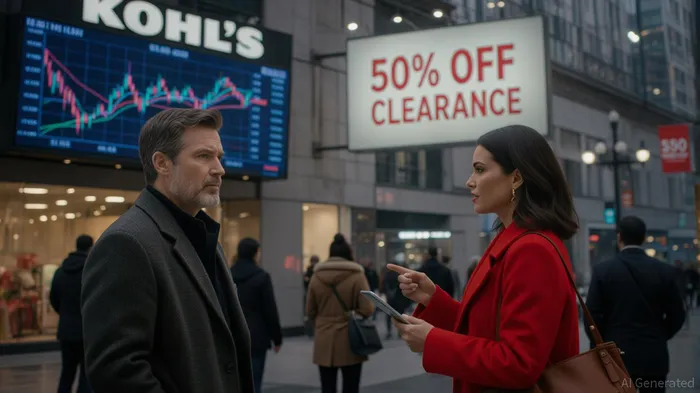
The recent 90% intraday surge in Kohl's CorporationKSS-- (KSS) has ignited a frenzy among retail investors, fueled by social media speculation and a short squeeze. Yet, beneath the surface of this dramatic price action lies a complex interplay of speculative fervor, deteriorating fundamentals, and broader retail sector headwinds. For investors, the question is stark: Is this a fleeting trading opportunity, or does it signal a deeper crisis for a company already struggling to adapt to a transformed retail landscape?
The Mechanics of the Rally
KSS's Q2 2025 earnings report, released on May 29, 2025, offered a mixed bag. While the company narrowly beat expectations with an adjusted EPS of -$0.13 (versus -$0.22) and revenue of $3.05 billion (up from $3.01 billion estimates), the underlying trends remain troubling. Revenue declined 4.1% year-over-year, reflecting persistent challenges in the discretionary retail sector. The stock's subsequent 90% surge—interrupted by trading halts—was driven by a perfect storm: a 50% short interest ratio, viral social media campaigns, and a lack of institutional conviction. Hedge funds were divided, with UBSUBS-- and Balyasny adding shares but BlackRockBLK-- and Jane Street trimming positions. Analysts, meanwhile, remain bearish, with six “sell” ratings and a median price target of $8.00, far below the stock's recent highs.
The Retail Sector's Perfect Storm
KSS's struggles are emblematic of a broader retail sector grappling with existential shifts. In 2025, the industry is defined by three key trends:
- The Rise of In-House Resale: Brands like Levi's and LululemonLULU-- are launching secondhand sections, capturing Gen Z's sustainability-driven demand while undercutting third-party platforms. This trend threatens traditional retailers like KSSKSS--, which lack the brand equity to monetize resale effectively.
- DTC Model Fatigue: Over half of publicly traded DTC brands have seen stock declines of 50% or more since going public. Kohl'sKSS--, which has long relied on a hybrid model, now faces competition from DTC brands pivoting to omnichannel strategies, while its own digital transformation lags.
- Value-Seeking Consumers: With groceries and health products outperforming discretionary sectors, retailers must cater to a price-conscious base. Kohl's reported a -5.0% same-store sales decline in Q2 2025, underscoring its vulnerability in a market where discounters like WalmartWMT-- and CostcoCOST-- dominate.
Macro Risks and Structural Weaknesses
The broader economic environment compounds these challenges. Tariffs on Chinese goods have eroded margins for 78% of retailers, while the Producer Price Index (PPI) rose 3.3% year-over-year in July 2025. For KSS, which operates in tariff-sensitive sectors like apparel and home goods, this means prolonged margin pressure. Meanwhile, consumer behavior is shifting toward non-alcoholic beverages and reduced discretionary spending—a trend accelerated by the Surgeon General's cancer warnings on alcohol.
Retailers are also racing to adopt AI-driven personalization and automation, but KSS's legacy systems and fragmented data infrastructure hinder its ability to compete. Competitors like Walmart and AmazonAMZN-- are leveraging AI for demand forecasting and inventory management, while KSS remains mired in operational inefficiencies.
Investment Implications: Short-Term Play or Long-Term Risk?
For short-term traders, the KSS rally presents a high-risk, high-reward scenario. The stock's volatility—driven by social media coordination and a short squeeze—could extend if the speculative narrative gains further traction. However, the lack of fundamental support (e.g., revenue growth, margin expansion) means the upside is precarious. A breakdown in sentiment could trigger a rapid reversal, particularly if short sellers cover positions or analysts issue further downgrades.
Long-term investors, however, should treat KSS with caution. The company's exposure to discretionary sectors, structural underperformance in same-store sales, and lagging digital transformation efforts suggest a weak competitive position. With the retail sector projected to see a 41.4% earnings decline in textiles and apparel, KSS's long-term prospects remain bleak unless it executes a radical reinvention.
Conclusion: A Tale of Two Markets
KSS's recent surge is a microcosm of the retail sector's broader tension between speculative hype and fundamental reality. While the stock may offer a fleeting opportunity for traders willing to navigate extreme volatility, its long-term risks—tariff-driven margin compression, shifting consumer preferences, and operational inertia—make it a poor bet for patient capital. For investors, the lesson is clear: in a market where retail sentiment can override fundamentals, the line between opportunity and folly is razor-thin.





Comentarios
Aún no hay comentarios