
Why Zero Knowledge Proof's Hardware-Driven Model Outpaces Meme Coin Volatility
The ZKP Hardware Infrastructure: A New Paradigm for Passive Income
Zero Knowledge Proof hardware infrastructure is emerging as a cornerstone of secure, scalable blockchain adoption. By 2025, the market for ZKP hardware is projected to grow at a compound annual growth rate (CAGR) of 17.5%, reaching $3.5 billion by 2033. This growth is fueled by demand for specialized hardware-such as cryptographic accelerators and secure processors-that enables efficient execution of zero-knowledge proofs in sectors like finance and healthcare.
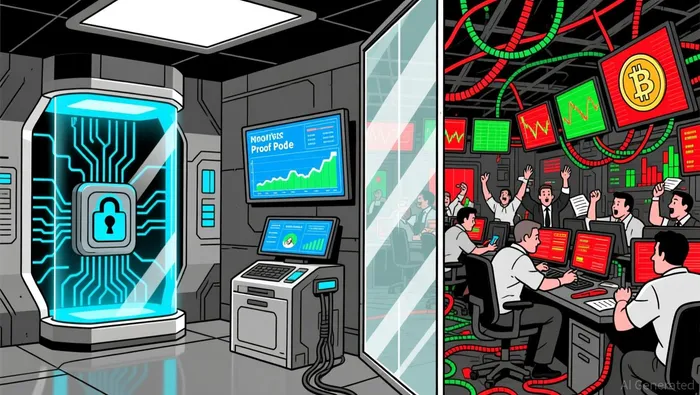
A key innovation driving this sector is the Proof Pod, a plug-and-play hardware unit developed by ZKP projects. These devices allow users to participate in decentralized AI computations verified via zero-knowledge proofs, generating passive income. For instance, a Level 1 Proof Pod can yield approximately $1 daily in ZKP coins, while high-tier units (Level 300) can generate up to $300 daily. This model contrasts sharply with traditional presale projects, as ZKP's infrastructure is "built before it sold", offering tangible utility and transparent token distribution.
The U.S. leads this hardware revolution, with a 2025 market size of $0.8 billion and a forecasted CAGR of 14.5%. This growth reflects a broader shift toward infrastructure that prioritizes security and scalability, addressing critical pain points in blockchain adoption.
Meme Coins: The Volatility Trap
While ZKP projects focus on infrastructure, meme coins thrive on hype and social media-driven speculation. In 2025, the meme coin market has become a hotbed for price manipulation, with 51 reported incidents causing $42 million in losses-19 of which occurred in Q4 alone. One notorious case involved the Popcat meme coin, which plummeted 43% after a whale orchestrated a pump-and-dump scheme using 19 wallets to create a false buy wall. The attack triggered $63 million in liquidations, exposing the fragility of thin-liquidity markets.
High-profile projects like $TRUMP further illustrate the risks. The Trump family's control of 80% of the remaining supply has enabled profit distributions skewed toward large investors, despite the coin's association with a $148 million private dinner hosted by Donald Trump. While such events attract retail investors, they also raise ethical concerns about foreign influence and regulatory oversight.
Contrasting Passive Income and Speculation
The divergence between ZKP hardware and meme coins lies in their value propositions. ZKP infrastructure generates passive income through real-world applications-secure data verification, decentralized AI, and enterprise-grade privacy-while meme coins rely on fleeting social trends and speculative trading.
Data from Grand View Research underscores this contrast: ZKP hardware markets are growing at a steady 17.5% CAGR, whereas meme coins face systemic risks tied to liquidity crises and manipulation. For instance, the Popcat incident highlights how centralized control and low market depth can lead to catastrophic losses for retail investors.
Conclusion: Building for the Long Term
As the crypto market matures, investors are increasingly favoring projects with verifiable utility over speculative assets. ZKP's hardware-driven model offers a blueprint for sustainable growth, leveraging cryptographic innovation to create infrastructure that supports real-world use cases. In contrast, meme coins remain vulnerable to the same volatility and manipulation that have plagued retail-driven markets for years.
For investors seeking stability and long-term returns, the choice is clear: ZKP's hardware infrastructure represents a future where blockchain's promise is realized through tangible, secure systems-rather than fleeting internet trends.







Comentarios
Aún no hay comentarios