
Kirin Holdings: Pioneering Climate-Resilient Hops to Secure the Future of Sustainable Brewing
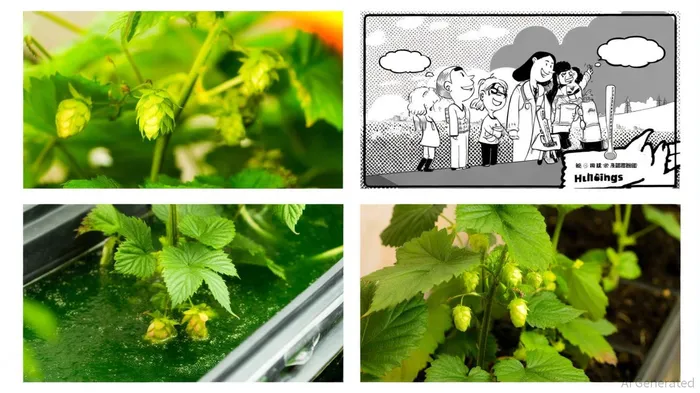
In an era where climate volatility threatens agricultural stability, Kirin Holdings has emerged as a trailblazer in agricultural biotechnology, leveraging innovation to safeguard the future of brewing. The Japanese beverage giant's recent development of climate-resilient hop cultivation technology represents a strategic masterstroke, addressing both environmental and economic risks while positioning the company as a leader in sustainable supply chain management. By engineering hops that thrive under extreme heat and drought without compromising flavor, Kirin is not only securing its raw material supply but also redefining industry standards in the face of global warming.
A Scientific Breakthrough in Resilience
Kirin's technology centers on a novel seedling propagation method: growing hop plants in a liquid medium and subjecting them to a six-week heat treatment at 25°C during mass propagation. This process, termed “acquired tolerance,” enables the plants to develop resilience to high temperatures and water scarcity without genetic modification[1]. Field trials in Iwate Prefecture demonstrated that heat-treated hop varieties, including the Czech “Saaz” and German “Hersbrucker,” exhibited 15–20% higher plant height and above-ground biomass compared to untreated controls, with a notable increase in cone yields under simulated climate-stressed conditions[2]. Crucially, the heat treatment preserved the aromatic and bittering compounds essential for beer quality, ensuring no trade-off between sustainability and product integrity[3].
This innovation directly counters the growing threat of climate-induced supply chain disruptions. According to the International Hop Growers' Convention, global hop yields have declined by 8% since 2019 due to erratic weather patterns[4]. By embedding resilience into the seedling stage, Kirin mitigates risks of crop failure, stabilizing costs and ensuring consistent ingredient availability for its brewing operations.
Market Dynamics and Strategic Expansion
The global hops market, valued at $1.2 billion in 2025, is projected to grow at a compound annual rate of 6.1% through 2034, driven by surging demand for craft beer and premiumized flavors[5]. Kirin's climate-resilient hops are poised to capture a significant share of this growth, particularly as competitors grapple with supply constraints. The company's parallel investment in indoor hop cultivation—pioneered in collaboration with the University of Tokyo—further diversifies its strategy, enabling year-round harvesting and reducing reliance on seasonal weather[6].
Financially, Kirin's forward-thinking approach is already attracting investor attention. A discounted cash flow (DCF) analysis suggests the stock is undervalued at ¥5,779 per share, with a Price-to-Earnings (P/E) ratio of 32.9x reflecting confidence in its long-term growth trajectory[7]. Analysts highlight that Kirin's Climate-Resilient Value (CSV) strategy, which includes reducing operational emissions by 50% by 2030, aligns with global ESG trends, enhancing its appeal to impact-focused investors[8].
A Hedge Against Climate Volatility
The strategic value of Kirin's innovation extends beyond its own operations. By licensing the technology to international growers, the company could become a pivotal player in global hop supply chains, fostering partnerships in regions like Germany, the Czech Republic, and the U.S.—traditional hubs for hop production. This scalability transforms Kirin from a brewing company into a climate adaptation solutions provider, diversifying revenue streams and amplifying its market influence.
Moreover, the technology's non-GMO nature circumvents regulatory and consumer resistance, ensuring rapid adoption. As stated by Kirin's Integrated Report 2025, the company's commitment to “sustainable agriculture” is not merely a risk-mitigation tactic but a core component of its vision to create shared value across its Food & Beverages, Pharmaceuticals, and Health Science divisions[9].
Conclusion: A Compelling Investment Case
Kirin Holdings' climate-resilient hop technology exemplifies how agricultural biotechnology can address existential threats to the beverage industry. By securing a stable, high-quality hop supply, the company is insulating itself from climate-driven price swings and supply shortages, directly enhancing long-term profitability. For investors, this innovation represents a dual opportunity: a hedge against global climate volatility and a stake in a company redefining sustainability in brewing. As the world grapples with the realities of a warming planet, Kirin's proactive approach underscores its leadership—and its shares may well be the most refreshing investment in a parched market.







Comentarios
Aún no hay comentarios