
The Kioxia Block Trade: A Cautionary Tale for AI-Driven Tech Valuations?
The Kioxia Block Trade: Structure and Implications
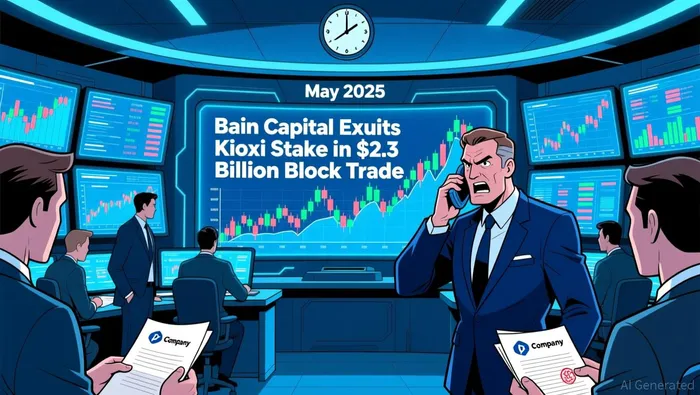
The block trade, involving 36 million shares at ¥9,853 apiece, reflects Bain Capital's calculated exit from a company it acquired in 2018 amid Toshiba's financial crisis. The timing is telling: Kioxia's stock had reached record highs earlier in 2025 on AI demand optimism but had since retreated, mirroring broader investor caution. This move aligns with Bain's recent divestment of a $1.14 billion stake in Coherent Corp.COHR--, another AI-related firm, suggesting a deliberate strategy to hedge against sector-specific risks.
The trade's execution method-targeting overseas investors-highlights the global nature of AI semiconductor demand but also raises questions about liquidity constraints. Large block trades often signal a lack of confidence in near-term price stability, particularly when earnings reports fall short of expectations, as Kioxia's did in November 2025.
Kioxia's Performance: A Case Study in Valuation Volatility
Kioxia's stock price collapse-23% following its Q3 earnings-exposes vulnerabilities in its business model. The company's operating profit of ¥87 billion fell below forecasts, attributed to a weaker product mix and fixed-price agreements with Apple that limited margin expansion. These challenges underscore a critical risk for AI-linked semiconductors: over-reliance on speculative demand without commensurate improvements in operational performance.
Despite its $5.3 billion valuation post-IPO, Kioxia's long-term prospects remain uncertain. The memory chip market, unlike high-margin AI accelerators, has not directly benefited from AI-driven demand, creating a disconnect between market hype and fundamentals. This divergence is emblematic of a sector where valuations often outpace tangible revenue growth.
Broader Sector Trends: AI Semiconductors in 2025
The Kioxia case is not an outlier. AI semiconductor stocks in 2025 are grappling with valuation volatility and execution risks. C3.ai, for instance, has seen its shares plummet 55% year-to-date amid leadership changes and strategic uncertainty. Such examples highlight a sector-wide struggle to balance innovation with profitability.
Unique risks include supply chain bottlenecks, regulatory scrutiny of AI data practices, and the challenge of converting pilot projects into scalable revenue streams. For instance, while partnerships like C3.ai's with Microsoft offer growth potential, they also expose firms to dependency on third-party ecosystems. These dynamics amplify the importance of rigorous risk management for investors.
Lessons for Investors: Balancing Optimism and Caution
The Kioxia block trade serves as a cautionary tale for investors. While AI-driven demand has fueled speculative runs, the sector's structural challenges-ranging from margin pressures to regulatory headwinds-demand a nuanced approach. Key takeaways include:
1. Valuation Realism: High multiples for AI-linked semiconductors must be supported by clear revenue diversification and margin resilience, not just AI hype.
2. Diversification: Over-reliance on a single technology or client (e.g., Apple) can expose firms to asymmetric risks.
3. Earnings Scrutiny: Earnings shortfalls, as seen with Kioxia, often trigger rapid repricing of valuations, underscoring the need for continuous performance monitoring.
As the sector evolves, investors must remain vigilant against the "AI premium" narrative. The Kioxia trade and broader market trends suggest that while AI semiconductors hold transformative potential, their valuations require a disciplined, fundamentals-driven lens.





Comentarios
Aún no hay comentarios