
KinderCare's (KLC) Governance Crisis: Rebuilding Trust Amid Regulatory and Reputational Risks Post-IPO
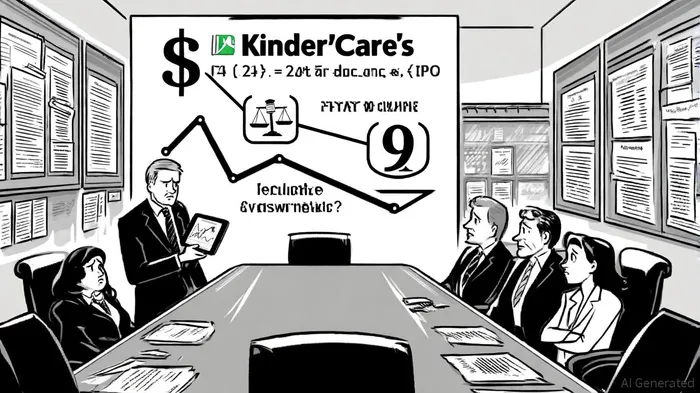
The recent securities class-action lawsuit against KinderCare LearningKLC-- Companies, Inc. (KLC) has exposed profound governance and transparency failures that threaten not only its financial stability but also the broader trust in the early-childhood education sector. Filed in August 2025 under the title Gollapalli v. KinderCare Learning Companies, Inc., the lawsuit alleges that the company misled investors during its October 2024 IPO by concealing a documented history of child neglect, harm, and safety failures, according to a GlobeNewswire release. These omissions, according to the court docket, created an artificially inflated perception of KLC's operations, particularly given its reliance on federal subsidies-30% of its revenue-which are now at risk due to potential regulatory scrutiny. The stock price has since plummeted from $24 per share at the IPO to lows near $9, reflecting a market that has recalibrated its expectations in light of these revelations, as reported in a NatLawReview update.
Governance and Transparency Failures: A Recipe for Crisis
The lawsuit highlights a critical disconnect between KLC's public messaging and its operational reality. The company's IPO materials emphasized "the highest quality care possible" in a "safe, nurturing, and engaging environment," while allegedly omitting serious safety and care failures at its facilities, according to a Primary Finances analysis. This misalignment underscores a governance failure rooted in inadequate risk disclosure. According to a report by Primary Finances, the childcare sector's opaque risk disclosures and lack of board independence have long been vulnerabilities, but KLC's case has amplified these concerns, as discussed in an EdgarIndex report.
The company's governance framework, while publicly accessible via its investor relations website, lacks recent updates addressing these specific risks; the investor site's governance documents do not appear to reflect the issues raised in the complaint. This absence of proactive transparency has eroded investor confidence, particularly as multiple law firms-including Hagens Berman, Robbins Geller Rudman & Dowd LLP, and Pomerantz LLP-have joined the legal fray, each alleging securities fraud, according to a Morningstar alert. The cumulative effect is a reputational crisis that extends beyond financial losses to questions about KLC's ethical stewardship.
Valuation Implications and Shareholder Sentiment
The financial fallout from the lawsuit is stark. A 62.5% drop in stock price (from $24 to $9) signals a dramatic reassessment of KLC's intrinsic value. Analysts attribute this decline to the market's realization that the company's revenue model-dependent on federal subsidies-is now exposed to heightened regulatory and legal risks, according to a GlobeNewswire report. For context, a Harvard Law Blog analysis noted that companies facing securities class actions often experience prolonged valuation discounts due to reputational damage and increased litigation costs.
Shareholder confidence has further eroded as the lead plaintiff deadline of October 14, 2025, approaches. Investors with losses exceeding $100,000 are being urged to participate in the class-action suit, a development that could lead to costly settlements or judgments, according to a ClaimsFiler alert. The reputational damage also poses a long-term threat to KLC's ability to attract capital, particularly in a sector where public trust is paramount, as highlighted by a CSIMarket report.
Strategic Pathways to Rebuilding Credibility
To mitigate these risks, KLCKLC-- must adopt a multifaceted strategy centered on governance reforms, transparency, and stakeholder engagement.
Enhanced Disclosure and Board Accountability
KLC should immediately update its governance documents to include detailed risk disclosures about child safety incidents and regulatory compliance. This includes appointing independent directors with expertise in risk management and ethics. As noted in a Diligent report, AI-powered governance platforms can streamline compliance and risk assessments, enabling boards to act proactively.Third-Party Audits and Reputational Repairs
Engaging independent auditors to review facility safety protocols and publish findings could restore public trust. Concurrently, KLC must address the root causes of child neglect allegations through staff training and operational overhauls. An EY analysis emphasized that companies in crisis often benefit from transparent, third-party validation of their reforms.Stakeholder Engagement and ESG Integration
Rebuilding investor confidence requires direct engagement with shareholders and regulators. KLC should align its corporate sustainability strategy with evolving ESG standards, particularly California's SB 253 and SB 261, which mandate climate-related disclosures; the broader implications of these shifts have been examined in the Harvard Law Blog analysis referenced above. While these laws are geographically specific, they signal a broader trend toward accountability that KLC must embrace.Legal and Financial Risk Mitigation
The company must prioritize resolving the ongoing lawsuits through settlements or regulatory negotiations to avoid prolonged legal battles. Simultaneously, diversifying revenue streams beyond federal subsidies could reduce dependency on a single, vulnerable income source, a point previously raised by Primary Finances.
Conclusion: A Test of Resilience
KinderCare's current crisis is a cautionary tale for companies in high-trust sectors. The lawsuit underscores the non-negotiable role of transparency in governance and the severe financial consequences of its absence. For KLC to recover, it must demonstrate not only operational improvements but also a cultural shift toward accountability. The path forward is arduous, but with strategic reforms and a commitment to ethical governance, the company could yet rebuild its credibility-and its valuation.





Comentarios
Aún no hay comentarios