
Kimco Realty's 2025 Q2 Earnings: A REIT on the Rise in a Shifting Retail Landscape
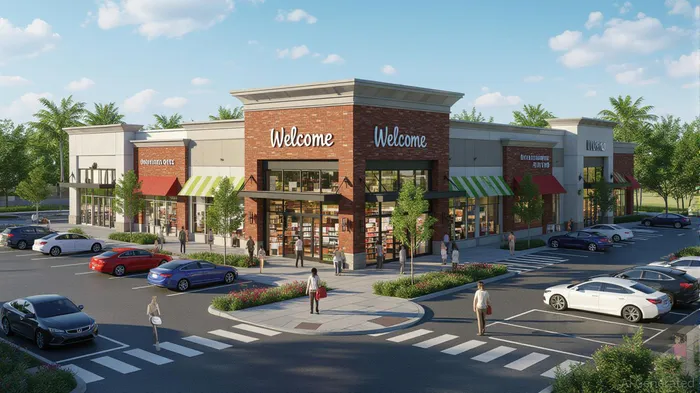
In a retail sector grappling with the dual pressures of economic uncertainty and shifting consumer habits, Kimco Realty CorporationKIM-- (KIM) has emerged as a standout performer. Its Q2 2025 earnings report, released on July 30, 2025, underscores a compelling narrative of resilience and strategic foresight. By leveraging necessity-based retail demand, executing disciplined capital allocation, and capitalizing on strong leasing momentum, Kimco is positioning itself to outperform in a high-interest-rate environment—a feat few real estate investment trusts (REITs) can claim.
Historically, KIM has demonstrated a consistent earnings reporting cadence, with 15 earnings releases since the start of 2022. This frequency provides investors with a robust dataset to evaluate the REIT's performance across varying market conditions, including the recent high-rate environment.
The Power of Necessity-Based Retail: A Shield in Volatile Times
Kimco's strategic pivot to grocery-anchored shopping centers has proven to be a masterstroke. These centers now account for 86% of the company's annual base rent, a testament to its focus on tenants that provide essential goods and services. This model has translated into a record small shop occupancy rate of 92.2%, with same-site net operating income (NOI) rising 3.1% year-over-year. The logic is simple: as discretionary spending wanes during economic downturns, demand for grocery stores, pharmacies, and other necessity-driven tenants remains stable.
Kimco's approach contrasts sharply with the struggles of REITs reliant on big-box retailers or entertainment-focused assets. For example, the fallout from tenant bankruptcies like Joanne and Party City has been mitigated by Kimco's diversified tenant base. The company's structured investment program, which contributed $4.8 million to Q2 results, further reinforces its ability to monetize underperforming assets while retaining high-quality properties.
Strategic Dispositions and Capital Recycling: Fueling FFO Growth
Kimco's capital allocation strategy has been a cornerstone of its success. The REIT has raised $1.73–$1.75 per share for full-year FFO, a 4.8%–6.1% increase over 2024, by monetizing low-growth assets and reinvesting in higher-yielding opportunities. A $500 million bond issuance in June 2025 at a 5.3% interest rate exemplifies this discipline, enabling Kimco to strengthen its balance sheet while maintaining a net debt to EBITDA ratio of 5.4x—a conservative metric in a high-rate environment.
This approach has also allowed Kimco to maintain liquidity of over $2.2 billion, including $228 million in cash reserves. By prioritizing capital recycling, the company has created a flywheel effect: dispositions free up capital for accretive investments, which in turn drive FFO growth and support its 34-year streak of dividend payments. The recent paydown of the $240.5 million Weingarten bond and revolver usage further illustrate its proactive management of debt obligations.
Leasing Momentum: A Tailwind for Sustained Performance
Kimco's leasing activity is another bright spot. The REIT's signed but not yet open pipeline represents $30 million in annual base rent for 2025, with 40% expected to commence in the second half of the year. This embedded growth is critical in a market where vacancy rates for non-essential retail remain stubbornly high.
The company's focus on innovation—such as AI-driven lease abstraction and operational efficiency tools—has accelerated tenant onboarding and reduced administrative costs. CEO Conor Flynn's emphasis on “disciplined capital allocation” has also helped Kimco avoid overpaying for properties, a common pitfall for REITs in a low-rate environment.
Navigating the High-Interest-Rate Environment: A REIT Built for Endurance
While the broader real estate sector faces headwinds from elevated borrowing costs, Kimco's strategic priorities have insulated it from the worst. Its 86% grocery-anchored portfolio, 92.2% occupancy rate, and $2.2 billion liquidity position create a buffer against economic volatility. The REIT's ability to raise FFO guidance despite a 0.68% revenue miss also highlights its operational resilience.
However, investors should not ignore the stock's 2.37% pre-market decline following the earnings report. This dip, despite strong EPS and FFO performance, may reflect broader market skepticism about retail REITs in a high-rate climate. Yet, Kimco's 4.57% dividend yield and current ratio of 1.79 (indicating strong short-term liquidity) suggest the REIT is undervalued relative to its fundamentals.
Investment Thesis: A Buy for the Long-Term
Kimco Realty's Q2 results validate its strategy of focusing on necessity-based retail, strategic dispositions, and disciplined capital management. For investors seeking a REIT with a proven track record of navigating economic cycles, KIM offers a compelling case. The company's raised full-year FFO guidance, combined with its 34-year dividend history and robust liquidity, makes it an attractive option for those willing to ride out short-term volatility.
That said, the stock's proximity to its 52-week low of $17.93 warrants caution. A pullback in interest rates or a broader retail recovery could unlock additional upside, but in the near term, Kimco's focus on grocery-anchored assets and capital recycling positions it as a defensive play in a challenging market.
In conclusion, Kimco Realty's Q2 2025 earnings demonstrate that even in a high-interest-rate environment, strategic agility and operational discipline can drive consistent growth. For investors with a medium-term horizon, KIM represents a REIT on the rise—one that's not just surviving but thriving in a shifting retail landscape.
"""





Comentarios
Aún no hay comentarios