
Kia's October 2025 Sales and the Resilience of the Global EV Market
Q3 2025: A Mixed Bag of Challenges and Opportunities
Kia's Q3 2025 results reflect the dual pressures of supply constraints and model transitions. , , according to the same Economic Times report. These figures align with broader industry trends, where automakers globally grapple with inventory imbalances and shifting consumer preferences. However, , as detailed by the Economic Times. This profitability, despite lower sales, suggests strong pricing power and cost management, particularly in its SUV and electrified vehicle segments.
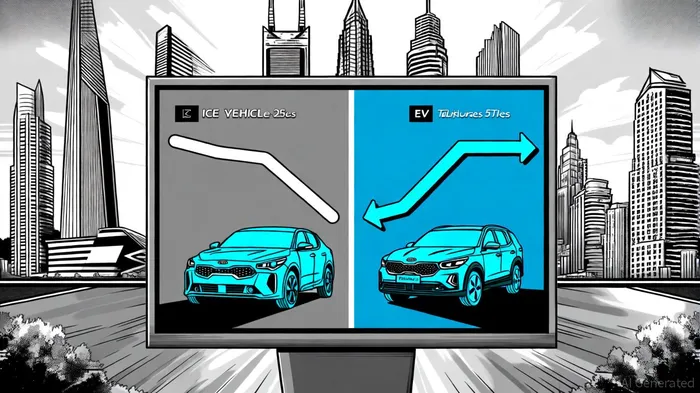
In the U.S., Kia's performance was notably robust. , , according to a Kia America press release. Electrified models, including the K5 and Telluride, , outpacing the overall market. This regional success underscores the potential for EVs to offset declines in traditional ICE (internal combustion engine) segments, even amid macroeconomic uncertainty.
The Broader EV Market: Expansion Amidst Uncertainty
Kia's trajectory mirrors the global EV market's duality of challenges and opportunities. The EV testing, inspection, and certification market, , , driven by safety regulations and battery advancements, according to an market report. Similarly, , reflecting demand for efficient power management systems, per that same EV testing market report. These infrastructure developments signal that the EV ecosystem is maturing, even as automakers face near-term hurdles.
Asia-Pacific remains the growth engine, with Kia's strategic focus on Japan exemplifying this trend. The company's launch of the PV5 electric van in Japan-a market dominated by local giants like ToyotaTM-- and Honda-positions it to capitalize on government policies aiming for 30% EV adoption by 2030, as noted in an Electrek article. While October 2025 sales data for the PV5 is unavailable, Kia's partnership with Sojitz to establish a local distribution network indicates a long-term commitment to this high-potential market.
Navigating Short-Term Hurdles: Delays and Strategic Shifts
Kia's Q4 2025 outlook is not without risks. The U.S. launch of the affordable EV4 sedan has been delayed due to "changed market conditions," including the expiration of EV tax credits and increased tariffs on South Korean imports, according to The Korean Car Blog. Such headwinds highlight the fragility of EV adoption in markets reliant on policy incentives. However, Kia's pivot to electrified SUVs and vans-segments with stronger demand-demonstrates its agility. For instance, , as noted in the Kia America press release, suggesting that consumer preferences are aligning with electrification trends.
Implications for Investors
For investors, Kia's October 2025 performance-while not yet fully quantified-offers a microcosm of the EV sector's resilience. The company's ability to generate profits despite sales declines, coupled with its strategic expansion into EV-centric markets like Japan, signals a balanced approach to risk and growth. Moreover, the global EV infrastructure's projected expansion (e.g., , per an plant report) reinforces the long-term viability of electrification.
However, caution is warranted. The EV4 delay and U.S. market volatility underscore the importance of diversification and adaptability. Investors should monitor Kia's Q4 2025 results closely, particularly its EV segment's contribution to revenue and its ability to scale production in Japan.
Conclusion
Kia's October 2025 sales, viewed through the lens of Q3 performance and broader market trends, illustrate a sector in transition. While short-term challenges persist, the company's profitability, strategic product launches, and alignment with global EV infrastructure growth position it as a resilient player. For investors, the key takeaway is clear: the EV market's long-term trajectory remains upward, but success will belong to those who can navigate near-term turbulence with innovation and agility.





Comentarios
Aún no hay comentarios