
The Kharkiv Strike: A Geopolitical Stress Test for Global Markets
The Russian missile attack on Kharkiv, Ukraine’s second-largest city, killing one and injuring 57, underscores the relentless escalation of a conflict that has become a defining geopolitical stress test for global markets. As the war enters its third year, the economic and strategic stakes are higher than ever, with ripple effects spreading from energy markets to investor portfolios. Here’s how the conflict’s trajectory is shaping opportunities—and risks—for investors.
The Immediate Market Impact: A Reminder of Unpredictability
The strike on Kharkiv, a city far from the frontlines, highlights Russia’s willingness to escalate through asymmetric warfare. While such attacks are not new, their persistence disrupts assumptions of a de-escalation timeline. For markets, this means continued volatility in commodities like oil and wheat, as well as heightened geopolitical risk premiums in European equities and Russian assets.
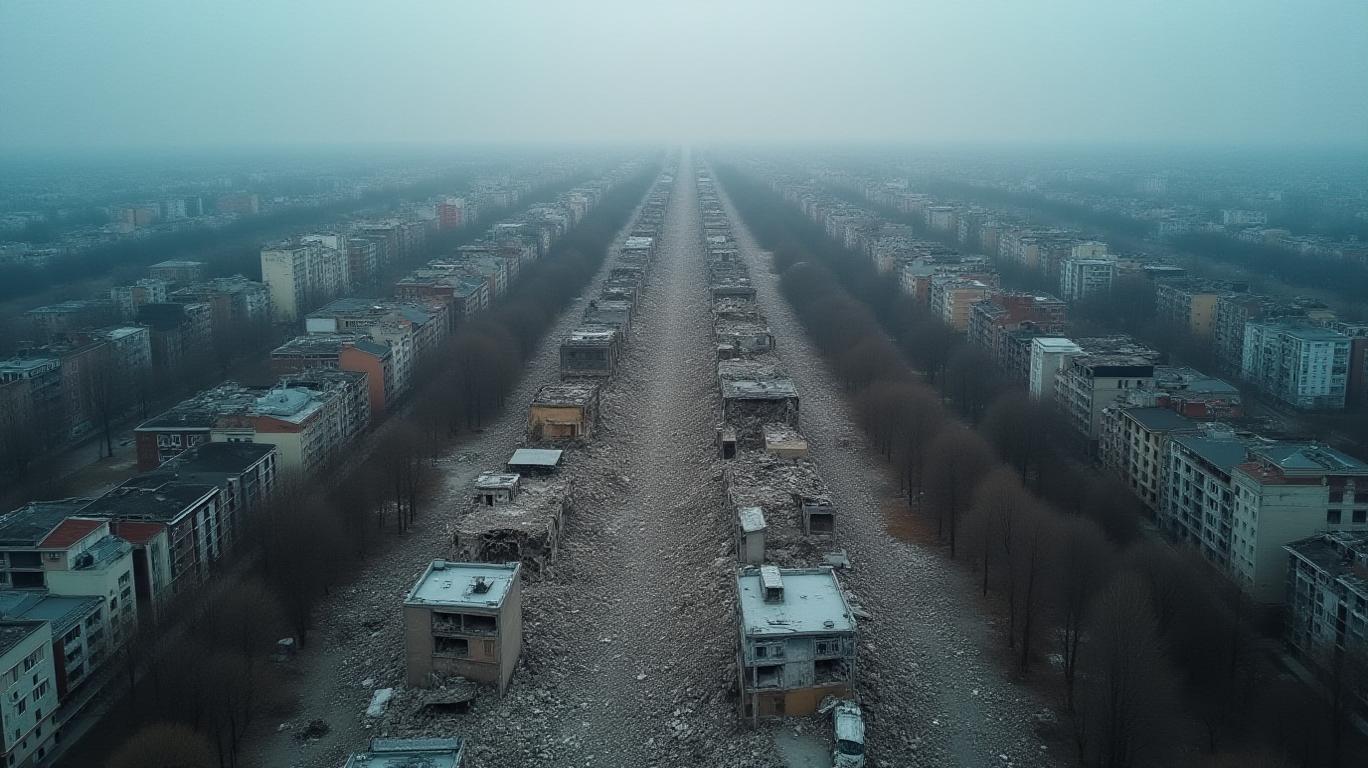
The data shows that even minor supply disruptions—like those caused by Ukrainian strikes on Russian infrastructure—can spike oil prices. With Russia’s sovereign wealth funds dwindling and its economy strained, prolonged conflict could force Moscow to prioritize energy exports as a lifeline, creating both risks (supply volatility) and opportunities (for energy investors).
The Economic Vice on Russia: A Clock Running Out
The attack in Kharkiv is not just a military move—it’s a reflection of Russia’s deteriorating strategic position. According to analysis, Russia’s sovereign wealth funds, critical to funding its war effort, are now at just $53 billion, with experts estimating reserves could be exhausted within 16 months.
- Inflation and Recruitment Costs: Russia’s inflation rate exceeds 10%, four times that of the U.S. Troop salaries and signing bonuses (now as high as $40,000 in some regions) are unsustainable given monthly casualty rates of 30,000–45,000.
- Dependency on Mercenaries: Russia’s reliance on 12,000–16,000 North Korean soldiers and over 150 Chinese fighters—who only offset 9–12 days of battlefield losses—exposes both fiscal and logistical fragility.
The Institute for the Study of War (ISW) warns that Russia faces an economic “vice” by late 2025 or early 2026, when its ability to fund the war could collapse. For investors, this means:
- Short-term risk: Sanctions-driven energy price spikes could persist until Russia’s economy buckles.
- Long-term opportunity: A Russian economic collapse could destabilize its energy exports, but also create openings for rivals like Iran or U.S. shale producers.
Ukraine’s Fragile Recovery: A Test of Western Resolve
Ukraine’s economy, meanwhile, is on life support. Its GDP has contracted 22.6% since 2022, with a 2025 recovery projected at just 2.5%. The country’s $20.4 billion budget deficit (20.4% of GDP) and a hryvnia down 26% since 2022 highlight its dependency on Western aid.
President Zelensky’s push for a $30–50 billion U.S. military deal, potentially funded via a future mineral trade pact, signals Ukraine’s desperation for security guarantees. For investors, this could translate into:
- Defense sector plays: U.S. defense contractors like Raytheon (RTN) or Lockheed Martin (LMT) may see sustained demand.
- Energy infrastructure investments: Companies like Halliburton (HAL) or Schlumberger (SLB) could benefit from post-war reconstruction in Ukraine and Europe.
The data underscores the fragility of Ukraine’s economic recovery—dependent on Western aid flows and military support that could falter if political will wanes (e.g., under a Trump administration).
Geopolitical Spillover: Risks Beyond the Battlefield
The Kharkiv attack also signals broader regional instability. Russia’s hybrid tactics—such as leveraging religious tensions in Estonia or recruiting Chinese mercenaries—highlight its willingness to destabilize neighboring states.
- Estonia’s vulnerability: Accusations of religious persecution (targeting the Estonian Orthodox Church) mirror Russia’s playbook in Ukraine. A destabilized Baltic region could pressure NATO to divert resources from Ukraine, benefiting defense firms like Raytheon or Boeing (BA).
- China’s role: Beijing’s tacit acceptance of Chinese mercenaries in Ukraine raises geopolitical risks. Investors in Chinese equities (e.g., PetroChina (PTR)) face reputational and sanctions-related risks if Beijing’s support for Russia escalates.
Investment Takeaways: Navigate Volatility with Data
- Energy Sector: Stay long-term bullish on oil (e.g., XOM, CVX) due to geopolitical volatility, but hedge against a Russia-economic-collapse scenario.
- Defense & Cybersecurity: Allocate to firms with exposure to NATO spending (e.g., LMT, HON) and cybersecurity (e.g., Palo Alto Networks (PANW)).
- Emerging Markets: Avoid Russian assets (e.g., RTS Index) and favor energy-independent economies like India or Brazil.
- Diversification: Use TVP-VAR models to monitor cross-market spillover effects, as seen in the heightened correlation between commodity prices and equities.
Conclusion: A High-Risk, High-Reward Landscape
The Kharkiv strike is not an isolated incident—it’s a symptom of Russia’s economic desperation and Ukraine’s precarious reliance on aid. With 10% inflation, a $53 billion financial cushion, and 1.6% GDP growth forecast for 2025, Russia’s window to negotiate a sustainable ceasefire is closing. Investors must weigh:
- The 60% probability of a fragile ceasefire (easing energy prices but risking renewed conflict).
- The 35% chance of a protracted war (sustaining defense stocks but amplifying volatility).
- The 5% remote hope of a Russian victory (unlikely, but risky for European markets).
The data is clear: the war’s economic costs are unsustainable, but the path to resolution remains fraught with uncertainty. Investors who combine sector-specific plays (defense, energy) with diversification (geographically and asset-class-wise) will best navigate this high-stakes environment. As the clock ticks on Russia’s reserves, markets are in for a bumpy ride—but one with opportunities for the prepared.
The numbers tell the story: Russia’s fiscal clock is ticking, while Western defense budgets are surging. This is the new normal for investors.







Comentarios
Aún no hay comentarios