
Khakassia's Emergence as Russia's Premier Bitcoin Mining Hub: Strategic Investment in Energy-Efficient Mining Infrastructure in a Regulated Market
The Republic of Khakassia has quietly emerged as a pivotal player in Russia's BitcoinBTC-- mining landscape, distinguished by its low-cost energy infrastructure and a regulatory environment that, as of 2025, remains more permissive than in neighboring regions. For investors seeking to capitalize on the intersection of energy efficiency and institutionalized mining, Khakassia represents a compelling case study. This analysis examines the region's competitive advantages, regulatory dynamics, and the strategic opportunities embedded in its energy infrastructure, while contextualizing the risks posed by Russia's fragmented and evolving crypto policy.
Energy Efficiency: The Cornerstone of Khakassia's Appeal
Khakassia's primary allure lies in its access to some of the cheapest electricity in Russia, a critical determinant of Bitcoin mining profitability. As of 2025, electricity tariffs in the region range between 4.2 and 4.8 RUB per kWh, translating to an annual operational cost of approximately $1.31 million for 12 mining devices. This affordability is further amplified by the absence of a differentiated tariff system for high-volume consumers, allowing small- and large-scale miners to operate within preferential rate brackets. For context, the rating agency ACRA identified Khakassia as one of the top three regions in Russia for low-cost mining, alongside the Irkutsk region and Dagestan.
The region's energy efficiency is not merely a function of low prices but also its integration with Russia's broader energy strategy. Khakassia's proximity to Siberian coal and gas reserves, coupled with its role in the Siberian Coal Energy Company (SUEK)'s operations, provides a stable and scalable energy supply. SUEK's recent partnership with Zyfra to trial autonomous mining vehicles using Huawei's 5G network underscores the region's technological adaptability, which could extend to Bitcoin mining infrastructure. While no direct Bitcoin-specific projects have been announced in Khakassia, the region's energy ecosystem is primed for integration with energy-efficient mining technologies, such as those leveraging associated petroleum gas or surplus hydroelectric power as reported by industry analysts.
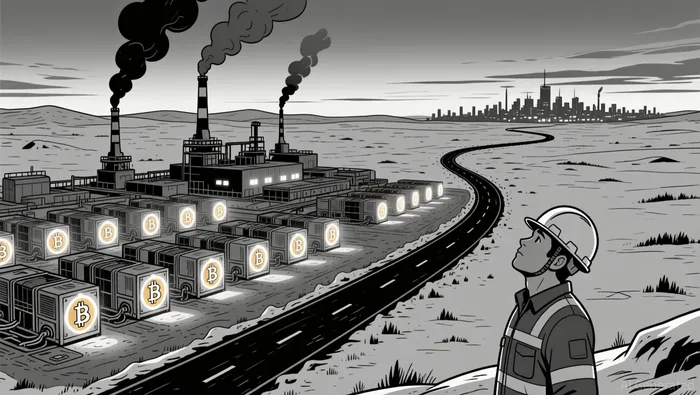
Regulatory Dynamics: A Delicate Balance Between Growth and Control
Khakassia's regulatory environment contrasts sharply with the restrictive policies adopted in other Russian regions. While Buryatia, Zabaykalsky Krai, and parts of Irkutsk have imposed permanent or seasonal bans on mining due to power shortages according to recent reports, Khakassia has avoided such measures. A 2025 government commission explicitly rejected a proposed mining ban in the region, citing insufficient evidence of energy demand exceeding supply. This decision reflects a calculated approach by regional authorities to balance economic incentives with grid stability, a strategy that has allowed Khakassia to outpace even Irkutsk in mining profitability.
However, the regulatory landscape remains fluid. The Russian Energy Ministry has signaled its intent to impose further restrictions in Khakassia by May 2025, citing rising energy consumption and logistical challenges in the coal sector. These potential constraints highlight the broader tension between Russia's desire to institutionalize mining as a revenue-generating industry and the need to prioritize energy security for essential services. For investors, this uncertainty necessitates a dual focus: leveraging current favorable conditions while hedging against future regulatory shifts through diversified energy sourcing or partnerships with state-backed energy providers.
Strategic Investment Opportunities in Energy-Efficient Infrastructure
The convergence of low energy costs and regulatory flexibility positions Khakassia as a prime candidate for strategic investments in energy-efficient mining infrastructure. Two key opportunities stand out:
Grid-Integrated Mining Facilities: Khakassia's energy infrastructure, particularly its coal and gas-powered plants, offers a foundation for grid-connected mining operations that can stabilize energy demand. For example, the use of surplus electricity from SUEK's coal mines or associated petroleum gas from oil fields could reduce operational costs while aligning with Russia's push to monetize underutilized energy resources. Such projects would mirror the "Crypto Factory" fund model, which leverages natural gas to power mining rigs at 2.5 cents per kWh.
Technological Synergies with Industrial Sectors: Khakassia's coal and mining industries are already adopting automation and AI-driven technologies to enhance productivity. These innovations could be extended to Bitcoin mining through partnerships with tech firms like Zyfra or Huawei, enabling the deployment of energy-efficient hardware and real-time grid optimization tools. Such collaborations would not only improve mining profitability but also align with Russia's broader digitalization goals.
Risks and Mitigation Strategies
While Khakassia's advantages are significant, investors must navigate several risks. First, the potential for future regulatory restrictions-such as the proposed bans under consideration by the Energy Ministry-could disrupt operations. Second, the region's reliance on fossil fuels exposes it to global energy price volatility and environmental scrutiny, particularly as Bitcoin's carbon footprint remains a contentious issue.
To mitigate these risks, investors should prioritize projects that:
- Diversify energy sources by integrating renewable energy or surplus gas.
- Secure long-term energy contracts with state-backed providers to stabilize costs.
- Engage in policy advocacy to influence regulatory outcomes in favor of sustainable mining practices.
Conclusion: A Calculated Bet on Russia's Mining Future
Khakassia's emergence as a Bitcoin mining hub is a testament to the power of energy efficiency and strategic regulatory navigation. While the region's current conditions are favorable, its long-term success will depend on its ability to adapt to evolving energy and policy landscapes. For investors, the key lies in balancing short-term gains with long-term resilience-leveraging Khakassia's low-cost energy while investing in technologies and partnerships that future-proof operations against regulatory and environmental headwinds.
As Russia continues to grapple with the dual imperatives of energy security and economic diversification, Khakassia's role in the Bitcoin ecosystem will remain a critical barometer of the country's broader approach to crypto mining. For those willing to navigate the complexities of a regulated market, the region offers a unique opportunity to participate in the next phase of the global energy-efficient mining revolution.







Comentarios
Aún no hay comentarios