
Kevin Hassett's Potential Fed Chairmanship and Its Implications for Bond Markets
The appointment of Kevin Hassett as the next Federal Reserve Chair has ignited significant debate among investors, policymakers, and economists. As a key architect of President Donald Trump's economic agenda, Hassett has long advocated for aggressive interest rate cuts and policies prioritizing growth over inflation control. His potential leadership at the Fed raises critical questions about the central bank's independence, the trajectory of inflation, and the stability of bond markets. This analysis examines the risks posed by a politically driven Fed under Hassett, drawing on historical precedents and current market dynamics.
Hassett's Economic Philosophy and Political Alignment
Kevin Hassett's economic views are deeply intertwined with Trump's policy priorities. As reports indicate, he has consistently argued for lower interest rates to stimulate economic growth, even as inflation remains above the Fed's 2% target. His alignment with Trump's agenda-such as reducing corporate taxes and implementing industrial policies-suggests a preference for growth-oriented strategies. However, this alignment has raised concerns about the Fed's independence. For instance, Hassett has previously supported removing the Fed chair over non-economic issues, such as cost overruns in the Fed's headquarters renovation, a stance critics deem politically motivated. Such actions could erode confidence in the Fed's ability to act impartially, a cornerstone of its credibility.
Historical Precedents of Political Influence on the Fed
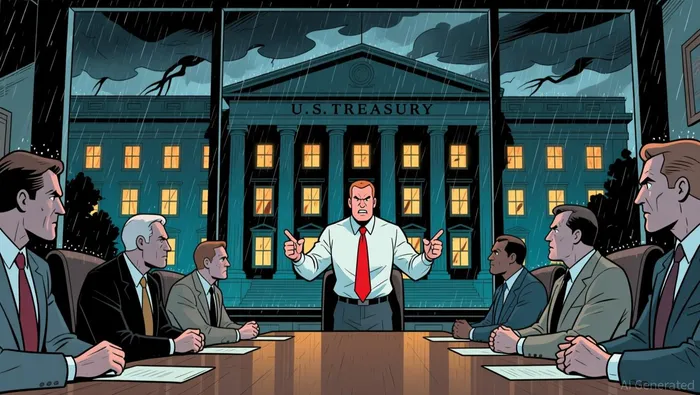
History offers cautionary tales about the consequences of political interference in monetary policy. A 2025 study highlighted that political pressure, particularly through public rhetoric or direct requests from administrations, can distort market expectations and undermine the Fed's mandate. For example, during the 1970s, political pressure contributed to inflationary surges, with price levels rising by over 8% within six months. More recently, Trump's public criticism of the Fed and his attempt to remove Governor Lisa Cook have already weakened public trust in the central bank's impartiality. These precedents suggest that a Fed chair with close ties to a political administration could face similar challenges in maintaining its independence.
Market Reactions and Bond Yield Trends
The bond market has already begun pricing in the implications of a Hassett-led Fed. Short-term Treasury yields dipped in late 2025 as investors anticipated more aggressive rate cuts. This dovish shift aligns with Hassett's public advocacy for a 50-basis-point rate reduction and his alignment with Trump's calls for lower interest rates. However, such expectations come with risks. If the Fed prioritizes growth over inflation control, it could trigger a "non-base-case scenario" where bonds lose their role as a safe-haven asset. Longer-term Treasury yields, while stable, could face volatility if inflation expectations rise or if the Fed's credibility is perceived to wane.
Inflationary Risks and Institutional Constraints
Despite Hassett's dovish stance, the Fed's institutional structure may limit his ability to push for extreme policy shifts. The chair's vote is just one of twelve on the Federal Open Market Committee (FOMC), and the Fed's dual mandate-price stability and maximum employment-provides a framework for balancing growth and inflation. However, the risk lies in how markets interpret these policies. If investors perceive a shift toward growth prioritization, they may demand higher inflation compensation, driving up bond yields and increasing borrowing costs for governments and corporations. This dynamic could undermine the Fed's effectiveness in managing inflation, particularly in an environment where trade policies and global uncertainties already complicate monetary interventions.
Conclusion: Navigating the Risks for Investors
For bond investors, the potential appointment of Kevin Hassett as Fed Chair introduces a dual risk: a possible erosion of the Fed's inflation-fighting credibility and increased volatility in bond yields. While the market currently appears "comfortable" with the prospect, the long-term implications depend on how the Fed navigates political pressures. Investors should remain vigilant, diversifying portfolios to account for potential shifts in inflation expectations and yield curve dynamics. The broader lesson is clear: the Fed's independence is not just a policy principle but a critical safeguard for financial stability in an era of heightened political influence.







Comentarios
Aún no hay comentarios